




Selentra HP is a dual-action formulation from Calroy Health Sciences designed to target the gut-bone axis, systemic inflammation, and structural preservation in menopausal, perimenopausal women and beyond. Visit calroy.com/drkf for exclusive discount and try Selentra HP for yourself or those in your practice
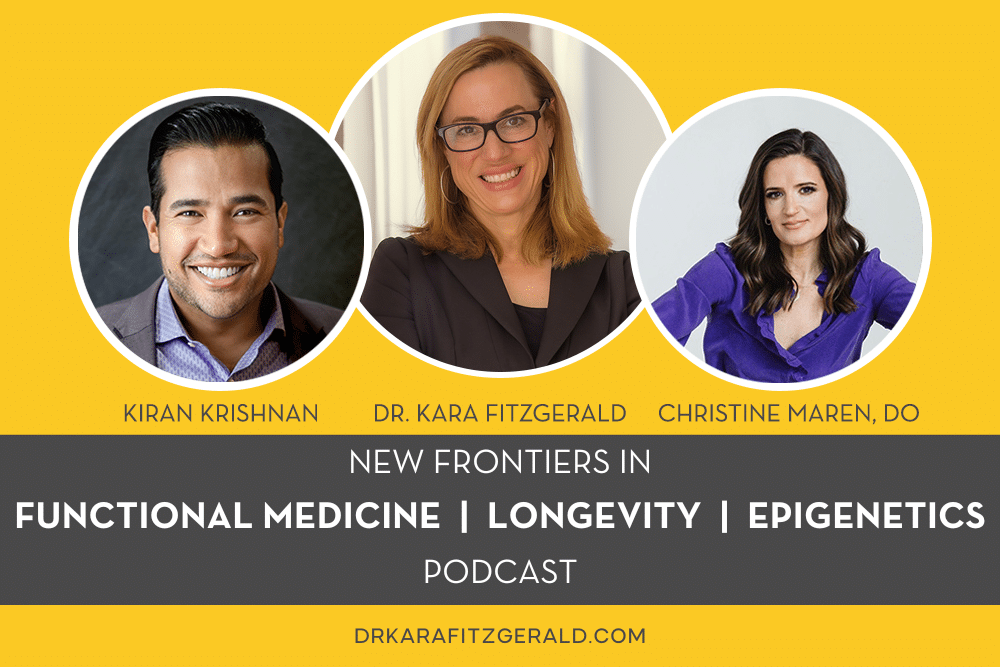
Midlife bone loss is often framed as a problem of calcium or declining estrogen. But what if the gut is part of the picture too? In this episode of New Frontiers, Dr. Kara Fitzgerald speaks with research microbiologist Kiran Krishnan and functional medicine and women’s health physician Christine Maren, DO, to explore the gut-hormone-bone connection across perimenopause and menopause.
They also unpack a surprisingly novel idea: how an exopolysaccharide produced by Bifidobacterium breve can be classified as a postbiotic, opening up an intriguing new way to think about gut signaling and the menopause transition. From there, the conversation explores the “perfect storm” that can emerge as estrogen declines: changes in the gut microbiome, impaired intestinal barrier function, and rising inflammation that can shift bone remodeling toward breakdown.
They discuss practical approaches to evaluating bone health, nutrient absorption, and emerging tools that may support both the gut and bone. From DEXA scans and CTX to postbiotics and Indian rosewood flavanols, this episode takes a deeper look at protecting bone health and offers a message of hope: midlife does not have to mean accepting declining health, strength, or resilience.
In this episode of New Frontiers, learn about:
- How the gut microbiome changes through perimenopause and menopause, and why estrogen is key to gut barrier integrity
- The “perfect storm” of estrogen loss, gut dysfunction, and inflammation that can accelerate bone loss
- Connections between menopause, worsening IBS and IBD, histamine intolerance, and autoimmune disease
- Why bone is much more than structural tissue, and how bone health connects to whole-body health and longevity
- When to start evaluating bone health, why a baseline DEXA around age 45 may be useful, and how markers like CTX can help track bone metabolism
- What postbiotics are, why a Bifidobacterium breve exopolysaccharide is such a novel example, and how VMK223 influences TLR2, TLR4, gut barrier function, and inflammation
- Potential off-label applications of VMK223 for men and people with gut dysfunction, intestinal permeability, food and environmental sensitivities, allergies, histamine intolerance, and MCAS
- How Indian rosewood (Dalbergia sissoo) compounds may influence bone remodeling, osteoblasts, osteoclasts, and trabecular bone strength
- How gut health affects vitamin D3 and K2 absorption, and how emerging gut and bone support approaches may complement HRT or offer options for women who cannot or choose not to use it
- Potential applications beyond menopause, including preventive bone support in younger women and strategies that may also benefit joint and vascular health
Dr. Kara Fitzgerald: Hi, everybody. Welcome to New Frontiers in Functional Medicine, where we are interviewing the best minds in functional medicine. And of course, today is no exception. I am with returning guest Kiran Krishnan. Some of my best podcasts have been talking with him. He is a research microbiologist who always brings fresh, exciting science and clinical tools to the podcast. Dr. Christine Maren, she is a first-time guest on New Frontiers. She’s certified in both functional and menopausal medicine. They’re both going to be talking about the gut-hormone-bone connection, what it means for us women in midlife, as we transition through perimenopause and menopause, of course, estrogen drops. And as this whole phenomenon occurs, system-wide changes, including gut remodeling and systemic inflammation, ensue, prompting changes to bone, bone health, bone remodeling, bone loss, et cetera. So we’re gonna be covering that phenomena and we’re also gonna be covering what we can do, some very simple tools that will allow us to address these transitions in our female population. And this episode is brought to you by Calroy Health Sciences. So let’s get to it.
Dr. Kara Fitzgerald: Welcome, welcome, welcome both to New Frontiers. It’s great to have you. Kiran, you’re back with me again after many really terrific conversations. Christine, this is our first time podcasting together, but in our prep session, you had absolutely fascinating information. And I wanna start with you. You focus on women’s health in your practice, and you look at it through a functional longevity slash systems lens, similar to me in my practice. And specifically, you’ve put a lot of energy around the microbiome transition during a woman’s transition as she moves through pre, peri, to menopause and post and beyond. There’s some pretty radical shifts in the microbiome. Can you talk about that and maybe what you see happen in your practice with that?
Christine Maren, DO, ABFM, IFMCP, MSCP: Yeah, for sure. I think we all know perimenopause is a hormonal transition. We don’t all know that it’s a gut health or a microbiome transition. But there’s really good data that’s come out in the last five years looking at this. And what we can see is that a woman’s gut microbiome is a lot more diverse than a male gut microbiome before the age of really menopause. And that’s called sexual dimorphism when a female and male gut microbiome are so different. But the female gut microbiome plateaus around the age of 40, and then we start to lose diversity.
Christine Maren, DO, ABFM, IFMCP, MSCP: And by the time a woman has transitioned through menopause, her gut microbiome looks like the gut microbiome of a male. So it’s a really big significant change that we see that, of course, affects everything else. So hormones affect the gut microbiome, and then the gut microbiome affects the hormones and the way that we balance and metabolize those hormones. So I think it’s really important when it comes to our health in general.
Dr. Kara Fitzgerald: So would you say that estrogen, I mean, of the hormones, of the transition journey, what are the big players in affecting this profound shift? And actually I’m gonna throw one more question at you around it. The first thing I thought of when you said that it then reflects the diversity of a man’s microbiome, are the diseases that we also catch up with to men, heart disease and so forth. The microbiome must be driving this and more.
Christine Maren, DO, ABFM, IFMCP, MSCP: Yeah, it’s a really big factor. We have lots of studies looking at this and how it affects cardiometabolic risk. So a woman in menopause looking directly at her microbiome and how it directly impacts cardiometabolic and heart disease. So it is significant. What was the first part of your question? What hormones are most important? I think estrogen is queen, right? It’s really important. What’s so interesting is how estrogen influences not just the composition of the gut microbiome, but actually intestinal permeability. So estrogen plays a role in the tight junctions of our gut.
Christine Maren, DO, ABFM, IFMCP, MSCP: So estrogen’s such a big deal when you talk about gut health and the microbiome and all the downstream impacts of that. Testosterone, progesterone also play roles, less well studied. But even we can look at thyroid hormone. There’s a big thyroid gut connection as well. So I think it just goes back to that systems perspective that everything truly is connected and it’s all important, but yeah, I would say estrogen is queen there.
Dr. Kara Fitzgerald: So fascinating. I’ve got two more questions. Is this a reason, or do you think about gut health in a particular patient phenotype as leading you to consider HRT? Is that more top of mind as this research emerges? Like maybe the autoimmune patient, somebody who you’re really thinking about leaky gut, even if they may not have the classic symptoms associated with the menopause transition.
Christine Maren, DO, ABFM, IFMCP, MSCP: Yeah, I do, especially when we’re thinking about autoimmune disease and inflammation. I mean, the gut, as we’ll talk about more, the gut and hormones. If you optimize those two things, you can really impact downstream immune system and inflammation and risk for autoimmune disease and even things, if we think about histamine reactivity and mast cell issues, in perimenopause. But yeah, I think, and back to your first question, like the patients who I think about with gut health. I mean, of course, any patient who has digestive symptoms or who has autoimmune disease, we know the gut is this immune interface.
Christine Maren, DO, ABFM, IFMCP, MSCP: But also just patients with hormone problems or concerns. We just can’t deny how important it is, how the gut metabolizes and helps to balance those hormones in all of our systems. And I think there’s a lot of women who come to see me who have started HRT and they were like really hoping for the silver bullet. And they said, it helped a little, but it wasn’t always what they’re hoping for. And that’s really when I dive in more on the gut issues. And of course, as we dig deeper, we often find other underlying issues. It’s not just hormones, it’s like nutrient deficiencies, it’s inflammation, it’s gut microbiome, it’s all good.
Dr. Kara Fitzgerald: It’s the full systems lens. Yeah. All right. And on this line of question, just one more. A woman is moving through the transitions. What gut presentations might you see emerge during this time?
Christine Maren, DO, ABFM, IFMCP, MSCP: So worsening of IBS. Sometimes she has underlying IBS and it got worse. She has more bloating, loose stool, GERD, even reflux and heartburn. Any of those kind of digestive issues. I have a patient, I mean, I have several with inflammatory bowel disease. And as they were in perimenopause and in that transition, I mean, she’s in her 40s, the one I’m thinking of. She was doing everything right too. She’s a nutritionist, she’s really smart, she’s on top of it. But she experienced just a decline in her gut health. She’s like, it’s not right.
Christine Maren, DO, ABFM, IFMCP, MSCP: Something’s not right here. And after she started hormones, that was like the thing that helped her get to the point where she’s like, I feel like I’m pretty much 100%. I can eat basically whatever I want. She doesn’t have as many food sensitivities and inflammation. She’s a lot more resilient. So yeah, it can be worsening of IBS, worsening of IBD, inflammatory bowel disease. Sometimes it’s worsening of histamine. So many women in perimenopause have concerns with itchy skin, hives, reactivity. And it really comes back to like, well, what’s going on in the gut?
Christine Maren, DO, ABFM, IFMCP, MSCP: What’s going on in the immune system? But gut health plays a big role there. And then of course the autoimmune piece. As we know, autoimmune disease, a big part of that comes from the gut. And we know that autoimmune disease tends to spike in perimenopause, in the menopausal transition, of course postpartum and menopause, we see these big spikes in autoimmune disease. So that plays a role too.
Dr. Kara Fitzgerald: Thank you for connecting that. That’s really useful. That’s very sticky. I mean, I think you’ve probably changed some minds and opened some eyes with that. All right, let’s start talking about some solutions. What else we might bring to our toolkit or add to our toolkit besides HRT, which obviously always deserves attention these days. Kiran, Calroy has come out with a really interesting new product. Of course, product design – I know you play a really big role in this. This is Selentra, the product name is Selentra, and it has a postbiotic in it that I want you to unpack and why we might be considering it in perimenopause and menopause.
Dr. Kara Fitzgerald: And before you talk about perimenopause and menopause, this postbiotic is ridiculously unique. Again, when we were talking off-air, it’s not a compound that I would think of as a postbiotic. I think of a polyphenol or a phytochemical that’s been transformed by the microbiome into another compound that’s absorbed systemically and it does its work. This is not that, and yet it falls under the postbiotic heading. So describe what it is and why we would be thinking about it in the context of gut health and the menopause transition.
Kiran Krishnan: Yeah, so let’s define the postbiotic by how, I think it’s the International Probiotic Association, the IPA, and a couple other regulatory bodies have defined it recently. A postbiotic now is a metabolic or cell component of a dead bacteria that has metabolic activity. And Bifidobacteria are fantastic examples of that because a lot of the bifs that live endogenously or naturally in the gut microbiome, they have this really unique capability of producing exopolysaccharides. These are polysaccharides that are typically sitting on the outer cell membrane of them and then often can be released into the lumen.
Kiran Krishnan: Or sometimes what happens, and this is really interesting, where dendritic cells actually engulf them. And if you know anything about dendritic cells, you know that what they do is they’re antigen presenting cells, right? So when they engulf a bacteria, what they’re doing is they’re processing the bacteria and then presenting some antigenic component of the bacteria to the T cells and B cells. But when they engulf some of these Bifidobacteria, they don’t actually do that. So somehow this antigen presenting cell, and this mechanism is not quite known yet, somehow this innate immune and antigen presenting cell engulfs a friendly bacteria and knows that it doesn’t need to present that antigen to the downstream of the immune system.
Kiran Krishnan: Instead, what it does is it digests the cell, releases those carbohydrates, and then spits all those carbohydrates out so that they can go off and bind receptors. Absolutely fascinating immunology and molecular biology. Like, how does it know? Like, 99.9% of the microbes it engulfs, it’s gonna digest it, process some antigens, present the antigens on its surface to the T cells and B cells to get the adaptive immunity moving, right? But in some cases, when it does this for certain Bifidobacteria, it doesn’t present the antigen, it spits it back out. And allows those carbohydrates to go off and bind receptors.
Dr. Kara Fitzgerald: That’s extraordinary.
Kiran Krishnan: So it’s absolutely extraordinary. I love this kind of stuff because it just keeps me thinking when things are quiet, like how in the hell does that happen? Right. And so this is a perfect example of it. So the regulatory bodies have decided that when a microbe doesn’t have to be alive and it has metabolic function, they’re gonna call it a postbiotic.
Kiran Krishnan: All the time before that, we always thought of postbiotics as microbial byproducts that are metabolic byproducts, right? So the term is still kind of interchangeable to some degree. But here’s what’s so interesting about this particular postbiotic. So it is an exopolysaccharide carbohydrate of Bifidobacterium breve, which is a really important microbe. And the way this carbohydrate was selected, so it took years of, number one, identifying the variety of carbohydrates that are made. Number two, mapping out its structural elements. Number three, figuring out what are all the receptors in the gut that it could potentially bind, right?
Kiran Krishnan: Because there’s so many receptors, immunological, metabolic, and so on, in the gut that it could potentially bind. And then when you identify what receptors it binds, then selecting that particular carbohydrate and then concentrating it through a process of fermentation and then lysing the cell and then understanding the molecular weight and then concentrating that particular carbohydrate. So what was found about this one and why this fits so well into what Christine just described happens in the transition gut is it activates toll-like receptor 2 and it antagonizes toll-like receptor 4. Right. What does that mean?
Kiran Krishnan: Well, so the intestinal epithelial cells and in fact virtually all the immune cells in the lumen as well, but most importantly on the intestinal epithelial cells, they have these receptors called toll-like receptor 2 and toll-like receptor 4. Now, what tends to happen in the transition state as estrogen levels drop, estrogen plays a very important role when it binds estrogen receptors on the intestinal epithelium to upregulate tight junction proteins. So estrogen plays a very specific role in maintaining the barrier structure of the intestinal lining, right? So really good for women. Up to a certain point until estrogen starts to decline.
Kiran Krishnan: Now, as estrogen starts to decline, what happens is of course you’re not getting the same expression of tight junction proteins. So permeability is starting to increase. Now, when permeability increases, what tends to happen is LPS from gram-negative bacteria starts to leak through the mucosa and the mucus, the mucin layer, and then end up interacting with the intestinal epithelial cells. When it does that, what LPS does, it binds toll-like receptor 4, right? And as a result of binding toll-like receptor 4, it propagates this immune response that then damages the intestinal epithelial cells.
Kiran Krishnan: And then at the same time, that same inflammatory process continues to inhibit the growth of Bifidobacteria and other gram-positive bacteria, right? So it’s a cascading effect that starts with estrogen no longer being able to maintain the barrier because the levels are declining, the barrier becomes more permeable, more LPS leaks down, interacts with TLR4, and as a result of that starts this cascade of inflammatory immune activation that not only continues to damage the barrier and cause what we call endotoxemia, more LPS leaking through, but it also starts to compromise the microbiome itself.
Kiran Krishnan: Right. So now what does this product do in that picture? Right. So this VMK223, this postbiotic comes in and it does two things. It activates toll-like receptor 2, which then upregulates tight junction proteins and increases IL-10 and all the anti-inflammatory cascade. And at the same time it’s antagonizing toll-like receptor 4. So in a transition gut where four activation is increasing, two activation is decreasing, permeability is increasing, we get this VMK coming in, and right away, without having to modulate the microbiome or do anything significant in the ecosystem, right away it starts reversing that signal change.
Kiran Krishnan: Right? We start getting toll-like receptor 4 inhibited, two increase, permeability reduced, and as a result, you start to see all of the downstream negative effects of permeability being corrected. Right. So it’s such a precise and acutely acting switch that helps move the transition gut back towards how it was prior to the transition.
Dr. Kara Fitzgerald: That’s amazing. That’s ridiculously interesting. I just want to go all the way back to the people who were the scientists who were puzzling over what do some of these polysaccharides actually do? Let’s isolate them and like did they do like in silico kind of investigations or digital? Did they start way back there and then move forward into animals and to figure out some of these compounds and their activity?
Kiran Krishnan: Yeah, so actually a lot of the work was done on what we call HEK (Human Embryonic Kidney) cells. HEK are like the new version of Caco-2 (human colon adenocarcinoma) cells, right? So anyone who’s who’d done laboratory research on like cell lines or gut cell lines, especially, used to work on Caco-2 cells. We now have these cells called HEK cells, which are a really good analogous cell to the intestinal epithelial cell. But what’s really interesting about where this can go is that there are libraries of postbiotics by Bifidobacterium and other microbes that are starting to become characterized, right?
Kiran Krishnan: In terms of which receptors do they turn on and off. And as a result of that, you can then upload this library of all of these carbohydrates into an AI program. And depending on the specific individual and what issue they have, you can customize a postbiotic cocktail for them. To specifically turn on and off different things in their system. And it’ll work immediately. And it’s absolutely phenomenal where that science is gonna go. And at Calroy, we’re now deep in that space. And this is the first example of it. And I think that there’ll be iterations of this kind of logic and technology that’ll come out over the years that’ll be amazing. It’ll be customizable to a certain degree.
Dr. Kara Fitzgerald: It’s nuts. It’s so interesting to me. As Darshan Shah said recently on our Masterclass, we’ve got a billion dollar pharma company, in our GI, at least. I have two thoughts and then I want to hear about the science. And that is that, well, first of all, the immune system is everywhere. It’s not an isolated organ like the heart or the liver or something like that. So, immune cells inform all tissue, system-wide. And they all have TLR4 and TLR2. And we’re always thinking in functional medicine. I mean, if anybody did the IFM training, we all did, we talked about it ad nauseam in the immune module where I teach, influencing, sort of blunting, the ravages of TLR4.
Dr. Kara Fitzgerald: And kind of supporting turning the volume up on TLR2, something that was sticky probably because I lectured on it for the last almost 15 years, is that it’s one of the things omega-3s do. They can actually change that conversation as well. But my first question is immediately jumping off label for these creative Calroy compounds, and this is no exception. Would we think about using this for systemic indications? Could we think about using it beyond repairing the local gut environment?
Kiran Krishnan: I think when you look at the clinical trial data on the second clinical study on this particular compound, I think it lends to that thinking that it has a peripheral effect even beyond the gut, right? So distal to the gut. I think just changing that signaling in the gut itself has a massive downstream effect. And that may be where the effect is.
Dr. Kara Fitzgerald: Yeah, that’s right.
Kiran Krishnan: But like you said, toll-like receptor 4 and 2 are found on immune cells throughout the body. They’re found on other cells as well, beyond immune cells, throughout the body. There’s probably some endothelial cells and things like that it’s found on. And these carbohydrates can escape the lumen and make their way into circulation, which is in fact one of the jobs of the dendritic cell, to take it from the lumen and put it into circulation. In fact, some of the some of the Bifidobacteria carbohydrates that have an effect on the gut brain axis, that’s how it gets access to the brain. That is through the circulation or sometimes through the lymphatic system, being escorted by the Bifidobacteria – sorry, by the dendritic cells. In fact, this is actually even more fascinating.
Kiran Krishnan: If you look at peptidoglycan, so peptidoglycan is another type of carbohydrate found on certain types of Bifidobacteria, the placenta in the womb has peptidoglycan receptors, and then the baby’s brain has peptidoglycan receptors, and there are studies that show that Bifidobacteria will take mom’s, sorry, dendritic cells will take mom’s Bifidobacteria all the way down to the placenta, digest it, release the peptidoglycan, and then it gets grabbed onto by receptors in the placenta, carried through cord blood into the baby and then deposited it in the baby’s brain. And you go, well, why are we putting bacterial carbohydrates in the baby’s brain?
Kiran Krishnan: Well, as it turns out, it activates myelination, it activates the formation of the corpus callosum, it activates neuronal networks. So building of our baby’s brains are to some degree impacted by bacterial carbohydrates, these postbiotics, right?
Dr. Kara Fitzgerald: That’s extraordinary.
Kiran Krishnan: So yeah, I would think if they’re getting all the way to the womb, and inside the baby’s brain, it likely gets all over the body.
Dr. Kara Fitzgerald: Right. And baby’s microbiome is largely bifido. It’s pretty extraordinary.
Kiran Krishnan: Yeah. It is.
Dr. Kara Fitzgerald: And we’ll digress for the rest of the podcast. But so the interesting thing also in this gut-damaged world, and now we’re circling back to thinking about Christine’s comment around our microbiome, our diversity dropping like a stone during this time, we don’t have a heck of a lot of bifido, probably many women, let alone a rich source of these beautiful postbiotic carbohydrates. And so you’ve been able to concentrate it in this Calroy product. Talk about some of the research, the clinical research. Actually maybe just give us a little, if there’s any preclinical you want to mention as well, do that. But then tell me about the clinical and then we’ll circle back to Christine.
Kiran Krishnan: Yeah, so the preclinical is all around mechanism of action: what receptors does it bind to, and then as a result, what does it turn on and off? And that’s where all the discoveries were made on the ability to turn on toll-like receptor 2 and off toll-like receptor 4. Now, there was also really strong indication, not just of receptor antagonism and agonism, but also on expression of those receptors. So there were signals, pretty strong signals that it increased the expression of toll-like receptor 2 and decreased the expression of toll-like receptor 4, at least in intestinal epithelial cells, right?
Kiran Krishnan: Which is absolutely fascinating. So those were the focuses of the preclinical work. Then it went into the clinical trials. Now the clinical trials were looking at, if that mechanism works in a human, then what are the downstream effects, right? So of course, the downstream effects in the first trial that was published in 2023, which is an RCT, that trial was looking at downstream inflammatory markers. It was looking at hs-CRP, IL-6, TNF-alpha, and then cortisol as well, because of course cortisol continues to increase as inflammatory markers increase and permeability increases as well.
Kiran Krishnan: So what was seen in that was a very significant drop in hs-CRP, IL-6, TNF-alpha, and then a significant drop in salivary cortisol as well. So you’re starting to see that, okay, the mechanism is working this way. This is the expected downstream effect, and in fact we saw that effect. Then a very interesting study published in 2026 looking at the next step, right? So okay, if we’re reducing the leakiness and the inflammation in the lining of the gut. And then we’re seeing that in global inflammation. What are the actual effects of that?
Kiran Krishnan: Can we see that in things like your skin, hair, and so on? So they were measuring characteristics of skin in a relatively short amount of time. And what we saw was a very significant reduction in depth of lines. So reducing wrinkles and fine lines, hyperpigmentation and discoloration on the skin. Even some subjects that had adult-onset acne. We saw acne lesions and inflammation going down, improvements in hair, skin, and nails by a number of different criteria. So we’re seeing all of the really peripheral, very downstream effects of making these metabolic and immunological changes.
Kiran Krishnan: Right. So it was very nice to see that sequence of events, the pre-clinicals to the first clinical, validating that the mechanism has an in vivo effect, and then validating that the in vivo effect has a real endpoint that is measurable and that matters to humans.
Dr. Kara Fitzgerald: Go ahead, go ahead, go ahead, Kiran.
Kiran Krishnan: No, no, that was it. So that was that sequence of studies.
Dr. Kara Fitzgerald: What made you decide to look at wrinkles and hair and nails? Like what made you make that leap? Were you just expecting mechanistically that you would see this and you wanted to actually track like phenotypic changes in that very obvious way? I mean what prompted that?
Kiran Krishnan: So that decision was actually made by the two researchers in the UK who were designing that trial. Now in working with them, what their interest was a couple of things. Number one, they were thinking that one of the things, the key changes that impact women in this transition stage are the cosmetic outcomes, right? So increased fine lines, wrinkles, hyperpigment, and all that.
Dr. Kara Fitzgerald: Dry skin and all that. Yeah.
Kiran Krishnan: Yep. So the thought there was that if we can see that these things are improving, all of the health benefits we can have the conversation around that, but ultimately this may be the thing that people really care about. That was the mindset that they had, right? And to me, that made perfect sense. I had no argument against that because if we know that the mechanism of action is improving health outcomes. But as a result of that, you also get improvement in looks and beauty and in the cosmetic side of it.
Kiran Krishnan: Why not? Right? Why not validate that? And so it made sense and I think it tells a really interesting story about the connection between what’s happening in the gut, the immune system, and then the physical changes that women experience.
Dr. Kara Fitzgerald: Yeah, yeah, systems medicine. All from the lowly polysaccharide hanging out on a cell membrane of bifido breve.
Kiran Krishnan: One little guy, right? It’s so crazy.
Dr. Kara Fitzgerald: Right? Yeah.
Kiran Krishnan: It’s so crazy that your hair, skin, nails, all that can improve from just one little guy.
Dr. Kara Fitzgerald: CRP? Massive. I think it was, what was it, a 4.7, a fourfold drop, I guess, relative to the controls. And then IL-6 was 4.7. Okay, so listen, let’s talk about the big elephant in the room with regard to our transition, and that is bone health. So all of that these conditions increase, but really we start losing bone exponentially. I think, as I was preparing for this, I was thinking about Gabrielle Lyon and how she really got us thinking about muscle as an endocrine organ.
Dr. Kara Fitzgerald: She’s really changed that conversation for many, many of us. Bone is an endocrine organ. Would you say that, Christine? And give me some of the background on the changes that happen that prompt us to start losing bone. I imagine they’re pretty similar. And then some of the stats, some of the epidemiology on that.
Christine Maren, DO, ABFM, IFMCP, MSCP: Yeah, bone is so interesting and underappreciated, I think, when we really think about our health. Statistics are wild. Like the CDC, I believe this data was from 2017 to 2018. It’s the most recent we have. But if you look at women over the age of 50, 20% of them have osteoporosis and 50% of them have osteopenia. I mean, that is crazy. Over the majority of women who have some loss in bone density, and it’s a really big deal. Because we think, well, bone’s just structural. Like most people don’t really think about bone too much, but bone is huge.
Christine Maren, DO, ABFM, IFMCP, MSCP: It’s a big deal. It is an endocrine organ. It produces other things. When we have bone breakdown, we have increased risk of other disease, atherosclerosis. Not just osteoporosis, right? We have atherosclerosis, even an increased risk of insulin resistance, increased risk of dementia. I mean, it’s a significant issue.
Dr. Kara Fitzgerald: And is it driven by the bone loss? So are there signal molecules within the bone that are driving forward these conditions or are they is it like corollary – collateral – damage or something?
Christine Maren, DO, ABFM, IFMCP, MSCP: All of the above. It’s all of the above. Bone itself produces its own signaling molecules. And it’s just part of the whole picture. Cause when we have bone loss, we can go back up and figure like, okay, we have inflammation, we have maybe loss of hormones, we have gut health issues. All of these things are contributing to our risk for osteoporosis. But then osteoporosis is like part of that feedback loop where pathologic bone breakdown. We forget bone is metabolism. Like bones, that the whole process with bones is a metabolic process.
Christine Maren, DO, ABFM, IFMCP, MSCP: And if that metabolic process becomes dysfunctional, just like if we talk about diabetes, that metabolic process is dysfunctional, bone metabolism can become dysfunctional, and we have increased bone breakdown. And under pathologic conditions, that bone breakdown itself can create more inflammation. Yeah, it’s all linked. And just like Gabrielle Lyon talks about muscle, it’s like muscle and bone. It’s all in there. And muscle talks to bone, bone talks to muscle. Of course, they support each other. But I think the big picture here is bone is about so much more than just some structural kind of situation.
Dr. Kara Fitzgerald: Right. Right. It’s a bioactive element, a very important element of the conversation, with all sorts of signal molecules speaking to other organs and interacting. That’s so fascinating. Given the statistics, those statistics are pretty dismal. When do you start thinking about bone health in your patients? And when do you actually start testing? And just out of curiosity, what are you testing?
Christine Maren, DO, ABFM, IFMCP, MSCP: Yeah, that’s a good question. I think we’ve got to be thinking about bone health when we’re in our forties. I mean, most of the bone loss that we experience is right before menopause. So perimenopause, like the year or two before menopause, and then two to five years after menopause. So like, just before and just after, which, on average is probably somewhere between 45 and 55 for most women, though, when you have a woman who goes through early menopause or premature menopause, that might be in her 30s. So certainly if we have somebody who has premature ovarian insufficiency, we gotta think about that big time when she’s in her 30s or whatever it might be.
Christine Maren, DO, ABFM, IFMCP, MSCP: But for the vast majority of women, I think 45 is probably a really good time to get a DEXA scan and to have some idea of what your bone density looks like. So that you know baseline. What are you entering this transition with? And then how do you protect it? I like to do a DEXA scan, and then I’ll often do, depending on what we find, but I’ll do another DEXA scan one or two years later in anybody who has osteopenia to look at any rate of bone breakdown. But there’s other markers, of course, that we can check, and of course, nutritional markers, of course, like looking at vitamin D and thyroid function.
Christine Maren, DO, ABFM, IFMCP, MSCP: I mean, I think, thyroid function is part of this conversation as well. In my population of patients, I see people who are on too high of a dose of thyroid medication sometimes. And obviously that’s not great for bone. Either way, it’s not good. So CTX is another option. I don’t know if you’re using a serum CTX in your practice, but it’s one I need more experience with for sure. But we’ve started ordering that as well to really sort of understand, like, okay, what’s really going on with bone metabolism? I mean, even alk phos can convey some of that risk as well.
Christine Maren, DO, ABFM, IFMCP, MSCP: I had a patient the other day, she’s had a high alk phos for I don’t know. I mean, I just saw her this week. Her alk phos is now, she’s like, this is the lowest I’ve ever seen it. She’s been following it and seeing GI. But I think it has more to do with her bone health.
Dr. Kara Fitzgerald: That’s certainly yeah, it’s possible.
Christine Maren, DO, ABFM, IFMCP, MSCP: Yeah. Leptin too, it’s like we can look at leptin levels. It’s just I think we have a lot of like surrogate markers, but nothing that’s super definitive.
Dr. Kara Fitzgerald: I like we use CTX in practice all the time. And by the way, if I can give a shout out to Cartigenix, the other Calroy product that Kiran designed. It drops CTX. And so if you want to think about a little stack, that these two products would be appropriate and we could circle back, Kiran, and talk about that mechanistically. I like to use it as a tracking tool for efficacy of my intervention. So DEXA. But then you’ve got a baseline CTX and if it’s out of range, you can track that easy to make sure what you’re doing is working and you can dial it in.
Dr. Kara Fitzgerald: So let’s take this bone conversation that you’ve just put forward. That’s a massive underappreciated issue. By the way, I think it’s a bigger issue in men than we appreciate. I have stumbled upon, because DEXA now is a popular, like, sort of the gold standard tool now for information on body mass and fat distribution and so forth and muscle distribution and so many people are going. And you can get these direct to consumer. More than one guy in my practice has had obvious bone loss going on that we wouldn’t have anticipated given his health history, et cetera.
Dr. Kara Fitzgerald: And so I think for us, though, this became a topic of our conversation in rounds as to whether or not we’re appropriately looking at our male patients. And CTX might be a good tool there for evaluating our male patients, especially, if there’s any suspicion of celiac or anything, or if there’s obvious gut issues. So that’s kind of a side note, like if there’s any malabsorption condition going on. But let’s bring in your thinking around gut health, hormones and bone all together.
Christine Maren, DO, ABFM, IFMCP, MSCP: Yeah, I mean they really do go all together. I think many of us appreciate that hormones play an important role when we talk about bone. Most people at this point understand. I should say not most people, because most people come in on calcium when they’re considering, when they have a concern about osteopenia. They’re like, I’m taking calcium. And the first thing I do is look at their gut and their hormones. So optimizing estrogen in women who are candidates is going to be really important. Also, testosterone and probably progesterone all play a role.
Christine Maren, DO, ABFM, IFMCP, MSCP: And of course, thyroid, too. All of those hormones are really important when we think about bone, especially estrogen and loss of estrogen in perimenopause and menopause is why we have such an accelerated bone loss in those years. But what we don’t fully appreciate is gut, and the gut piece creates these downstream inflammatory impacts. Of course, it also impacts the nutrients we absorb. At a very simple level. So if we’re talking about malabsorption or celiac or any of that, it’s important. But the bigger and underappreciated piece is just how much gut contributes to inflammation.
Christine Maren, DO, ABFM, IFMCP, MSCP: And Kiran talked about this really beautifully. But gut plays a major role in this downstream, inflammatory component. Of course, so does hormones. Estradiol itself is immunomodulatory. Estriol is anti-inflammatory. Like hormones affect inflammation as well. And so if we get this sort of vicious storm of perimenopause where we have gut dysfunction creating inflammation. And then we have hormone loss also contributing to inflammation. We have massive inflammation.
Dr. Kara Fitzgerald: Perfect storm.
Christine Maren, DO, ABFM, IFMCP, MSCP: Yes, perfect storm. And then downstream from that inflammation, we have, I mean, it really puts us into a catabolic place where we have more osteoclasts and we’re getting into that pathologic bone breakdown, which then, back to that vicious cycle, we have bone breakdown and then we have more inflammation. And then more inflammation and more bone breakdown. So we’ve got to just get a way to like break that cycle and get out of it.
Dr. Kara Fitzgerald: Well, it certainly makes sense that, the stats you cited earlier, this perfect storm hits so many of us, most of us, I would say. What patient comes in with a perfect gut? I mean, maybe in the beginning, I feel like in the beginning of my career, I’ve been practicing now for about 20 years, guts were a little easier, a little more straightforward. It seems to me like most individuals have some degree and usually a pretty extensive degree of dysbiosis imbalance and insufficient quantity of the good guys, too many pro-inflammatory bad guys.
Dr. Kara Fitzgerald: Any other inputs? So I think you’ve really covered them all. I guess the other major player on bone health of course would be body habitus.
Christine Maren, DO, ABFM, IFMCP, MSCP: For sure. I mean, the mechanical stress and muscle is gonna be huge. There’s some people who have autoimmune disease who are on corticosteroids. That’s not good for bone health. Right. We talked about thyroid, vitamin D, all of that plays a role. I think the other piece we haven’t really talked about and that affects women in midlife is stress. Stress leads to more inflammation. We’re not sleeping, if we have a lot of chronic stress, we’re at this peak of our career. Often, they talk about the sandwich generation. We’ve got young kids and aging parents. It is a lot on women in their forties. And so that contributes as well.
Dr. Kara Fitzgerald: Of course it does. Yeah, of course. Of course the volume on cortisol is gonna be way up in this population just for life concerns, but also attempting to kind of respond and deal with this inflammatory cascade, so physiologically as well as sort of exposomically, life-wise. Okay, so we talked about this cool postbiotic compound in Selentra. And there’s another ingredient in it, Kiran, that I want you to outline. And then let’s talk about this combination together and how we might think about it in this demographic of perimenopause or women moving through the transition, vulnerable to these conditions we’re talking about here.
Kiran Krishnan: Yeah, the Dalbergia sissoo, right? So this is a fascinating ingredient. It was about 15 years in development. I think there are seven preclinical trials, at least one of them, I think two published in the Journal of Nature. So there were some very, very novel mechanisms that were discovered. This was all done by what is equivalent to the NIH of Ayurvedic medicine in India, right? So it’s like the biggest institute of research for Ayurveda. And we had the pleasure of licensing this technology and then supporting with some of the earlier clinical trials on it as well.
Kiran Krishnan: What’s fascinating about this particular compound, it’s actually a set of compounds, it’s called CAFG. CAFG is a set of flavanols that’s been extracted from this plant, the Indian rosewood, that we called Dalbergia sissoo. And CAFG has really interesting mechanisms of action. Now, in the preclinical studies, and I’ll tell you what we saw in the preclinical studies, and then what we saw in the clinical trials, and then how that ties back to the picture that Christine laid out really well for us about the role of bone in all of this. The preclinical study showed that these CAFG compounds were really good at increasing the differentiation of osteoblastic cells.
Kiran Krishnan: So from stem cells that could become osteoclastic cells and/or other cells, it’s activating the differentiation to osteoblastic cells. So now we know that okay, we can turn on or create more of these pro-bone-building cells. Now that is a mechanism that declines with these transition stages in women, right? But the other part of it that’s actually equally important and actually more important from a transition stage perspective is that it also suppressed the differentiation of osteoclastic cells, right? What we call osteoclastogenesis. And so that shift in upregulating osteoblastic cells and downregulating osteoclastic cells is a really important mechanistic change in the transition stage of perimenopause and menopause, because of course estrogen served as such a great and important inhibitor of osteoclastic cell and bone resorption.
Kiran Krishnan: And as estrogen levels decline, you start to see the osteoclastogenesis going up. Right. So now we have this again correction of the shifting that’s occurring in the bone mechanism itself. But there’s a few other things that were seen in the preclinical studies and then kind of shown in the human clinicals as well. Number one, the maturation of osteoblastic cells into osteocytes. And that’s really important because osteocytes are those cells that go inside the bone and actually sit in the key areas inside the bone and sense where all the pressure is, and then lay down the bone matrix in those regions, right?
Kiran Krishnan: And those cells are largely responsible for the actual strength of the bone itself, beyond the mineralization that you see on the outside. So that’s one really interesting factor. The other component was the reduction of inflammation associated with bone breakdown. Right. And Christine had mentioned that bone itself can become a source of inflammation and outputs that can affect the rest of the body. And we’re coming to find this out even more and more. We know that a progressively dysfunctional joint can kick out inflammatory mediators, senescent factors, and things like that into the tissues that surround it and can actually drive more senescence and catabolic function in, say, the vascular tissue around the joint.
Dr. Kara Fitzgerald: Right. Right.
Kiran Krishnan: And so there’s these bystander effects of the tissues that surround these areas. And so if bone inflammation continues to increase, it’s just going to become another source beyond the gut, beyond the joints and other areas of just driving inflammatory mediators to surrounding tissues, creating more problems in the vascular, neurological tissues that surround it. So that was also really interesting to see that the inflammatory mediators in the bone were also coming down. A part that I was really excited about, which is one of the reasons why we really wanted to gain access to this technology, was the preclinical work that showed that there was an impact on trabecular bone.
Kiran Krishnan: Right. And that is critical because ultimately those spongy ends of your long bones is where all of the strength and resilience exists. Right. And that’s called a trabecular bone. And the trabecular bone has a very unique honeycomb-like structure that provides it not only compression capability, flexibility, but then of course the required strength to take on the load. Right. So the trabecular bone takes on most of the load when you have compression and you have weight bearing and all of that. And so what was shown very clearly in animal studies was a significant improvement in trabecular bone strength and characteristics around trabecular bone.
Kiran Krishnan: So that became really interesting to me because that completes the picture on bone preservation and not only preservation of BMD, but also preservation on strength and functionality of the bone, right? So osteoblasts going up, osteoclast coming down, inflammation in the bone going down, osteocytes increasing, and then trabecular bone strengthening. Right. So that is a complete picture. Now that’s what we want, because of course, as Christine mentioned, as bone health declines in women in an accelerated fashion, starting late 30s, early 40s, and then it gets progressively worse, that bone resorption and the release of calcium is associated with increased calcification of the aorta, for example, right?
Kiran Krishnan: So there is a core morbidity here where increase in bone resorption and releasing free calcium and phosphates seems to be associated with increased calcification in the arteries and vessels. So we want to prevent that because again, cardiovascular disease risk is also dramatically increasing at the same time, right? And it’s a time in life where movement and exercise become increasingly important. If we follow Gabrielle Lyon’s ideas, you need to build muscle, but you can only build muscle if you’re bearing weight, and you can only bear weight if your bones are healthy.
Kiran Krishnan: Right. So ultimately, we gotta work on the bones as well. And this is why this component was added into this product, because we can stop the inflammation and the source of problem at the lining of the gut, which becomes a major source of these disruptive immunological factors, but we also know that there are already remodeling things occurring in the bone that we have to start correcting. And as a result of that, the OsteoCaf comes into this picture to start doing that work.
Dr. Kara Fitzgerald: So there are off-label indications, understanding the mechanism. So we can think about it beyond bone, but it really does seem to be a pretty exquisite combination addressing multiple angles of what is prompting bone loss, right down from intestinal permeability and the inflammation of the menopausal transition or anyone who has that GI phenotype. But then you have this amazing Indian rosewood product that seems just really in there specifically addressing bone. Is this a standalone intervention then? I mean, would you say so?
Kiran Krishnan: For bone health, it can be, assuming that there’s some base level vitamin D3 and K2 being consumed. Almost everybody gets adequate calcium, even just from regular eating, and so calcium supplementation is not needed, and not necessarily. In fact, it can be a detriment to both bone and heart health. But one of the studies, one of the human clinical trials, was with vitamin D3 and K2, and it was a year-long study on menopausal women. And what was shown was that with D3 and K2, and you add this, it completely preserved BMD and bone strength and functionality.
Kiran Krishnan: There was no change at all, which typically you do see a progressive change in BMD and then also some of the bone markers like bone morphogenetic protein 2, CTX and so on, right? So all that was preserved. So I would say D3, K2. And I think most docs are advising their patients to take those. But then there’s another element here, because when we talk about the gut component of this, right? So we know that when inflammation is increased in the lining of the gut as a result of tight junction disassembling and increased toll-like receptor 4 expression and all that, it compromises the absorption of D3 and K2, right?
Kiran Krishnan: Because fat-soluble nutrients are compromised in terms of absorption in an inflamed intestinal epithelium, right? This is the classic example of people with Crohn’s and colitis, and then of course, people who are gluten sensitive, right? So celiac individuals tend to be really, really deficient, even with supplementation in D3, K2, that’s why they get brittle bones, bad teeth, brittle hair, and all that. So they’re not absorbing the K2 and D3. So when we think about, well, okay, we want to get these nutrients back in our patients. Well, in order to get those nutrients actually to the site of action, you also have to deal with the lining of the gut, which the VMK223 takes care of. And then those nutrients will get to the bone with the Dalbergia and do the work.
Dr. Kara Fitzgerald: Awesome. That’s really interesting. Christine, how are you thinking about using it in your clinical practice, and specifically, let’s talk about different presentations. So you’ve got your maybe pre-menopause, but, moving in that direction. So your 30-something women, your 40-somethings, and then all the way over to your post-menopause, and then also with different bones, bone densities. So healthy bones. Vulnerable bones, bones are osteopenic, bones are osteoporotic. How are you thinking about using…
Christine Maren, DO, ABFM, IFMCP, MSCP: Yeah, for sure. I mean, we know prevention’s always gonna be better. So I’m always on that side, but we gotta pick and choose sometimes. One thing I really like is that it’s a complement to hormone replacement therapy, or it’s a good option for women who are not great candidates for hormone replacement therapy. I have several patients in my practice who had breast cancer that was estrogen receptor positive. And so they’re just not a candidate. And so this is a great option in them. Both of them actually have osteopenia as well.
Christine Maren, DO, ABFM, IFMCP, MSCP: So I have already bookmarked that for them, like, we’re starting Selentra in them. But I think, if we’re thinking through a 40 something, 30 something, we’re thinking through the perimenopausal transition. It can definitely be supportive and on the preventative front. Certainly if I have somebody who is osteopenic or osteoporotic, I’m gonna use it. Then there’s that other collection of women who are maybe 10 years postmenopause. I will still use hormone replacement therapy in some of those women. But some women don’t want hormone replacement therapy, or some women aren’t good candidates, or some women are too far out where perhaps the risk maybe outweighs the benefits. And in patients like those, I think it’s a great option. My mom is one of them actually.
Dr. Kara Fitzgerald: Yes. Yeah. No, actually, yes, as is mine. In fact, I have this bookmarked for a very similar patient in my practice who I met with on Tuesday this week. That’s funny. Yeah, she’s a good candidate. So she’s status post breast cancer as well and so she’s not on HRT and she’s struggled with bone loss. This would be a complement, I’m imagining, for those women requiring medication, requiring bisphosphonates or any of the medications commonly used for bone loss disorders. I would imagine this would be complementary.
Christine Maren, DO, ABFM, IFMCP, MSCP: Yeah, I imagine it will be complementary. I don’t have any clinical experience working with those. I don’t ever prescribe bisphosphonates in my practice, actually. One, it’s a little outside of my expertise, but two, we see improvements in bone with all of the other interventions. So, I mean, I’m not saying there’s not a time and place.
Dr. Kara Fitzgerald: That’s right. I mean I think you can be far enough along where medication is indicated, without question, actually, without question. But you would also want to do a full systems approach. There’s no contraindication. This would be helpful.
Kiran Krishnan: No, and I would say just from a mechanistic perspective, so the biggest classes of bone health, bone-building drugs, like bisphosphonates, they typically work on the osteoclastic side, right? So to reduce osteoclastic activity, which is great. And this particular product will reduce the number of osteoclasts that are even there to create a problem. So I don’t see that being a contraindication or some sort of conflict. But then on top of that, what we have here is an acceleration of the bone, actual bone building functionality, right? The blastic side. So I think it can be complementary.
Kiran Krishnan: I don’t think it would be contraindicated at all. Maybe, because we don’t have PK studies, pharmacokinetic studies, maybe taking it at a different time, 60 minutes apart, or, ones in the morning, ones in the evening, that kind of thing, just out of an abundance of caution, but understanding mechanism.
Dr. Kara Fitzgerald: I wanna just go back and ask you, this came from Ayurveda. What is Indian rosewood indicated for through that lens? What’s its traditional use history?
Kiran Krishnan: Interestingly, in Ayurvedic text, in like ancient Ayurvedic texts, it was always used for bone pain. That was like the main indication, right? Without this whole idea of building bone and preventing fractures and that whole thing. It was typically used for bone pain. Now how this came about in terms of understanding its true mechanisms was, there was a massive grant from the government of India to find herbs that activated BMP-2 and then inhibited CTX and activated RANKL, and RANKL is another indication of like bone building capability, right?
Kiran Krishnan: So there were a number of endpoints and molecular markers that the government said you need to find, you need to screen all of these different herbs and plants that have all of this empirical data and old wives’ tales of helping bone and then see if any of them actually fit the mold and for mechanism. And so the institute actually screened, I think the number was around 400 different plants, and then it came down to about 86 that looked like it could activate one or two of the set of molecular patterns that they were looking for.
Kiran Krishnan: And then finally as they refined it, it was only Dalbergia sissoo that could activate everything. And so that’s how it was selected. It was through this screening process. And the reason it was even put into the category for screening was because of the empirical use around bone pain.
Dr. Kara Fitzgerald: So fascinating. It’s so fascinating. Many moons ago I lectured a few times in India and just was so impressed by the level of scientific rigor and the embrace of, well, the history of Ayurveda. In the United States, we’re so divided. It’s only RCTs, looking through a very pharma-driven lens. We don’t come from this rich traditional history. I loved my experience there.
Kiran Krishnan: Well, it’s interesting because here we have that like integrative medicine is a completely new concept, right? Essentially for us. This like integrating multiple schools of thought. Whereas in some of the older civilizations like India, like traditional Chinese medicine, integrative thought is the foundation of medicine in general, right? Like why would you kick out things that have been very useful for 2,000 years just to adopt only one model, right? Yeah, I think you’re totally right in that observation. And it’s really exciting that there are very well-funded institutes like the one I’m mentioning, like AYUSH and so on, that are continuing to bring modern research to these ancient Ayurvedic herbs. And we get a lot of the benefit of it.
Dr. Kara Fitzgerald: That is cool. Yeah. Yeah, no, I think that’s very exciting. So it’s our advanced technologies at being able to understand at a much more sophisticated level what these observations are actually doing that have been made time immemorial. So just, like, maybe in the final stretches, I wanna give both of you an opportunity to share some thoughts. But I also, it’s sort of fun to think about how we might use Selentra, like, off label. What other patient populations? I’m sure you’ve, it’s a little game I like to play, just understanding the mechanism.
Dr. Kara Fitzgerald: Also, obviously it seems logical to me that I would stack it with my omega-3s, vitamin D, vitamin K, as you already said. I could see using it with Cartigenix. I could see using, given the incredible data on the postbiotic VMK223, using it with Arterosil actually, and even the research you shared on Indian rosewood, I could see using it with Arterosil in some of my heart health patients or vascular patients I’m focusing on vascular health with. So off-label uses, stacking it, Kiran, I’ll start with you, if you…
Kiran Krishnan: Yeah, you mentioned a couple that are really, I think really important. So I just did a lecture this past week in Nashville on this topic and went deep into the progressive joint degeneration, right? And of course, the two early-stage culprits that lead to that progressive degeneration are vascular dysfunction in the microvasculature in the subchondral bone, and then osteoporosis in the subchondral bone, right? So bone health and vascular health, in the case of joint health, are some of the initial stages of what progresses the condition.
Kiran Krishnan: So for patients who need Cartigenix, for example, because they do have progressive joint issues, the Vascanox and the Selentra could become very important, because they clearly have, if they have a symptomatic joint issue, it means that they’ve progressed to a certain degree on their osteoporosis, where the subchondral bone, potentially even the trabecular bone, is starting to lose its structure and matrix and strength. So with joint care, I think it becomes basic. On the other side of it, when you think about VMK223 and the activation of toll-like receptor 2 and inhibition of 4, Christine mentioned this, like, many of her patients now at these transition states come in with all of these immune intolerances.
Kiran Krishnan: Right. So food intolerances start increasing, allergies, histamine intolerance, MCAS. Those could all be thought of as a result of this shift in immune activation and lining of the gut, where you’ve got more toll-like receptor 4 activation and less 2, and thus dendritic cells are sampling antigens like foods and all that in the context of an activated toll-like receptor 4, which inevitably makes it initiate an innate immune response and thereby a hypersensitivity response to these antigens. So this may be a perfect time to intervene with the VMK223 in order to shift that immune presentation.
Kiran Krishnan: So anyone that’s dealing with any gut health, intestinal permeability, immune intolerances, whether it’s food, other antigens, environmental and so on, I think all of those could benefit from this particular product as an off-label use. And then keeping in mind, and you mentioned this in the beginning, Kara, that men also suffer more bone loss than we give them credit for. And then men, of course, have been experiencing the intestinal permeability that women start to suffer in their 40s. We’ve been doing it since we were 20-something, right? Or even earlier. So men could really use the support from VMK223. So an off-label use here would be also for men.
Dr. Kara Fitzgerald: Yes. Well, and just thinking again about the fact that it dropped cortisol. That’s so cool. And thinking about all the stress that you talked about, Christine, women being under. All right. Take us home, Christine, with your final thoughts.
Christine Maren, DO, ABFM, IFMCP, MSCP: Final thoughts. As we’ve talked about, who doesn’t have gut issues, unfortunately, in this day and age? Like, there are a lot of challenges to our gut microbiome. And so I think the more we can support that the better. And as I’m coming to learn and appreciate, bone health couldn’t be more important to us as we age. We forget this. I mean, if we look at the statistics, it’s sad. We haven’t really cared for women’s bones. And that is what keeps us independent and able. I have a friend who says she wants to be able to independently toilet.
Christine Maren, DO, ABFM, IFMCP, MSCP: And I agree wholeheartedly when I get older, I want to be strong and independent and capable. And I believe women can be all of those things. I think sometimes it feels overwhelming for women to hear. There’s so much inflammation, there’s so much bone issue, there’s so much hormone issue. And it doesn’t mean we have to affect or we have to fix every little system. I think the big thing is how do we move the needle enough so our system can come back into homeostasis. And it really is about supporting our immune system, our hormones, and our gut health and all of the downstream impacts that come with that.
Christine Maren, DO, ABFM, IFMCP, MSCP: And so I just want women to have hope and not to feel like they’re screwed for the second half of their life because they think that messaging is really taking a turn in the direction of accepting less for our lives. And I don’t believe that at all. I think we should ask a lot and take great care of our bodies and our vessels and I think we have so much great life ahead of us if we take good care of those precious things.
Dr. Kara Fitzgerald: Amen. Amen. Thank you so much. Thank you both.
Dr. Kara Fitzgerald: Hope you enjoyed that amazing conversation that just took place with Christine and Kiran. My mind has been blown a little bit by this whole new class of postbiotic compounds led by VMK223. Wow, extraordinary. And combined with Indian rosewood in the Selentra product, just amazing for me as a clinician to think about this as a new tool in my toolkit. For women. And then as we also talked about, the potential for so-called off-label uses, just understanding the mechanisms of these two compounds. So maybe this will shift your approach. And if so, I would love, love, love to hear from you.
Dr. Kara Fitzgerald: As always, thanks for listening to New Frontiers. If this conversation sparked any ideas, I would always appreciate hearing those thoughts from you. And don’t forget to check out the show notes for links from today’s episode and the full transcript. We’ll see you next time on New Frontiers.


Christine Maren, DO, ABFM, FMCP-M, MSCP, is a board-certified physician specializing in comprehensive care for women’s health and hormones. She is the founder of a thriving functional medicine practice and brings a unique lens to midlife care that honors the complexity and interconnectedness of women’s physiology. Dr. Maren focuses on the dynamic relationship between hormones, gut health, and the immune system, recognizing how trauma and chronic stress shape women’s biology. She integrates advanced functional medicine testing with precision hormone therapy, lifestyle medicine, and mind–body medicine to help women take agency over their health and make meaningful, lasting transformation. Dr. Maren is an Institute for Functional Medicine Certified Practitioner (FMCP-M), a Menopause Society Certified Practitioner (MSCP), board-certified by The American Board of Family Medicine (ABFM). She also serves on the Scientific Advisory Board for Microbiome Labs and is a sought-after speaker on women’s health and the hormone–gut health–immune connection.


Kiran Krishnan is a research microbiologist and a health and wellness expert who aims to make complex information understandable to all. He has founded a number of successful health and supplement companies over the last 20 years including co-founding and leading Microbiome Labs, the preeminent, microbiome therapeutics focused brand among healthcare professionals. He is currently a co-founder and partner in 3 other companies that aim to revolutionize wellness care. He has conducted and published several research studies in scientific journals, has published chapters in scientific textbooks/reference books, has global patents and is a sought after speaker on human health and the microbiome.
Selentra HP is a dual-action formulation from Calroy Health Sciences designed to target the gut-bone axis, systemic inflammation, and structural preservation in menopausal, perimenopausal women and beyond. Visit calroy.com/drkf for exclusive discount and try Selentra HP for yourself or those in your practice
People mentioned
- Gabrielle Lyon, DO, on muscle as an endocrine organ
- Darshan Shah, MD, on the gut as a “billion-dollar pharma company”
Research
Menopause and the gut microbiome
- Age- and sex-dependent patterns of gut microbial diversity in human adults
- Menopause is associated with an altered gut microbiome and estrobolome, with implications for adverse cardiometabolic risk in the Hispanic Community Health Study/Study of Latinos
Bone loss epidemiology
- Osteoporosis or low bone mass in older adults: United States, 2017–2018 (Women 50+: 19.6% osteoporosis, 51.5% low bone mass)
VMK223 (Bifidobacterium breve BB091109 postbiotic)
- Supplementation with postbiotic from Bifidobacterium breve BB091109 improves inflammatory status and endocrine function in healthy females: a randomized, double-blind, placebo-controlled, parallel-groups study (Women 40–55; 500 mg/day for 12 weeks; significant reductions in CRP, IL-6, and salivary cortisol vs. placebo)
- Oral postbiotic (VMK223) supplementation is associated with improved instrumental skin appearance parameters in healthy women aged 40–55 years: a randomized, double-blind, placebo-controlled trial (Wrinkle depth −28.0% vs. −4.4% placebo at 12 weeks; improvements in pores, acne, melanin, hydration, and elasticity)
Dalbergia sissoo (Indian rosewood) and bone
- A standardized phytopreparation from an Indian medicinal plant (Dalbergia sissoo) has antiresorptive and bone-forming effects on a postmenopausal osteoporosis model of rat (Improved trabecular microarchitecture and bone strength; comparable to estradiol without uterine estrogenic activity)
- A Clinical Study of a Standardized Extract of Leaves of Dalbergia sissoo (Roxb ex DC) in Postmenopausal Osteoporosis (Demonstrated reduction in TNF-α, hs-CRP and ALP; BMD-score on DXA-scan remained unchanged for most participants at 12 months)
Products Mentioned
- Selentra – combines VMK223™ (Bifidobacterium breve BB091109 postbiotic, 500 mg) and OsteoCaf™ (Dalbergia sissoo leaf extract, 600 mg) for gut barrier and bone support
- Cartigenix – joint support; lowers CTX and improves cartilage regeneration markers
- Arterosil – endothelial glycocalyx support
- Vascanox – nitric oxide/vascular support
Ingredients discussed
- VMK223™ – exopolysaccharide postbiotic from Bifidobacterium breve; TLR2 agonist and TLR4 antagonist
- OsteoCaf™ / CAFG – flavonol compounds from Dalbergia sissoo (Indian rosewood)
- Vitamin D3, vitamin K2, and omega-3s, mentioned as foundational nutrients
Labs and tools
- DEXA scan
- Serum CTX (C-terminal telopeptide)
- Alkaline phosphatase, vitamin D, thyroid panel, and leptin
Related Conversations on New Frontiers
- Podcast: The Estrogen Effect Nobody Talks About | Kiran Krishnan
- Podcast: Why Bone Loss Accelerates With Aging: The Gut–Bone Connection
- Podcast: What New Research Says About Cartilage Regeneration and Joint Longevity
- Blog: Moving Beyond Glucosamine: The Future of Functional Joint Care
- Podcast: Why Aging Is Not a Fat Problem: A Muscle-Centric Approach to Longevity
- Podcast: Resolving Osteoporosis and Optimizing Bone Health: A Tour de Force Update
- Masterclass: Functional Medicine Is Longevity Medicine (includes talks on gut microbiome and women’s health)