
The Infection Driving Chronic Illness | Dr. Richard Horowitz

Don’t forget to Become a DUTCH Provider today to gain access to free educational resources about the DUTCH Test, expert clinical support, comprehensive patient reports, and peer-reviewed and validated research! Learn more at dutchtest.com/for-providers.

For 50 years, Biotics Research Corporation has utilized “The Best of Science and Nature” to create superior nutritional supplements, available exclusively to healthcare professionals.
This was an energizing and important conversation with Dr. Gabrielle Lyon. Her ability to connect muscle health with metabolic stability, aging, and even our current misunderstanding of obesity lit up something for me. The idea that intramuscular adipose tissue may be the real driver of metabolic dysfunction, and that skeletal muscle is our most underappreciated longevity organ, brings a clarity and direction I think our field really needs. And I’ll say personally, talking with her made me rethink my own training and protein patterns, especially as I reflected on how my body responds now compared to years ago. There’s something profoundly validating, and also motivating, about realizing that foundational concepts such as protein intake and exercise resistance & intensity still work, and may matter even more as we age. I think you’re going to feel that same spark listening to her. ~DrKF
Why Aging Is Not a Fat Problem — A Muscle-Centric Approach to Longevity
Skeletal muscle is increasingly recognized as a central regulator of metabolic health, playing a critical role in obesity, insulin resistance, glucose metabolism, and long-term chronic disease risk. In this episode, Dr. Kara Fitzgerald interviews Dr. Gabrielle Lyon to explore muscle-centric medicine and the emerging science positioning skeletal muscle as a primary organ system influencing inflammation, adiposity patterns, metabolic flexibility, and overall healthspan and longevity.
The conversation examines why traditional obesity and body fat–focused models may miss a key driver of metabolic dysfunction: intramuscular adipose tissue and muscle quality. Drs. Fitzgerald and Lyon discuss how impaired muscle health contributes to insulin resistance, fatty liver disease, metabolic syndrome, and age-related decline.
Functional and integrative medicine practitioners will gain practical insights into assessing muscle quality, protein requirements, and anabolic resistance, as well as evidence-based approaches to strength training and nutrition across the lifespan. The episode also highlights emerging tools for evaluating muscle health and provides actionable strategies.
In this episode of New Frontiers, learn about:
- Muscle at the Center of Healthspan: Explore how skeletal muscle supports immunity, metabolism, cognition, & longevity, and why strengthening it improves life-long resilience.
- A New Lens on Obesity: Learn why intramuscular adipose tissue, not total body fat, may be the real driver of metabolic dysfunction and how this reframes obesity treatment.
- Muscle, Glucose, and Fatty Liver: Explore the metabolic mismatch between carbohydrate intake and muscle capacity, and how this leads to insulin resistance and NAFLD.
- The Future of Muscle Testing: Discover how MRI, CT, and tagged-creatine tools may soon allow clinicians to assess muscle quality, infiltration, and metabolic risk more precisely.
- Exercise Non-Responders and Autoimmune Influence: Learn how immune, inflammatory, and potential autoimmune factors may explain why some patients fail to adapt to training and when deeper investigation is warranted.
- Personalized Protein Needs: Explore how age, anabolic resistance, metabolic biomarkers, and physical activity guide individualized protein prescriptions.
- Strategies to Build and Preserve Muscle: Learn how training intensity, leucine-rich protein, essential amino acids, and 30-50 g high-protein meals drive stronger anabolic responses and improve outcomes in older adults.
- Recomposition Is Possible in Perimenopause and Menopause: Discover how targeted training, optimized protein, and selective pharmacologic tools, including microdosed GLP-1s when appropriate, can support meaningful body recomposition during hormonal transition.
- Protein and Performance in Kids: Explore how protein intake shapes appetite regulation, metabolic health, and athletic development in youth.
Dr. Kara Fitzgerald: Hi, everybody, welcome to New Frontiers in Functional Medicine, where we are interviewing the best minds in functional medicine. And of course, today is no exception. I am here with the fabulous Dr. Gabrielle Lyon. She is one of the most forward-thinking, science-rooted voices in the conversation around aging, strength, and resilience. She’s challenging long held beliefs about muscle, protein and aging with her signature muscle-centric medicine approach, which puts skeletal muscle at the center of healthspan and vitality.
Dr. Kara Fitzgerald: You know her, of course, from her bestselling book, Forever Strong, and now she’s back with the Forever Strong Playbook, which she told me is the book she actually wanted to write first. This is the practical how-to guide that dives into how to think, how to eat, move, recover, for lasting strength and capacity. It’s grounded in science, it’s grounded in her clinical experience, and it’s a no-nonsense philosophy: Do the hard thing, it’s how we build resilience. We had a fabulous conversation and I’m sure you’re going to enjoy it.
Dr. Kara Fitzgerald: Dr. Gabrielle Lyon, I’m just absolutely thrilled to have you here. I want to say that you were at the Vibrant Summit. I saw you speak and you tore it up. I just want to thank you for bringing your energy, your dynamism, your message to functional medicine, to the broader community, to the world, to women. I really want to thank you for it because it’s very science focused, it’s very science forward, but it’s also dynamic. It’s important. I mean, you’ve really gotten a lot of people thinking and probably, perhaps more importantly, actually moving. So bravo you and thank you.
Gabrielle Lyon, MD: I really, really appreciate that. So, I want to tell you a funny story about you. Are you ready? You know Dr. Liz Lipsky, right?
Dr. Kara Fitzgerald: Yes, of course.
Gabrielle Lyon, MD: So, that’s my godmother. And for the listener or the viewer, Liz is one of the OGs, right? She is in the group before Mark Hyman and others, and that’s my godmother. So I’ve been hearing about you for, I don’t know, 10 years plus?
Dr. Kara Fitzgerald: That’s amazing. Wow. Well, she’s a badass. I mean, what a woman to have as an influence in your world.
Gabrielle Lyon, MD: Pretty extraordinary, truly.
Dr. Kara Fitzgerald: And I was going to ask you a little bit about that, so how wonderful and yeah, thanks for bringing you into the game here. How did you find your space? I mean, you’ve published science, you’ve conducted research, you’re a physician by training, you have a clinical practice, and you’re obviously a lifter. How did you find this?
Gabrielle Lyon, MD: Yeah, so again, my godmother is Liz Lipsky. I graduated high school early and I moved in with her and I started learning about nutrition. She was seeing patients, we were living on Kauai, it was amazing, and I became extremely fascinated with nutritional sciences. And then after that, I knew that that’s what I was going to study. I did my undergraduate in nutritional sciences and happened to fall under the mentorship of one of the OGs of protein metabolism, who is Dr. Donald Layman, and that has been an extraordinary relationship and mentorship. So that’s kind of the science perspective. Then I went on and there’s more details to that, obviously, but after I finished residency, Don said to me, if you want to make the impact that I know that you can, you have to go back and do a fellowship. So I then did a fellowship at Washington University in nutritional sciences and geriatrics, and here we are.
Dr. Kara Fitzgerald: Very interesting. Wow. And concurrent to really diving into protein science, you obviously appreciated it in terms of building muscle. Where does that fit in?
Gabrielle Lyon, MD: Yeah. So I’ve been training my whole life. My dad was a collegiate athlete. He was captain of his wrestling team. Physical activity is something that I have been doing my entire life. And I think about that a lot because of the obesity epidemic for kids right now. And I think it’s much easier to recognize that we’re raising adults, we’re not raising kids. And training early and often is actually how I grew up and I just became obsessed with it and, you know, as an organ system appreciated beyond just the looks and aesthetics.
Dr. Kara Fitzgerald: Yes. Well, you’ve changed people’s minds. Bob Rountree was talking to me about you, and you, of course, know Bob because he’s an OG as well, along with Liz and he’s just an important member of the functional medicine community. You really changed his mind in thinking about muscle as an endocrine organ. It was a big aha for him. And so he’s gone on to shape his lectures within a—
Gabrielle Lyon, MD: That’s pretty cool.
Dr. Kara Fitzgerald: It is pretty cool.
Gabrielle Lyon, MD: That’s amazing. That’s the goal, right? And I think as clinicians, once we hear something, then we can reorient ourselves to things, because science is always evolving. But what becomes so fascinating, and I’ve thought about this a lot, because I will tell you, I think that we’ve gotten obesity wrong as well. And I can explain more about what that looks like.
Dr. Kara Fitzgerald: Yeah.
Gabrielle Lyon, MD: You know, as clinicians, we are trained to think in algorithms and identify problems and systems and patterns and we become very good at that. Alternatively, we become very bad at thinking outside the box. So with understanding skeletal muscle and people now adopting it as an organ system and an endocrine system, I think that we’ll be able to really move the needle. And yeah, I think that that’s where we’re going. That’s the future.
Dr. Kara Fitzgerald: Yes. Just again, I thought you tore it up at the Vibrant Summit and it was fun, interesting, motivating and enlightening to appreciate muscle, you know, not just for being able to move as fast. You know, I continue to compete as a cyclist but I was serious about it when I was in university.
Gabrielle Lyon, MD: And don’t forget that my lecture was hilarious. Just kidding. Nobody thinks that.
Dr. Kara Fitzgerald: That’s funny. Oh my God. I’m like, was it? Shoot. No.
Gabrielle Lyon, MD: No. It was not.
Dr. Kara Fitzgerald: I mean, you want to make your point. You make your point. You hit it home. All right. Let’s just circle back to— I’ve got a ton of questions for you, but why do we have obesity wrong? Why don’t we just dig into that.
Gabrielle Lyon, MD: Again, I think that obesity is, in part, a symptom of unhealthy muscle and we’re looking at body fat percentages as that meaningful marker. And just from a clinician standpoint, I was interviewing one of the world’s leading experts on my podcast, who is an MD, PhD and practices, and her specialty is PCOS. She has done two of the eight trials out there on PCOS and fertility and GLP-1s. And I was interviewing her and I said to her, “Melanie, what is the body fat percentage that is the cutoff for those that end up getting pregnant and for those that don’t?” Because there has to be some kind of cutoff if we are recognizing that body fat percentage. Is it 30%? Is it 25%? And she said, Gabrielle, it has nothing to do with body fat percentage. It has everything to do with intramuscular adipose tissue. And it’s the fat within the muscle that really determines these metabolic outcomes.
Gabrielle Lyon, MD: And it got me thinking that we measure body fat percentage, I think in part, because it’s easy to measure and we’ve been doing it for so long with a DEXA. And for lean body mass, we extrapolate that information with a DEXA. We don’t actually look at the quality of skeletal muscle. It’s very hard to detect changes as an individual. So for me, whether I gain a pound of muscle or lose a quarter pound or whatever it is, those small changes, it’s very difficult to then be able to detect. And I think that at the end of the day, body fat percentage is an important biomarker, but it’s going to become relatively less important compared to the percentage of fat within that muscle. I think that that’s the driver of disease.
Dr. Kara Fitzgerald: What are the surrogate markers?
Gabrielle Lyon, MD: MRIs. So, there’s a D3-creatine–so it’s a tagged creatine– which again, there’s not an ease of use. So Bill Evans out of UCLA is doing these studies and it’s not available yet for clinical use, but MRIs… Again, in Japan, everyone’s getting MRIs. Here, we aren’t really getting them routinely. There is going to be some evolution with that, but MRI or CT, which again, we’re not measuring these things routinely. It’s so much easier to do a bioimpedance or a DEXA. And the bioimpedance is great, it’s what we have, but it doesn’t actually look at the fat infiltrated into the tissue. So for example, there has been a lot of discussion about, well, a person can have obesity, but still have muscle. Yes, but we know nothing about the quality of that tissue.
Dr. Kara Fitzgerald: It seems to me that if somebody is obese but has reasonably decent metabolic biomarkers, insulin, sugar, maybe they have a continuous glucose monitor, some of our standard and more sophisticated markers, we might have some insight. You might be able to draw some conclusions.
Gabrielle Lyon, MD: I think that’s exactly right. And what you’re referring to is metabolic syndrome. And for the listener, I know that you have a ton of clinicians who listen, metabolic syndrome, elevated triglyceride, elevated insulin, elevated glucose, elevated blood pressure, and obesity or waistline circumference. People contribute, the medical community contributes this to a lens of body fat percentage. So that’s what the issue is, but that’s not accurate. I think that what we’re looking at is the health of skeletal muscle because from a biochemical perspective, when you have unhealthy skeletal muscle, where does the glucose go? So it starts with muscle first as the primary. Then, of course, the liver has to deal with it, but we are eating for a mismatch of our muscle health. And I think that when we look at metabolic syndrome, metabolic syndrome and those biomarkers, that is an indication of unhealthy skeletal muscle.
Dr. Kara Fitzgerald: Right, and likely fatty infiltration. What about non-alcoholic fatty liver disease, which is pandemic? I mean, would this be secondary? I mean, would one already have…
Gabrielle Lyon, MD: That’s a great question. I don’t know the answer. It’s a great question and I imagine in my mind that— And again, I don’t have data, but I’ve been thinking a lot about this because we’re writing a paper on carbohydrate tolerance right now. Is it muscle or liver that becomes pathologic first? It’s probably liver in overt pathology, testable pathology, because if you think about skeletal muscle, if someone is overeating carbohydrates and the glucose disposal is about 40 grams per two hour period for a sedentary individual. The human body can dispose of around 40 grams if they are sedentary. I’m not talking about the athletic population. I’m talking about in reality, because the reality is the majority of people are sedentary with obesity. And the average carbohydrate consumption is 300 grams per day. So it’s three glucose tolerance tests per day.
Gabrielle Lyon, MD: When we think about that– So the first stop for glucose disposal is skeletal muscle. And if someone does not have muscle that is able to then receive glycogen or not enough skeletal muscle, then the liver has to deal with it. So probably— again, we don’t know, but I’m guessing fatty liver comes first from a morphological changing standpoint, but it’s skeletal muscles’ inability to manage the current nutritional intake.
Dr. Kara Fitzgerald: I have to say that I am sometimes surprised at who in my practice has fatty liver. Certainly, at a glance, they don’t present as somebody who would, or even their metabolic markers may not really strongly suggest that I’m going to find it. But to link it to muscle and to this idea that you’re positing, makes a lot of sense.
Gabrielle Lyon, MD: So I propose, and actually I’m working on this, is that it would be great to image liver and muscle. And that’s actually one of the things that I’m working on because I’m guessing that the liver becomes deranged tissue-wise first. But again, skeletal muscle is the primary organ system that can’t—
Dr. Kara Fitzgerald: but it’s harder to pick up. It’s probably harder to detect.
Gabrielle Lyon, MD: Yes. Well, this is what’s so amazing about intramuscular adipose tissue, is whether body fat percentage changes, or whether someone builds muscle or not, the simple act of doing physical activity decreases intramuscular adipose tissue. And because we have to get up and walk and do these things, I’m guessing that there’s more of a capacity for flux than say, the liver and that’s why. And again, we’re really far behind in recognizing skeletal muscle. We recognize it from a performance standpoint, and we’ve done a great job at that. But from a metabolism, medical standpoint, skeletal muscle is the most underappreciated organ system. And it extends beyond that. I mean, even when we think about medications, we don’t talk about the impact of medications, typically, on skeletal muscle. But also, and then I’ll be quiet–
Dr. Kara Fitzgerald: No, this is really interesting actually. No, go.
Gabrielle Lyon, MD: One can go to their doctor and say, I want a drug that’s going to make me less fat, or have less obesity if I want to be PC. And a patient could not go to their doctor and say, I want a medication that’s going to make me have bigger, healthier muscles. How does that make any sense? So we don’t stigmatize the fact that someone could go and say, I want a medication that’s going to help me lose fat but if someone goes to their doctor, and say, ask for an anabolic agent, the doctor’s like, I’m not giving you anabolic agents. So do you see where there is a complete disconnect in our framework for thinking about things?
Dr. Kara Fitzgerald: Yeah. Well, you’re you’re changing the conversation there, I think.
Gabrielle Lyon, MD: Yeah. I’ll get back to you on that.
Dr. Kara Fitzgerald: We definitely have to make time to talk about your book because I like how you’re approaching it and how you’re motivating people. So people, if you’re listening, obviously get the Forever Strong Playbook. You already have Forever Strong on your bookshelves if you’re a physician or you know, just a regular person listening to this podcast. But the Playbook is super inspirational in bringing it forward. But before we go there, before we jump into that.
Gabrielle Lyon, MD: By the way, that’s the book that I originally wanted to write. The first one was the manifesto and the science behind it. But this Playbook is the book that I had originally wanted to write. You know, as physicians, we don’t usually go, okay, well, we’re proud of something or this was awesome. This Playbook is awesome. I mean, it tells you exactly what to do, how to do it, but also how to think about it and reframe. I mean, there isn’t this disconnect. It’s not just do this, but you have to really get into the psyche of pushing one’s capacity. I think that that’s really important.
Dr. Kara Fitzgerald: Yes. And recovering and being with your mental game. Like, not even working at, but being present. You bring in a meditation element that was super surprising to me and immediately engaging. As I was reading it I was paying attention to the things that just bring me center. And I was also thinking, because I was preparing for our podcast, how I did not expect to be in a meditative space preparing for our conversation, but it’s so important.
Gabrielle Lyon, MD: Same here, but if our real mission, you know, Kara, I’m sure you’re in alignment with this– The real mission is to build stronger, more resilient humans. If the entry point needs to be muscle and protein or whatever it is, great. But the overarching mission is something much bigger.
Dr. Kara Fitzgerald: Beautiful, nice. Yeah, it’s an all hands on deck mission. And so if your entry point is the science of muscle, that’s awesome. I’m with you. That’s very cool. I just wanted to get back to what you mentioned about MRI possibly being able to capture intramuscular adipose. Patients are coming to me with full body MRIs all the time these days and you can get them direct-to-consumer for relatively cheap. But I don’t think they’re going to be giving us that data. Is that correct? I mean, you would need to get specific–
Gabrielle Lyon, MD: This is a really good point so let’s frame this up. This is very good question. People are getting preventative MRIs, which we recommend. Again, I know that there’s a lot of questions around it. Are we opening up a can of worms? Okay, fine, but the chance that we can find and prevent something catastrophic is also there. So I think that these MRI scans are very valuable. The next question is what can we learn from them? And with particular software and larger data sets we’ll begin to look at intramuscular adipose tissue. I think we still have to understand, you know, what does that mean, again, because of the flux. I think the gold standard— And again, I don’t know where this will fully be able to go, but it’s actually to look at skeletal muscle under MRI while exercising to probably see. But I—
Dr. Kara Fitzgerald: Or with a glucose load or something, you know, a predetermined…
Gabrielle Lyon, MD: Yes. So this is where I actually think ideally it will go. But for the interim, getting an MRI, you know, there is some software that’s beginning to emerge that can look at it, because people are interested in muscle. But again, it has to really be the intramuscular adipose tissue, which I think becomes valuable from a clinician standpoint, because it also will move the conversation away from body fat percentage to, okay, so your intramuscular adipose tissue is at 5%. What we really want for your body habitus is 2%. When we decrease your intramuscular adipose tissue by say, 1%, then we see a handful— Because it’s outcomes that we’re after. That these outcomes become better. So that’s where I think we will go. The same way that we’re looking at fatty liver. Could we use ultrasound? Yes. But again, those results will be operator dependent and we are not routinely doing vastus lateralis ultrasounds.
Dr. Kara Fitzgerald: Over time, as they link this, and to your point, kind of marry it to tons of good imaging and AI technology in massive data sets, we’ll be able to see what easier, more reliable markers can be good surrogates. I mean, I think the puzzle will come together in such a way that we can infer more readily.
Gabrielle Lyon, MD: Yeah. And I’m going to say another layer to this is that intermuscular adipose tissue affects contractile function. We become weaker over time. And I think we always think about–well, we don’t always–but when we think about sarcopenia, we think about decreased muscle mass and function. And there’s a number of reasons as to why it is believed that these things happen. I think that there are underappreciated aspects to sarcopenia. One being increase in intramuscular adipose tissue. And also I think that there’s potentially, in part, an autoimmune component to the health of skeletal muscle. You know, we talk a lot about thyroid and Hashimoto’s but I think that there is also an autoimmune component to skeletal muscle that we are not necessarily testing for.
Dr. Kara Fitzgerald: And what… Unpack that a little bit.
Gabrielle Lyon, MD: Why would I think that? Because just interviewing immunologists and beginning to think beyond what is traditionally thought of in the literature. Again, we will see, but this is what I speculate.
Dr. Kara Fitzgerald: I mean, why wouldn’t we attack skeletal muscle? I mean, there are many, many auto antibodies that we produce.
Gabrielle Lyon, MD: Exactly. Why are we not even asking these questions if we recognize that skeletal muscle is so critical as an organ system? So how can we begin to catch up?
Dr. Kara Fitzgerald: So maybe in somebody who’s got– Who would be flagged for actual autoimmune pathogenic process happening? Somebody for whom sarcopenia has kicked in rather rapidly or has a history of autoimmunity?
Gabrielle Lyon, MD: It’s a really good question. I don’t have a clinical answer, but it is always on my mind because there’s– Again, it’s just so fun talking to another clinician because we think about the input of exercise and why do people not respond the same way to various exercise stimulus? I think this is one reason why. That there are more complex processes that go on in skeletal muscle than we recognize. I don’t think it’s as simple as, do resistance training and then you will get this result. I think that, again, it is an organ system and that we have to treat it like such and also evaluate it like such.
Dr. Kara Fitzgerald: And it’s interconnected to the rest of the body. You know, I’m always grateful for being a functional medicine provider because I have an idea, if I do suspect this. You brought it to my attention, and so of course, immediately I’m thinking about it through my clinical framework. We can work on diet, we can work on intestinal permeability, I mean, there’s a whole foundational suite of interventions we use in autoimmunity.
Gabrielle Lyon, MD: And I believe, even to layer on that, when we think about treatments, I think treatments are going to include low-dose GLP-1s, anabolic agents, also radio frequency or supraphysiological contractions that we use external machines for. Like, when you think about the astronauts or, you know, there’s radio frequency that can be applied to skeletal muscle. I think that’s where we’re going.
Dr. Kara Fitzgerald: Cool. That’s very interesting. Let’s see. I guess let’s leap over to talking about protein. For all the clinicians listening, everybody’s taking lots of notes, all of this will be on the show notes. The full transcript is available and we’ll be linking to all of Gabrielle’s science, et cetera, so you can always go there and get it. So we’ve got this awesome starting point we’ve built, but now I want to move over to talking about protein and muscle mass and quantity. There are a handful of questions I was pondering as I was getting ready for our talk.
Dr. Kara Fitzgerald: And you’re ad recommending about a gram of protein per pound body weight these days, maybe with a little wiggle room in there to go a little bit lower. And I was wondering, for me that can be hard to hit on a daily basis. Especially because, you know, I wrote that book back there, Younger You, and I advocate for these massive quantities of polyphenol-dense foods. And I ended up blogging on toggling between hitting your targets and then hitting Younger You targets. So on days that I’m lifting, I can go hard, hard, hard protein and then lean more into the polyphenol conversation.
Gabrielle Lyon, MD: How much protein or how much polyphenols does the Younger You—
Dr. Kara Fitzgerald: We’re looking at about seven to ten cups of green and colorful veg and fruit per day. But the protein quantity in the original book is lower than I would recommend today, except that I put all sorts of qualifiers. If you’re lifting, you need to go higher. If you’re pregnant, you need to go higher. If you’re older, you need to go higher. But it’s a good chunk of food. It can be up to, maybe, 11 cups, plus we’re layering in good fats. So between all of that, it ends up being a decent chunk of food, which for me, I found worked if I toggled. But I wanted to ask you. So that brought a thought, and you can comment on that in a minute, but it brought a thought to me around individualizing protein requirements. So for example, my doctor uses an InBody in her office. I started working with her and I was at the 88th percentile for for my age range for muscle mass and she was like, you need to be up above 90. And now I am happy to say– And I know the reliability of InBody is debatable.
Gabrielle Lyon, MD: Listen, I’m a fan. I’m totally a fan of InBody.
Dr. Kara Fitzgerald: Okay, well, I’m at the upper limits of detection. So greater than 99, like they don’t quantify, which is fabulous. I’m really excited to be there, but it made me think, well, actually, A, that I wanted your opinion on it. So I’m glad that you think that it’s useful. And we’ve got measures over time. Obviously, it’s not going to be picking up muscle quality, et cetera, but I can tell that I’ve got good energy and movement. I’m out there in the world doing stuff so I think I have reasonably decent quality. But the question I have for you is, would that suggest that I’m consuming adequate protein because I have adequate muscle by that measure?
Gabrielle Lyon, MD: It’s a really good question. So to frame it up is, how do we think about protein? We think about protein in the form of whole foods, but how do we make protein decisions? And first of all, you kind of looped back to this point, is how do we stimulate muscle? So before we even talk about protein, how do we stimulate muscle? You stimulate muscle by two main inputs: dietary protein because of the amino acid leucine, and resistance training. So this is what we think about as the primary inputs for muscle protein synthesis, which is somewhat of a proxy to muscle health.
Gabrielle Lyon, MD: Now as we age, muscle becomes less efficient, and this is called anabolic resistance. So the question becomes, how do we make protein decisions to be able to both maintain and build muscle? The first one is age. The second one is physical activity. The third one is metabolic health, meaning, do you have elevated triglycerides, insulin, glucose? And then the fourth one is personal choice. And so for someone like you, there is a U-shaped curve and that’s actually what I put in the Playbook. I really simplify the idea of how do we understand dietary protein. The older you are, the more sedentary you are, the more protein you need. Because if you relate to the idea that there are two ways to stimulate muscle, and as we get older, it becomes more anabolically resistant, then one of those two levers has to be pulled.
Gabrielle Lyon, MD: So the older you are, the more sedentary you are, the more protein you need. Now, there’s this U-shaped curve, so then as you become more physically active, you need a little bit less. You can get away with a little bit less, like 0.7 grams per pound. But as you become more of an elite athlete, then that’s where you’ll go higher in dietary protein because your body is going to require it for rebuilding and repair and maybe you if you’re doing some endurance sports, you’ll be using some of those amino acids for fuel. And, from my perspective for you, you are pulling the lever of physical activity. So because of that, you’re probably at the bottom of the curve where you’re not having to go as high as one gram per pound target body weight.
Dr. Kara Fitzgerald: Yeah, because I’m lifting and working out.
Gabrielle Lyon, MD: And that’s how people really need to begin to think about that how do they make protein decisions? And then to your next point, there is personal choice. I personally think polyphenols and fruits and vegetables are extremely important. I’m not a very high fat person. I think that you’ll get all the fats that you need from the foods that you eat. The body requires about four grams of essential fatty acids. That’s not that much compared to the essential need for protein. And then we know that there’s no essential carbohydrate need. So, as we make these decisions, protein is the first decision. And then after you make that, you get to choose whether it’s carbohydrates or whether it’s fat. For someone like you, you’re so active that if you look at the literature, you can earn your carbohydrates– which for whatever reason, that becomes very triggering for people. With physical activity that is over, say, 120 beats per minute you can earn between 40 and say 70 grams of carbs per hour.
Dr. Kara Fitzgerald: And that’s actually a good thing because if you’re going to do an event, you’re thinking about glycogen and all of that, so we want to do it. But I want to just go back to the protein. So yeah, so we’re pulling both of these levers. I’m pulling the physical activity lever, so that could drop my protein requirement. So I can see that my muscle is where it needs to be by the InBody measure, which is awesome. But if I decide to up my game, which I want to, actually I want to go back into competitive cycling, and it’s criterion. I need my legs to have a lot of muscle for the style of racing that I’m engaging in. I will need to increase my protein game again, you’re suggesting. And I’m just curious, how will I know that? What will be the signs, the measures?
Gabrielle Lyon, MD: Well, there’s no measure that you’re going to see in your blood, but potentially soreness, fatigue, recovery. There’s no perfect way to figure it out, but definitely for you, I would hit one gram per pound of target body weight. And then you could even consider using essential amino acids. So where essential amino acid use comes in is in a predicament like this. Say you want to get a lot of polyphenols, you don’t want to fill your plate with too much protein. So if you have a lower protein meal at, say two ounces of meat, so that’s 14 grams of protein, that’s not enough to stimulate muscle protein synthesis. And also that’s really too low to be super valuable, but adding in essential amino acids would complete that picture and signal to the body that it’s more. More robust.
Dr. Kara Fitzgerald: And is that primarily because leucine’s in the mix there?
Gabrielle Lyon, MD: That’s really great question. So leucine is like the key to a car that you turn on. But all the other essential amino acids are gas. You require all of them to do anything meaningful.
Dr. Kara Fitzgerald: That makes sense. Generally speaking, for the entry level conversation, and I know we’re getting pretty specific here, pretty down the rabbit hole, you would say 30 grams per meal is reasonable.
Gabrielle Lyon, MD: Thirty to fifty. And that number comes from a very specific target. So 30 to 50 grams of protein with 30 as the bare minimum for anyone listening to this, unless you’re 25. If you’re over the age of 25, then the minimum you would have at your first and last meal would be 30. For me, I have anywhere between 40 and 50. Now, why is that? Well, because it stimulates skeletal muscle. So if you are below a certain threshold, muscle is not stimulated. So this idea of a bodybuilder diet of, I don’t know, 20 grams of protein five times a day is not a good strategy. And, you know, they did those studies and those studies are primarily done in older women. It was a group, Arnal et al. They’re a French group, and basically what they looked at is one group had a bolus of protein, I think it was 50 grams or more, and then smaller protein feedings. And then the other group had a bunch of small protein feedings, but both protein amounts were the same. They saw more lean mass retention with the protein group that had the bolus.
Dr. Kara Fitzgerald: Interesting.
Gabrielle Lyon, MD: So again, even if protein is the same, it’s how you distribute it, especially if you are training, and especially if you are more mature in age.
Dr. Kara Fitzgerald: So we want to bang out a bunch. Yeah, go ahead.
Gabrielle Lyon, MD: Yeah. So that 30 grams is a minimum threshold. So for someone like you, Kara, who’s very physically active, that’s too low for you. From my perspective, you want to hit that first meal of the day when you are catabolic, with a more robust meal. A first and last meal are the most important, going into an overnight fast. The rest doesn’t really matter, it’s what you consume in a 24-hour period. But again, if we are talking about protecting body composition as we age, if we are talking about anabolic resistance, because there’s physiological changes that happen to skeletal muscle, then we have to account for these things. So eating and training like you did when you were in your 20s, it doesn’t work as well if the goal is long-term health.
Dr. Kara Fitzgerald: They did this research, you said, in older women.
Gabrielle Lyon, MD: Yes.
Dr. Kara Fitzgerald: So let’s talk about that because it’s a sorely neglected group. That’s incredibly interesting. So when we’re talking about, let’s just talk about perimenopause, menopause, postmenopause, that’s fascinating that they did that. It sounds like for you, based on the read on this, and we’ll link to it again in the show notes folks, that’s when we really need to be moving our protein up in a meaningful way, but not just scattered.
Gabrielle Lyon, MD: Everybody does. So protein doesn’t matter, regardless of sex. So basically men and women, the skeletal muscle is the same. It’s the same. And, I worked on some of these earlier studies. We looked at postmenopausal women, we looked at premenopausal women, the muscle responds the same. It’s this triggering effect. But again, you know, when are the moments… It’s something called musclespan.
Dr. Kara Fitzgerald: So the anabolic resistance is this triggering effect.
Gabrielle Lyon, MD: It’s an age thing.
Dr. Kara Fitzgerald: It becomes blunted and you have to push it harder– the muscle itself.
Gabrielle Lyon, MD: Yes, and the way you do that is either training or food.
Dr. Kara Fitzgerald: Right, obviously both ideally.
Gabrielle Lyon, MD: Obviously both ideally. Yes, that’s right.
Dr. Kara Fitzgerald: Just going back to thinking about women, thinking about perimenopause, there is a pesky fat redistribution that happens. There is. You know, it’s interesting because when I was early in my career, working with women going through this journey and speaking about it, I was as sensitive as I could possibly be without actually having experience. But recently I noticed a friend of mine started talking about back fat. I was like, wow, I actually have that. This is something that I have now and I will certainly get abdominal adiposity at a drop of a hat. I can turn it around pretty darn quickly too, but there’s a phenomena that’s happening in my body as my hormones change. There’s definitely a phenomena that’s happening that didn’t happen when I was younger. And I am moving and I’m eating well. I’m doing what’s right and there’s this phenomena that’s happening and I’m on HRT. So just in light of the science and just, you know, your background, what do you say to that and how do you work with that?
Gabrielle Lyon, MD: So yes, there is this redistribution of body fat that happens. We do see that as testosterone changes, as hormones change. However, with appropriate nutrition and training, there should be no reason why you cannot achieve body composition goals. And we’ve looked at this and Don Lehman has looked at this in women without HRT. So that’s even probably more of a challenging group, but yes, it absolutely can be done. The question is, is the stimulus enough? So is the training protocol enough? Are you training in the right way? Are you building muscle in the right way? Those are the kinds of questions. Yes, you’re up against physiology and we know that you can’t outgrind your biology, however, you can make extraordinary changes if nutrition is right. Now nutrition from my perspective is different than the traditional functional medicine nutrition. I mean, I haven’t seen what it looks like recently, but you have to prioritize muscle first. Period, end of story.
Gabrielle Lyon, MD: Yes, obviously you need fiber, obviously you need polyphenols, but you have to get that muscle piece right because that is your central command. So even with perimenopause, menopause, redistribution of fat, you should be able to still do and go through body recomposition. And the way that’s done is really getting extremely clear and figuring out what does your actual total caloric load look like? How much protein, how much activity, what is your training like? All of those things become really important. And then of course there’s pharmacological measures. People are using GLP-1s at microdosing. That can also be very helpful. There’s a whole host of things. But with just diet alone, can it redistribute? Yes. The answer to that is yes.
Dr. Kara Fitzgerald: And it’s sufficiently outlined in the Playbook. Like if somebody—
Gabrielle Lyon, MD: Oh yeah.Yeah.
Dr. Kara Fitzgerald: Okay, awesome. Again, well.
Gabrielle Lyon, MD: Yeah. I would say, I think that you should go on the the program. Then in two months you chime in. Because the tricky part with you is you’re doing an endurance sport. So you–
Dr. Kara Fitzgerald: Well, I do lift as well. But yes, I’m doing both. Actually talk about that. I mean, I’ve been a cyclist my whole adult life. It’s incredibly essential for my mental wellbeing. In fact, arguably it’s as important for my mental and psychic wellbeing as it is for my physical wellbeing. But I’ve always mixed it with lifting as well because I was more of a sprinter and my legs are big and sort of reflect that body habitus. There’s so much dialogue around doing cardio and you can do resistance in a cardio manner and ba-ba-ba-ba-ba. I mean, I’m not going to change what I’m doing. I will fine tune it and tweak it, but I’m still just committed to it for soul-based reasons because it makes me happy. But what are your thoughts around that?
Gabrielle Lyon, MD: In terms of carbohydrate consumption?
Dr. Kara Fitzgerald: No. I’m sorry, cardio and resistance. So like, clearly I’m engaging in cardio because I’m a cyclist, but, I’m also–
Gabrielle Lyon, MD: Yeah, if you want to change body comp, you have to do resistance training. And listen, why is aerobic training good? It’s good for plumbing. It’s good for vasculature. It’s good for cardiovascular health. Because skeletal muscle is an endocrine organ, when you engage in aerobic activity, it affects cognitive function. The faster you move, the faster you think. There are certain pathways in the brain that become affected. And also when you contract skeletal muscle, it also releases myokines that then cross the blood-brain barrier. So there’s all these benefits to cardiovascular action. But I will say that action doesn’t maintain your type 2 muscle fibers, which are the bigger bulky fibers. You’re maintaining your type 1 fibers, which is great, but through aging people seem to do that anyway. So yes, the aerobic part is really important, but you have to add some type of resistance.
Dr. Kara Fitzgerald: For sure. Okay, I’m with you on that. I’m curious what you do for aerobics. Do you just blend it into your resistance?
Gabrielle Lyon, MD: Not much. Actually, I put in my Playbook. I do high intensity interval on Fridays and then one day– So basically my schedule is, I train four days a week and then I might sprinkle on some pathetic cardio for– Listen, my husband runs 50 miles, so when I say pathetic cardio, I’m doing, I don’t know, 35 minutes, nothing crazy. So I train four days a week and I lift on the heavier side. But I’ve done all types of lifting. You don’t just have to lift heavy. It’s all about the intensity and the progressive stimulus. So basically, four days a week for me, then one of those days is a high intensity. So I add in high intensity with load. And then once every two weeks– You know, I haven’t been doing a sprint interval training lately, but that’s above 85% of VO2 max. That’s really intense, but I add in one high-intensity interval session a week, and then I do at least one day of zone two.
Gabrielle Lyon, MD: But I’m up fidgeting, I wear a weighted vest, I move all the time, I do pushups in the airport, in the bathroom, anywhere. I wash my hands. So I’m always moving. I just don’t focus on that training session. There is evidence for VILPA, which is vigorous intermittent lifestyle physical activity and that’s doing short bursts of training.
Dr. Kara Fitzgerald: So just going back to the leucine conversation, I was in a lab for a chunk of my postdoc period and we always considered the potential for high branched-chain intake as disrupting the aromatic amines from being able to cross the blood brain barrier–- tryptophan, tyrosine, phenylalanine, et cetera— and potentially tweaking neurotransmitters such as serotonin, which needs sufficient tryptophan. Now, it’s super clear to me, both just in the literature, experientially, myself, my patients, that exercise and a dietary pattern that supports muscle mass doesn’t usher in depression at all. In fact, it’s the antithesis to depression, it improves mood. But what are your thoughts around that, you know, competing amino acids?
Gabrielle Lyon, MD: Yeah. So I actually looked into this a lot. So this is Fernstrom’s work. There’s blood brain barrier, tryptophan, these other aromatic amino acids. The data isn’t so clear yet. And again, I know that they’ve been working on these types of things for a very long time.
Dr. Kara Fitzgerald: Yeah.
Gabrielle Lyon, MD: So I would say that the data isn’t there, but the individual amino acids, things like phenylalanine as precursors for neurotransmitters, there is data to support that. I don’t think that we know how to design a diet that then influences those amino acids in the brain. I feel like the work kind of petered out because, you know, well, for reasons I’m not sure, but there is supposed to be this ratio. But yeah, I just don’t think it’s panned out yet.
Dr. Kara Fitzgerald: Right, right, and I have to say I haven’t seen it bear out clinically. It hasn’t moved a needle when I’m working with somebody who has depression. Okay.
Gabrielle Lyon, MD: No. I think it’s very interesting. So basically what I’m hearing you say is that would there be a clinical indication, say for more phenylalanine?
Dr. Kara Fitzgerald: Lower branched-chain.
Gabrielle Lyon, MD: Yes, or tyrosine. We just haven’t seen that. And I’ve looked, because I was very—
Dr. Kara Fitzgerald: Tweaking how you ingest them. Yeah.
Gabrielle Lyon, MD: And I’ve looked into it a handful of years ago, because I thought for sure that it would make a difference but we’re not there yet. And I don’t think we’re going to get there from a a gut-brain access. I don’t think so.
Dr. Kara Fitzgerald: I’ve got a couple more questions. I want to touch on your book and some of the wonderment, just the fabulous content in it. But two other things. I want to ask you about kids, because I know you’re a mom. You’re a mom of kiddos who look like they’re similar in age to my own daughter. So I’m thinking about her athletics and her dietary pattern, and want your thoughts on that. And then let me just say there’s one other selfish question I want to know. I was being trained by a really great trainer who always said kids start specializing way too soon in an athletic event and they don’t mix it up enough.
Gabrielle Lyon, MD: That’s true.
Dr. Kara Fitzgerald: Okay. So all of those, athletics, resistance training, dietary pattern for kids.
Gabrielle Lyon, MD: Yes. So we see a lot of burnout with kids because they start specializing in athletics very early. So for example, if they’re doing baseball, they’re always doing baseball. It’s baseball practice at this time, this is the off season. And again, I’m not an expert in this particular area, but I do believe we are specializing too early. And people that are smarter than me have come on my podcast to discuss this very fact. I think it was Joel Jameson that was talking about kids sports and Jordan Shallow, who’s also in the Playbook. We are specializing too early.
Gabrielle Lyon, MD: From a lifting perspective and a protein perspective, children are very anabolic. When I say children, I’m talking about prior to puberty. Prior to puberty, there isn’t this anabolic threshold. And again, we don’t study children. We’re not doing muscle biopsies on children, but 5 to 10 grams of protein at a serving is likely anabolic, versus 5 to 10 grams of dietary protein for someone who is past puberty is probably not anabolic. But when you are young, you are because you’re still growing. So I speculate that it’s after the growth phase closes where you’re no longer growing up or no longer in that active growth process that you really switch to that threshold effect. In addition, from a dietary protein perspective, I would say that there’s still wiggle room. For example, your daughter is still very young. She probably doesn’t even need nearly as much of an adult recommendation for protein. Again, I think that it’s a very tricky space because we don’t have data in that kind of age group.
Gabrielle Lyon, MD: But where they do have data, which is interesting, and this is out of… Whose lab is it? I can’t remember. I can’t remember off the top of my head. Anyway, it was looking at having 30 grams of protein at breakfast for these adolescents. And what they saw, especially for girls, is when they had 30 grams of protein, they were much less likely to engage in eating behaviors that would include high carbohydrate snacks, and they were less hungry overall, and they were less likely to grab the thing that was unhealthy.
Dr. Kara Fitzgerald: Well, that does make sense. I mean, protein is extremely satiating. That’s cool.
Gabrielle Lyon, MD: Heather Leidy. Her name is Heather Leidy.
Dr. Kara Fitzgerald: OK. We’ll track that down.
Gabrielle Lyon, MD: And so she looks at adolescent kids and what’s so interesting is that that 30 gram mark is also the same amount that will cause a secretion of GLP-1.
Dr. Kara Fitzgerald: Oh, interesting. So when we’re growing, you would think you need extra protein, but in fact, you’re just going to really use that protein wildly efficiently. You don’t have to sort of push through that threshold.
Gabrielle Lyon, MD: That’s right.
Dr. Kara Fitzgerald: OK, very cool. Well, listen, Dr. Lyon, it has just been fabulous to talk to you. We just ran the gamut. Is there anything else you want to add? We’ll link to your book again. We’ll just link to your science.
Gabrielle Lyon, MD: Thank you so much. No, but I am still publishing. We recently published a paper on muscle mass and strength and sexual function and erectile function. So that’s kind of cool. And other than that, I have a podcast called the Dr. Gabrielle Lyon Show. I have an active medical practice called Strong Medical. You can find all these links on my website.
Dr. Kara Fitzgerald: Yeah, and we’ll link over to your website in the show notes. That’s great. And the paper will be there, folks. All right. Thanks so much.
Gabrielle Lyon, MD: Thank you.

Dr. Gabrielle Lyon is a board-certified physician and founder of Muscle-Centric Medicine®, a groundbreaking approach that places skeletal muscle at the center of metabolic health, disease prevention, and healthy aging. She is the New York Times bestselling author of FOREVER STRONG and the upcoming Forever Strong PLAYBOOK [coming out January 27th, 2026], where she translates cutting-edge science into practical protocols for how to think, eat, move, and recover for lifelong strength and resilience. With dual fellowships in geriatrics and nutritional sciences, Dr. Lyon is a leading educator on protein metabolism, exercise physiology, and the relationships between muscle, obesity, and longevity. Her work challenges long-held assumptions about aging and offers a powerful, actionable framework for building healthspan through muscle.
Website: https://drgabriellelyon.com/
Instagram: https://www.instagram.com/drgabriellelyon/
YouTube: https://www.youtube.com/@DrGabrielleLyon

Exclusive Offers for New Frontiers Listeners
Find out why MitoQ’s mitochondria-targeting is a critical step for your healthspan and longevity strategy.
Journal Articles
Protein pulse feeding improves protein retention in elderly women
People Mentioned
Liz Lipski, PhD, CNS, BCHN, FACN
Blog: The Protein Magic Formula
Podcast: Mitigating Muscle Loss from GLP-1 Agonists, with Dr. Anurag Singh
Podcast: From Hot Flashes to Healthspan: The FxMed Guide to Hormones & Longevity
DrKF Clinic: Patient consults with DrKF physicians including Younger You Concierge

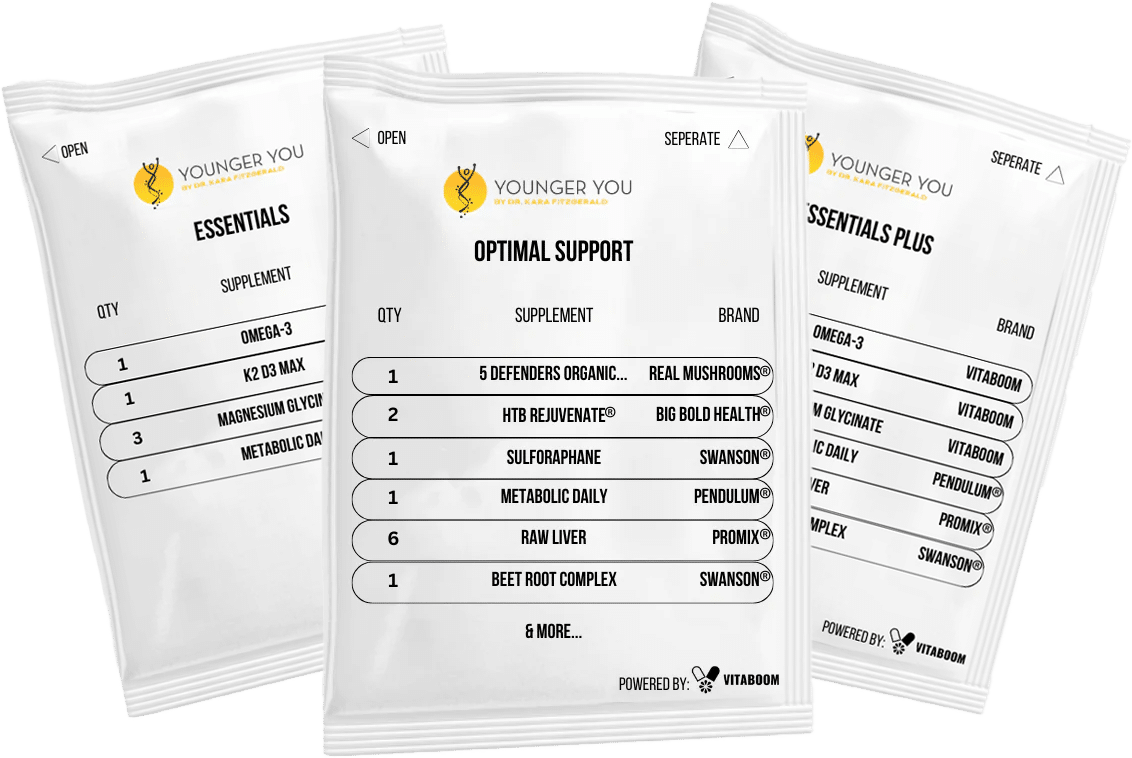
Younger You Daily Supplements are Now Here!
What could be more convenient than having your daily supplements all pre-portioned in one pouch? Choose your level to get the combination of supplements that’s right from you. Monthly subscription available.
(note you’ll be leaving www.drkarafitzgerald.com to go to www.vitaboom.com to complete your purchase)

Related posts