
Fertility Preservation Beyond Egg Freezing
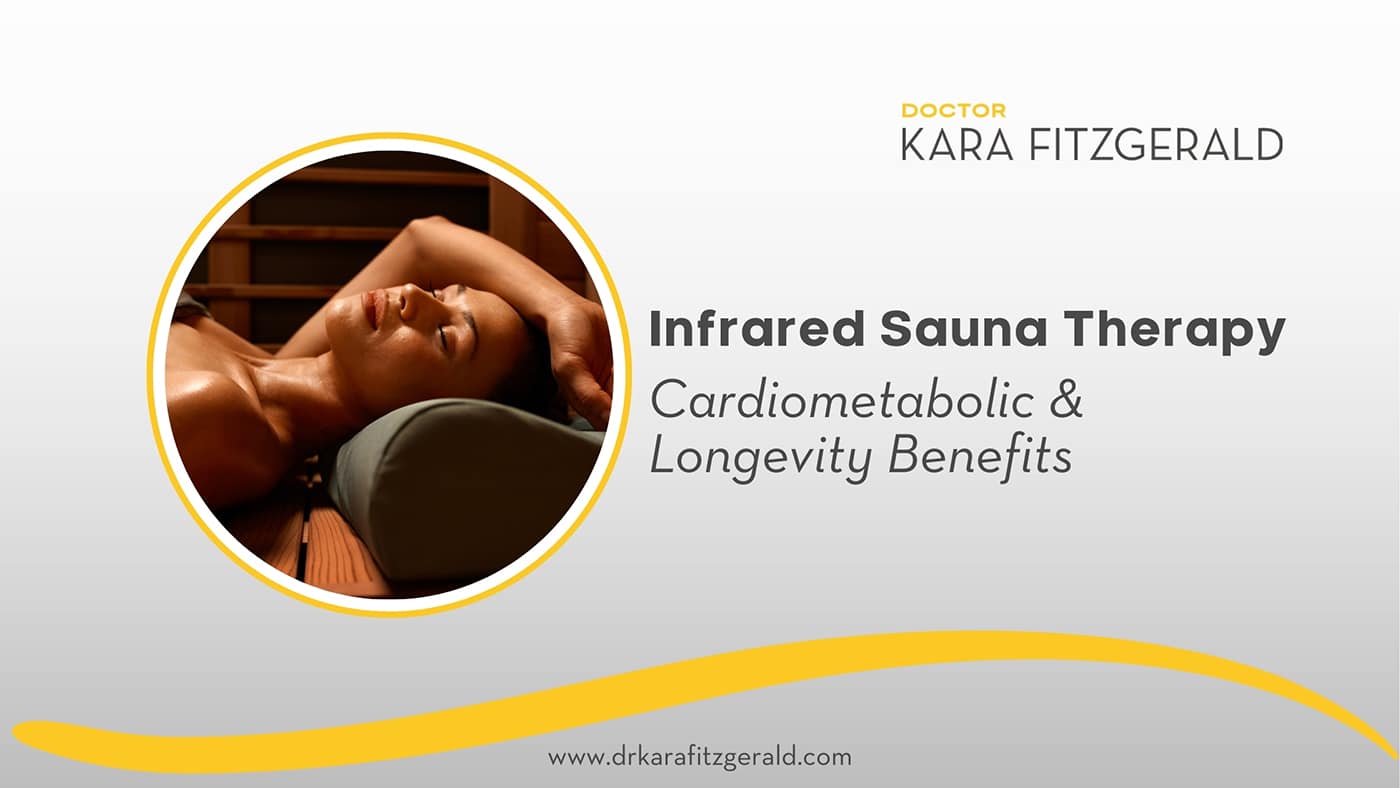

Save up to $1,600 on your sauna purchase, with additional savings throughout the year, using this special link.
Functional medicine often focuses on nutrition, exercise, and stress management as the foundational pillars of health. But what other powerful environmental inputs could be leveraged with greater precision? What if heat and light could be used as biological inputs in a way that is measurable and clinically relevant?
These intriguing ideas are not new. A warm bath can soothe muscles, and a little sunshine can lift mood. However, the science of targeted heat and light therapy, particularly full-spectrum infrared sauna therapy, goes beyond relaxation. When integrated thoughtfully into preventive care, this combination of heat and light may support core biological systems tied to cardiometabolic resilience and healthy aging. Let’s explore the evidence and the mechanisms that support it.
Heat and Light as Biological Inputs
First, it’s essential to reframe how heat and light are understood. These are not merely passive experiences. In controlled therapeutic doses, both act as measurable physiological inputs that can powerfully influence cellular signaling, circulation, stress responses, and metabolic regulation.
With heat exposure, blood redistributes toward the skin, heart rate rises, and blood vessels dilate to dissipate heat. This is one reason sauna-style heat can look “exercise-like” on a heart-rate monitor, without being what we are used to calling exercise.
Light adds another layer. In PBM (photobiomodulation) research, red and near-infrared wavelengths are studied for their interactions with cellular photoreceptors and downstream signaling (including effects on nitric oxide), with outcomes that depend heavily on wavelength, dose, and tissue context.
The key here is that the method of delivery, the dose, and the consistency of use determine the outcome. It’s not about the volume of sweat you produce or how hot the air around you feels. It’s about cellular responses and dose-dependent adaptation.
Advances in infrared technology now allow clinicians and patients to deliver these inputs with far greater precision than a traditional dry or steam sauna, targeting tissues to generate distinct and complementary biological effects. For example, in a Sunlighten infrared sauna, patented SoloCarbon® heaters emit peak wavelengths of near-, mid-, and far-infrared with added red light. This enables a sauna user to customize their sauna session to their immediate needs or choose from preset programs that address long-term goals such as heart health or muscle recovery.
Heat vs. Light: What’s Doing What?
Heat and light are not the same signal, even when they show up in the same device.
Heat is a hormetic stressor. It raises body temperature and triggers protective stress responses. In a controlled human heat-stress study, circulating HSP72 (heat shock proteins) increased by approximately 49% after passive heat exposure (see below for the benefits of HSPs).
Red/near-infrared light (photobiomodulation or PBM) works primarily through cellular photoreceptors, not by heating tissue. One review explains that cytochrome c oxidase (CCO) “drives oxidative phosphorylation for… ATP production” (energy production). PBM is thought to interact with cytochrome c oxidase (CCO), the mitochondria’s “final step” enzyme, helping electrons delivered by cytochrome c move more smoothly through the energy pathway, which can increase ATP (cellular energy) and trigger downstream signals involved in repair, resilience, and reduced inflammation.
Hormesis: Getting Stronger Through Beneficial Stress
To understand how this works, it helps to start with a cornerstone principle in biology: hormesis.
Hormesis describes a phenomenon in which a low dose of a stressor elicits a beneficial, adaptive response. Exercise is a classic example: you apply temporary stress to your muscles and cardiovascular system, and in response, your body rebuilds itself to be stronger and more resilient.
Therapeutic heat, such as sauna exposure, including far-infrared saunas, acts as a mild hormetic stressor. It activates protective adaptive pathways, most notably by inducing the production of Heat Shock Proteins (HSPs). Studies have shown that a single far-infrared session increased circulating HSP70. These essential proteins act as “molecular chaperones,” helping to maintain cellular protein structure, prevent misfolding, and support the cell’s ability to withstand stress. It’s a profound mechanism for building cellular fortitude from the inside out when the dose is appropriate.
This is also where “more is better” can backfire. Overly heated, intense sessions, poor hydration, skipping cooldown, or pushing past warning signs can reduce benefit and increase risk, especially in people with cardiometabolic disease, autonomic dysfunction, impaired temperature regulation, or taking medications that affect thermoregulation.
Mitochondrial Health: Where Heat and Light Intersect
So, where does this hormetic response have the biggest impact? One of the most exciting areas of research lies at the intersection of infrared therapy and mitochondrial health.
Our mitochondria are the powerhouses of our cells, but they do far more than just produce ATP. They are critical regulators of cellular signaling and are deeply involved in the aging process. The interaction of infrared light with photoreceptors in our cells appears to directly influence mitochondrial function, in ways that are both wavelength- and dose-dependent.
Research suggests that therapeutic heat and red/near-infrared photobiomodulation can enhance mitochondrial efficiency, improve the oxidative balance within the cell, and even stimulate mitochondrial biogenesis, i.e., the creation of new mitochondria. What’s fascinating here is the direct relevance to our metabolic flexibility, energy levels, and overall aging trajectory. Supporting our mitochondria is a key component of any longevity-focused protocol, and infrared therapy offers a powerful, non-pharmacologic tool for doing just that in the right context.
Cellular Cleanup and Reduced Inflammation
Beyond energy production, infrared therapy also appears to influence two other key hallmarks of aging: cellular cleanup (autophagy) and inflammation.
- Cellular Cleanup: Repeated exposure to therapeutic heat is shown to influence signaling pathways related to autophagy, the body’s vital process of clearing out damaged cells and cellular components. By enhancing circulation and metabolic activity, infrared therapy can further support this continuous process, which is critical for long-term health.
- Reduced Inflammation: Chronic, low-grade inflammation is a primary driver of cardiometabolic disease. Light therapies have been studied for anti-inflammatory signaling effects in certain contexts. When combined with heat-induced vasodilation (widening of blood vessels), it may help modulate our physiological stress response and shift the body’s baseline level of inflammatory activity toward a more balanced set point over time with consistent use.
Cardiometabolic Health: A Core Clinical Application
This brings us to another clinically relevant benefit of infrared therapy: supporting cardiometabolic health.
The endothelium (the lining of blood vessels) is an active organ that helps regulate vascular tone, clotting balance, and inflammatory signaling. Thermal therapy has been studied for its potential to support endothelial health, and consistent heat therapy has been associated with improved endothelial function, including vascular dilation. These improvements also lead to enhanced circulation, which means better delivery of oxygen and nutrients to other tissues.
Across clinical reviews, these heat-induced vascular effects show some of the most repeatable benefits of sauna exposure, with plausible mechanisms tied to enhanced endothelial function and healthier hemodynamic responses. Taken together, this supports sauna (including infrared protocols in select populations) as a practical adjunct to foundational care.
Infrared vs. Traditional Sauna: Why Delivery Matters
The mechanistic differences between an infrared sauna and a traditional sauna are important.
Traditional saunas rely mainly on ambient heat. They heat the surrounding air to very high temperatures, which in turn heats the body. Infrared systems work through thermal radiation, which heats the body directly.
This allows for a much deeper tissue interaction at a lower, more tolerable ambient temperature. For many people, this improved temperature tolerability is a key to enabling the consistent, repeated use needed to see durable biological benefits. That “consistency” point is not trivial: the best therapy is the one you can use safely, repeatably, and at an appropriate dose for the individual without overshooting recovery capacity.
The 80% Rule
“Typical sauna sessions consist of short stays in the sauna room, which is interspersed with cooling-off periods (swim, shower, or a period at room temperature). The duration of stay in the sauna room depends on the comfort and temperature of the sauna bather, but it usually ranges from 5-20 minutes …” – Laukkanen et al.
Integrating Infrared Therapy into a Wellness Practice
When evaluating wellness tools, it’s best to prioritize approaches that are credible, evidence-based, and align with a holistic view of health.
As part of a broader preventive strategy, Sunlighten infrared saunas stand out for longevity framing that centers on five pillars of healthy aging: mitochondrial health, cellular cleanup, gut health, stem cell activation, and inflammation. Sunlighten sauna systems are also designed with low EMF output and material safety in mind, which is important for supporting frequent, therapeutic use.
Where Infrared Therapy Fits in Preventive Care
Infrared therapy is a powerful adjunct to foundational health practices. It’s most effective when used consistently as part of a broader strategy focused on long-term healthspan, not short-term symptom suppression. It is not, and should not be, a replacement for a healthy diet, regular exercise, necessary medical care, or appropriate clinical follow-up.
Contraindications and Cautions
It’s important to note that although heat therapies can be well tolerated, they aren’t for everyone. Always consult a clinician beforehand, especially in the case of a heart condition. Treat dizziness, nausea, chest discomfort, or unusual shortness of breath as stop signs, and seek medical guidance if they persist.
Final Thoughts
Heat and light are biological signals, not wellness trends. And for those seeking evidence-based, non-pharmacological ways to support cellular resilience, cardiometabolic health, and healthy aging, infrared sauna therapies that combine targeted heat with specific wavelengths of light may be a valuable addition to a comprehensive, personalized plan. The science is compelling. It offers another exciting frontier in functional medicine worth watching as the evidence base continues to grow.

Written by:
Sunlighten saunas
Since 1999, Sunlighten has been committed to innovating infrared, red light, and cold therapy that empowers people to improve their vitality and longevity. Our patented SoloCarbon® technology rejuvenates the body by delivering the highest quality and quantity of absorbable infrared energy — proven to be up to 99% effective. Today, we hold 50+ patents and are trusted by 200+ medical professionals and wellness experts worldwide. Our technological innovations are fueled by a passion to make a difference and to bring light, hope, and happiness to people everywhere.
Sunlighten saunas are not a medical device as defined by Section 201(h) of the Food, Drug & Cosmetic Act. Sunlighten provides general information relating to various medical conditions for informational purposes only and is not meant to be a substitute for advice provided by a doctor or other qualified health care professional. Please consult with your physician regarding diagnosis or treatment.
Related posts