
Why Chronic Disease May Begin Before Birth

Don’t forget to Become a DUTCH Provider today to gain access to free educational resources about the DUTCH Test, expert clinical support, comprehensive patient reports, and peer-reviewed and validated research! Learn more at dutchtest.com/for-providers.

For 50 years, Biotics Research Corporation has utilized “The Best of Science and Nature” to create superior nutritional supplements, available exclusively to healthcare professionals.

Timeline is a Swiss-born longevity brand founded by scientists, doctors and innovators on a mission to extend healthspan through clinically proven science. At the core is Mitopure®, a pure and patented form of Urolithin A, shown to improve mitochondrial function — a key hallmark of aging.

A modern patient lab testing experience, powered by provider expertise.

The Mira Hormone Monitor transforms episodic lab draws into continuous hormone trends.
As I reflected on the conversations in this episode – and on the remarkable speakers joining us for this year’s Functional Medicine Is Longevity Medicine Masterclass – I was struck by just how much the lens of longevity medicine is expanding. We explored exciting new science, emerging technologies, and powerful clinical insights, but we also found ourselves asking deeper questions about what it means to be human, how we want to live, and what truly supports a long and well-lived life.
I think you’ll appreciate the breadth of perspectives in this episode and the reminder that the future of longevity medicine can be both scientifically rigorous and deeply human. ~DrKF
The Future of Longevity Medicine Starts Here
Longevity medicine is evolving beyond biological age and biomarkers to encompass the interconnected factors that shape cognitive, metabolic, reproductive, and whole-person health. In this special episode of New Frontiers in Functional Medicine, Dr. Kara Fitzgerald brings together conversations with Dr. Dale Bredesen, Dr. Kat Toups, Dr. Peter Diamandis, Dr. Aviva Romm, and Dr. Casey Means to examine emerging research, clinical innovation, and the broader questions redefining healthspan and longevity care.
Functional medicine practitioners will explore personalized approaches to cognitive decline, the potential role of AI and exponential technologies in healthcare, evolving frameworks for PCOS and women’s metabolic health, and the importance of meaning, connection, and lived experience alongside measurable health outcomes. From clinical research and biomarkers to systems-based assessment and lifestyle medicine, this episode offers practical context for integrating a more comprehensive, patient-centered approach to longevity into clinical practice.
In this episode of New Frontiers, learn about:
- Personalized precision medicine for cognitive decline
- Randomized controlled trial findings in Alzheimer’s disease
- Cognitive performance, neuroplasticity, and biomarker outcomes
- AI, exponential technology, and the future of medicine
- The enduring role of lifestyle medicine in longevity
- Reproductive health as a vital sign
- PCOS, metabolic health, and whole-person care
- Lifestyle, environmental, hormonal, and psychosocial influences on women’s health
- Mindset, connection, stewardship, and meaning in healthspan
- Nature, human connection, and the broader dimensions of longevity
Dr. Kara Fitzgerald: Hi, everybody. Welcome to New Frontiers in Functional Medicine, where we are interviewing the best minds in functional medicine, and today, of course, is no exception. I am excited to be bringing you a series from our upcoming September 18 and 19 live masterclass. This is our second year doing it, Functional Medicine is Longevity Medicine, and we have an incredible lineup.
Dr. Kara Fitzgerald: Hopefully you joined us last year. If you didn’t, let me tell you that we had over 8,000 people registered, we had over 3,000 people in live attendance, we had almost 110 countries in representation, and we just have a rock star lineup of scientists, clinicians, educators, all here to let you know, the functional medicine clinician, that indeed we think functional medicine is longevity medicine, and we want you to be best positioned to carry that out. We want you to understand as functional medicine providers that you’ve got this. So to that end, I’m going to share with you some extraordinary interviews that we had this year to hopefully whet your appetite to go to FunctionalMedicineIsLongevityMedicine.com and sign up for what’s going to be another incredible masterclass.
Dr. Kara Fitzgerald: The conversation around longevity medicine, and our first conversation last year was letting you, the functional medicine provider, know that you’re well equipped to deliver good quality longevity medicine through a functional lens. And we would argue that you are, as a functional medicine-trained clinician, the best person to do the job.
Dr. Kara Fitzgerald: This year is different in that the lens of what longevity medicine/functional medicine is has expanded. In my experience of participating in these interviews and these dialogues with people, to be, yes, all of the hard science, all of the really interesting science, all of the new tools that you can bring to practice, but also the soul journey around longevity.
Dr. Kara Fitzgerald: What it is to be human, what it is to have a health span. Some very interesting conversations in that space as well and it’s very satisfying. For me, it’s expanding the lens on what all of this is about. And there’s kind of a balancing or a reckoning happening, where again we’re moving away from the obsession with biological age reversal, although, arguably it’s not a bad obsession, but really to wrestle with more granular and perhaps impactful questions around what it is to be human. Why are we here? How do we live our best lives outside of the cold plunge or the kettlebells? How do we live our best lives? What does that look like for us? Anyway, you’ll hear the breadth of it. And as always, I think we as functionally trained clinicians are best suited to bring forward this information, this conversation, these interventions to our patients.
Dr. Kara Fitzgerald: And again, I also want to remind you that we love our community. We need you, we thrive on the exchange of ideas. I love being in the chat room and hearing what you have to say, reading what you have to say, sharing my own thoughts, et cetera. So our intention is to build and nurture this community and have you walk with us and share with us your ideas and how this will hopefully expand you, expand your practice in some way.
Dr. Kara Fitzgerald: The field is moving quickly. Again, we’re going to be touching on some of the latest science we’re going to be touching on tools that you can begin to incorporate in practice almost immediately. And we’ll also be talking about AI. Again, you can’t miss the AI conversation. It comes up all over the place and it’s an important, important, important conversation for us to be reckoning with. And you’ll hear a real breadth of thoughts on AI and bringing AI into practice.
Dr. Kara Fitzgerald: We will be considering escape velocity, longevity technologies that are perhaps out there, if you will, or you maybe really be excited about them and gunning for escape velocity yourself. And then we’ll be talking about some really nourishing feet on the ground, toes in the sand, diet and lifestyle themes as well. So the full gamut will be there. And in fact, from some of the perhaps most extreme thinkers, we may be hearing some pretty down-to-earth stuff. So all can coexist. And I think that’s one of the cool things about this space.
Dr. Kara Fitzgerald: Today I’ll be sharing with you four excerpts from four conversations that I already had. Again, this is to whet your appetite to attend the Functional Medicine is Longevity Medicine Masterclass. First up, I will be talking to Dr. Dale Bredeson and Dr. Kat Toups. They will be sharing with you the new results from their latest trial. Then we’ll circle over to Dr. Peter Diamandis. He is a visionary in the future of humanity and AI.
Dr. Kara Fitzgerald: Next up is Dr. Aviva Romm. This is almost an about face conversation, very grounded in her perspective and approach to longevity. And then finally, Dr. Casey Means is back. I’m absolutely thrilled and honored to be introducing to you her first appearance back on camera since her Surgeon General nomination. You’re going to love this podcast, and yes, indeed, all five of these speakers will be returning to the Masterclass, so you don’t want to miss that. Be sure to sign up at FunctionalMedicineIsLongevityMedicine.com.
Dr. Kara Fitzgerald: I want to introduce you to some colleagues and friends that are going to start off this podcast, Dr. Dale Bredesen and Dr. Kat Toups. Of course, Dr. Bredesen has been on the podcast before, but now he’s back. Both of them are back, and they’re going to be talking to us about this extraordinary study that’s out, this extraordinary clinical trial that they’ve just conducted. So, Dr. Bredeson, if you’re not sure who he is, Dr. Bredesen is an internationally recognized neurologist with a specialty expertise in the mechanisms of neurodegenerative diseases. He is a senior director at Precision Brain Health at Pacific Neuroscience Institute and Chief Science Officer at Apollo Health. Decades of experience translated into the ReCODE (Reversal of Cognitive Decline) protocol. He’s held positions at UCFS, UCLA, and UCSD. He also served as the founding president and CEO of the Buck Institute for Research on Aging for 10 years.
Dr. Kara Fitzgerald: Dr. Kat Toups, she’s been the principal investigator on over 100 clinical trials. That’s incredibly impressive to me. And she’s got nearly four decades of clinical experience as a functional medicine psychiatrist. She’s IFM certified, and she’s held academic and leadership positions at the University of California at Davis. In this segment, again, we’ll be talking about their latest research. This is a randomized controlled clinical trial that expands on their early pilot investigations with just astounding results.
Dr. Kara Fitzgerald: Dale, Kat, you have been colleagues, just incredible humans in the world of functional medicine, of systems medicine, diving into doing some of the most impressive, meaningful science out there in reversing MCI and changing the trajectory of not only how we think as physicians and practice medicine, but improving the lives of countless individuals. You’re such an inspiration for so many of us. So first of all, I just want to start by saying thank you, thank you, thank you.
Dr. Kara Fitzgerald: It’s been years that we’ve been dialoguing and cheering you on and bringing as much publicity to the incredibly important work you’re doing. And here you are on the heels of having conducted an extraordinary, first-of-its-kind randomized control study with results that are so meaningful and we’re going to dig into those today. Dale, Dr. Bredesen, can you just walk us through this paper? Give us an overview of this monumental publication that we’ll all have access to shortly.
Dr. Dale Bredesen: Yeah, thank you, Kara. So the idea here was to take what we’ve all studied for many, many years and translate this into what’s a meaningful outcome for human beings. And the fundamental change, as someone who worked in the lab for 30 years on this, the fundamental change, and it fits very well with precision medicine, functional medicine, is that these diseases we’re going after, like Alzheimer’s, like Parkinson’s, Louis Body, frontotemporal dementia, are no longer thought of as single modality diseases where you get a virus and you get the disease. Boom. These are more complex chronic diseases.
Dr. Dale Bredesen: You have to identify, which we did in both the trial that Kat and I worked on previously and this current trial, you have to examine all the different pieces, all the different contributors. And as you know, they’re often different for different people. And then you have to address those. And you have a threshold where you have supply for each neural subsystem and you have demand, and people with disease have more demand than supply, and they are downsizing these various neural networks. And you have to bring the demand up. You’ve got to bring this supply up and the demand down. And for the first time with these trials, we can actually see all the different things that are contributing, and people respond. In Kat’s case, every single one of her people got better, which was fantastic.
Dr. Kara Fitzgerald: That’s extraordinary. All right. So this was a randomized controlled trial. Just walk us through the structure of the intervention, Dr. Toups.
Dr. Kat Toups: Yeah, so we had seventy-three patients. This study was done at six different locations around the country, so different investigators. We had two thirds of the patients randomized to the active precision medicine treatment intervention, and one third were randomized to what we call standard of care neurology. So the patient goes to their neurologist and says, I’m having cognitive decline.
Dr. Kat Toups: They may get some testing, they may get some limited lab workup, and usually in the early phases they’re told, okay, eat right, sleep right, take care of yourself, come back in a year. And we’ll see you when you need medication. So we asked our control group to try to not make any changes in their diet, their lifestyle, their supplements, things like that. Obviously if something came up medically that needed to be addressed, of course we’re going to allow them to do that.
Dr. Kat Toups: So the plan was to compare these two groups against each other so that we could look at whether the interventions that we do with our precision medicine approach were superior to the watchful waiting group. And we had a large battery of tests that we do as Dr. Bredesen said, we want to identify the treatment targets. That’s the most important thing here.
Dr. Kat Toups: It may be one thing that’s a trigger that breaks the camel’s back and precipitates a cognitive decline like a COVID infection or anesthesia, but there’s all of these underlying contributory factors. And so we see our job as important to identify what are the treatment targets, and then let’s try to rectify all of these treatment targets for our patients. Now, sometimes we can’t do all that at once, but we do test everything up front so we can identify those things and I can tell you more as we go along some of the things we found. We do have our preliminary paper out in preprint. And I hope by the time this airs that our peer reviewed paper will be published. So we have not gone through the final peer review yet, but it’s in progress. But the really exciting news is that the results that we got in this study were phenomenal. And in our preprint paper, people can take a look at the graphs that show the difference in each cognitive modality that we investigated and we investigated quite a few.
Dr. Kat Toups: The separation between the precision medicine group and the standard of care group was highly statistically significant, very highly significant in every marker that we did, except the MOCA, and the MOCA had a clear separation, but it didn’t quite reach the threshold of significance. And we have some ideas about that. There’s no other study or any other modality that really comes close to the results that we saw in this study.
Dr. Kara Fitzgerald: Can you walk us through some of the specifics, Dr. Bredesen, of your findings?
Dr. Dale Bredesen: Absolutely. When we look at this sort of approach, we think of this in terms of seven basics and two specifics. So the seven basics, as you know well, are a plant-rich, mildly ketogenic diet, regular exercise, both on the aerobic side and on the strength training side, sleep and the typical parameters we’re looking for are at least seven hours of sleep, 90 minutes of REM, 60 minutes of deep, and and an oxygen saturation of 94%. So we’re trying to optimize sleep.
Dr. Dale Bredesen: Stress management – the clinicians you used HeartMath, for example. So you want to manage that. And then of course, brain stimulation and things like Auragen™ [light system] that Kat used, and brain stimulation and brain training as part of that. Basic detox and then some targeted supplements. Those are the seven basics. Then the two specifics are just what Kat alluded to earlier, are there toxins or infections that are out there?
Dr. Dale Bredesen: And then as she showed earlier and as we found in the previous trial, most of these people, the vast majority, have some sort of toxin or or infection exposure, often both. And so you have to identify those and treat them. So those are the seven basics, the two specifics. And you can see as people do this, you can see this. And I should add, I just got back from an assisted living facility, the first one to do a trial like this.
Dr. Dale Bredesen: They just did the same sort of thing and got almost identical results to what Kat is describing. So it’s just wonderful to see that these things can be done. And you can see time after time after time, as you do the right things, just as you’d expect from the scientific background here, you are changing cellular signaling. You’re changing synaptogenesis Just as you showed in your studies with the changing aging rate, you’re now changing synaptogenesis and synaptic maintenance.
Dr. Kara Fitzgerald: That’s extraordinary. Actually just thinking, I know you did some epigenetic investigations and did indeed see epigenetic changes specifically suggesting neuronal – improvement to neuronal function. I don’t remember the specific genes, but they are kind of validating. To give me some unpack some of the results, like some of the findings that just really wowed you. And and whether they were you anticipated seeing it or were you guys really kind of blown away as well?
Dr. Dale Bredesen: Yeah.
Dr. Kat Toups: We did anticipate it because we’ve been doing this for so long. And the results certainly tracked along with our first proof of concept trial. But those of us working in this area have been doing this clinically now for quite a number of years. So we all have our anecdotal stories of all our success. But for us to do this in the context of a randomized controlled trial certainly is exciting. I’ll let Dale tell you some of the results because he’s so good with remembering the statistics, but I’ll just translate it to the real changes in people. And we all have plenty of wonderful success stories. But as he mentioned in my cohort of patients, every single patient had dramatic improvement. Every single patient but one was testing completely normal by the end of the study. The one that wasn’t completely normal in Hermosa had increased her CNS vital signs neuropsych scores by more than fifty percent and as you know she was able to return to work in her seventies. So I mean just to see the human side of it beyond the statistics is so good. But I’ll let Dale tell you the statistics.
Dr. Dale Bredesen: Yeah. So as you alluded to, Kara, often you learn the most from what you didn’t expect. And so, as Kat said, we did expect to see improvements in cognition. And indeed, neurocognitive index, the overall look at cognition, p < .001 (less than). So these are not small changes that have been reported in some other studies. These were very significant. And you can look at the graphs as Kat said, these are freely available online in the preprint. You can look at the striking differences.
Dr. Dale Bredesen: Composite memory, just striking differences. Again, p < .001 (less than). And processing speed, p < .01 (less than). So the pushback has always been why not a thousand people? Well, that’s the whole value of statistics. They tell you how much you have to do to see a result that would be more than if it and by chance. And so these were dramatically improved. Executive function was improved as well, striking improvements in biochemistry as well, in the various parameters. So all that fit together. Now here’s what we didn’t expect. There, and we now I think are beginning to understand something that hadn’t been clear before. When we looked, as you said, we looked at the epigenetics, the main thing that came out of the epigenetics was synaptic plasticity, the neuroplasticity-associated markers and sites were the ones that changed the most.
Dr. Kara Fitzgerald: Mm-hmm.
Dr. Dale Bredesen: But when you looked at the so-called Alzheimer’s biomarkers, p-tau 217, GFAP (glial fibrillary acidic protein), NfL (neurofilament light chain), and Ab42/40 ratio, there were only modest changes. And in fact, for most of those, they did not reach statistical significance. So what we’re seeing now is fascinating. What’s happening is you look at this phenomenon as people start to have cognitive decline. Well there is a functional aspect, which is how many functioning synapses do you have? You should have about 500 trillion. You’re starting to lose those with this process. But then you’ve got the other piece, which is ongoing inflammation. And what we now realize is that when you get this amyloid, for example, this is an antimicrobial peptide. And so this allows you to go for years with a pre-inflammatory component. You literally surround, sequester, and inactivate these pathogens without initially creating any major inflammation, which compromises function. So what happens is, for example, as you’re removing amyloid, you’re improving the markers, but you’re not improving the cognition. On the other hand, when you’re –
Dr. Kat Toups: Let’s just say what he just referred to was that anti-amyloid medication.
Dr. Kara Fitzgerald: Yes, yes, exactly.
Dr. Dale Bredesen: Yeah.
Dr. Kat Toups: They can remove the amyloid but they’re not translating into meaningful improvements long term.
Dr. Dale Bredesen: Exactly. And on the other hand, we have the complement here where we’re improving the energetics, we’re improving synaptic function, but we’re not yet seeing a dramatic reduction in amyloid. So this is why we mentioned in the paper a good idea to potentially look at putting these together. And could we now do even better long term? We now know that we’ve had people over ten years who’ve sustained improvement. That was reported about a year and a half ago. So we know that we can get long-term outcomes. But the surprise was that the cognition, these dramatic cognitive improvements, were not attended, at least during the nine month trial, by dramatic improvements in the biomarkers for Alzheimer’s.
Dr. Kara Fitzgerald: This is really exciting stuff. It’s extremely empowering in validating the power of functional medicine. During the masterclass, we will go deeper into some of the personalizations that both Dr. Bredesen and Dr. Toups bring to their work in this trial. So you can begin to think about it or if you’re already using ReCODE, perhaps evolve it. I think this is essential listening for any of us working with adults in the early stages of cognitive decline, but also for all of us as we age to protect brain health. Remember, FunctionalMedicineIsLongevityMedicine.com to sign up for the Masterclass and join us for the deep dive into Drs. Bredesen and Toups’ research.
Dr. Kara Fitzgerald: Peter Diamandis, of course, you know who he is. And it’s just an honor that he has brought his interesting, really brilliant angle to our Masterclass. I appreciate his support and his interest. Peter is considered to be one of the world’s 50 greatest leaders. This was at Fortune magazine. He is a pioneer in innovation, longevity, and exponential technologies. He’s a founder and executive chairman of XPRIZE Foundation, which has driven more than 10 billion in research and development across space, health, robotics, climate, quantum, and of course, artificial intelligence. Peter and I started the conversation about how AI is revolutionizing the practice of medicine and what that means for us as providers. Peter has been tussling with this, I think, at a level few of us have gone towards.
I’ve heard him in this conversation over the years. And this time we go deeper and we can see that his thinking, as well as the tools, have expanded even further. So tune in for that. And we also talk about the role of diet and lifestyle in a world of emerging longevity technology.
Dr. Kara Fitzgerald: An interesting element of the conversation I had with Peter was his thoughts around whether aging should be classified as a disease. And if it were, the kinds of doors that might be opened for us. And again, take a listen, share with me your thoughts, because I know you’re going to have them.
Dr. Peter Diamandis: I think this is the most exciting time ever to be alive. We are beginning to truly understand and unravel the mysteries of biology, of cellular function. Those forty or fifty trillion cells in the human body are running five to ten billion chemical reactions per second per cell. And I mean you studied incredibly hard to become a physician and went through a lot of pain, a lot of time, a lot of work.
Dr. Peter Diamandis: And we’re about to witness the golden renaissance of medicine. You know, Sir Demis Hassabis, the CEO of DeepMind, I saw him at dinner about a month ago. He’s been on record about this for a while. He believes that within the next ten years, we are going to cure every single disease. All cancer, all heart disease, all inflammatory disease, all infectious disease, that AI, again, he’s the CEO of DeepMind, he’s also the CEO of Isomorphic Labs, is able to understand the root etiology of disease because there is a root etiology. There is a reason the disease occurs. It’s either a gene gets silenced or a gene gets turned on, or whatever it might be, and then able to change that and repair it. And that’s mind blowing. And I believe it. And then we have someone like Dario Amodei, the CEO of Anthropic, now the fastest growing, most valuable AI company on the planet. He also is committed to longevity and biology, and he went on record last year saying he expects that AI could double the human lifespan within the next 10 years. So these may be shocking.
Dr. Peter Diamandis: Cure all disease, double human lifespan the next 10 years. But if it’s true and you’re a physician, wouldn’t you want to be part of that revolution?
Dr. Kara Fitzgerald: Yeah. Right. Of course.
Dr. Peter Diamandis: It’s amazing to be alive now instead of back a couple hundred years ago applying leeches onto a patient or drilling a hole in their skull. Because the fact of the matter is the kind of medical practices we’ve been using over the last couple of decades are going to be viewed that way based upon what the revolution that’s coming our way. My statement to everybody is jump on the bandwagon, learn as much as you can, dive in. The education is free. Every AI system will build a curriculum for you. Tell them you want a curriculum about epigenetic reprogramming or a curriculum about organogenesis and how to grow new organs or around Insilico medicine and designing new drugs, whatever you want to learn, don’t stop learning. But don’t learn looking backwards. Learn looking forwards.
Dr. Kara Fitzgerald: I want to just say that you brought this up back in 2022. It was around when our study came out and so I had the stage at A4M and then you were on later as one of the main keynotes and you said something similar and it kind of was sticky for me at that time. You’re like, look, because you’re talking to a bunch of doctors, if you guys aren’t using AI, if you aren’t thinking about incorporating it and how to do it, then the boat’s leaving. You gotta get on it. And there was an urgency in your message. I think you couch things from a framework of positivity generally speaking, but there was an urgency there and it sounds like that’s just grown.
Dr. Peter Diamandis: Yeah, it’s it’s I think we change how physicians are trained in medical school, internship and residency. I think we start to sequence everybody who enters a hospital and everybody who’s born. I think we will begin using these tools. You know, they’re incredible products like OpenEvidence out there. And I think the problem with medicine is that it is such a long process for adopting the latest tools and technologies. A physician graduates having gone through this crazy educational process of four years of college, four years of medical school, and some amount of postgraduate training and is then expected to know everything.
Dr. Peter Diamandis: I think they become a little bit recalcitrant in their willingness to try new things and to remain educated. So AI is going to just disrupt those who are standing still. It’s just like you’re everybody coming in with an AI diagnosis or second a second diagnosis. I think it’s ridiculous to think that they’re not. I think our medical practices, whether it’s at a doctor’s office or in a hospital, need to retool themselves for what’s coming. OpenAI and Google and Anthropic are all making free tools available. And these need to be utilized.
Dr. Peter Diamandis: I think the human to human relationship is important. I think having physicians and nurses and caretakers in the loop and delivering that. But when you say you know better than an AI system what’s going on and refuse to use that technology, you’re doing your patient a disservice. And I think again, people don’t realize how fast this is changing.
Dr. Peter Diamandis: We are seeing AI systems we’ve had over the last 50 years, 10 billion fold increase in computational power. We’re going to see a thousandfold increased computational power by 2030. and the AI systems that are coming out of the frontier labs today are superhuman in almost every single aspect. Again I think that the ossified, backward looking systems and a lot of them are dependent upon regulatory structure to uphold them from change, are going to get crushed. They’re going to get disrupted.
Dr. Kara Fitzgerald: Right. You are getting a good, great night’s sleep, you’re crushing your veggies, you’re exercising, you’re eating a bunch of protein. Is this leap forward going to allow us to bypass lifestyle?
Dr. Peter Diamandis: Good question. So I actually had a conversation with my sister and my physician this morning about Peter, you’ve got to change your lifestyle. You’ve got to slow down. You are racing, racing, racing. And we are a mind and body as well. And so I don’t think it will bypass lifestyle. I think medicine can patch up lifestyle to a certain amount, but I do believe that lifestyle is still critically important. I need to learn that lesson more than anything else.
Dr. Kara Fitzgerald: Do you think aging is a disease?
Dr. Peter Diamandis: I think qualifying it as a disease is logical and useful for regulatory standpoints. It’s a process. But a disease is a process as well. I think the fact of the matter is that as the public thinks about aging and death as natural, as long as you think of it as natural, then you’re not going to fight about it. If you think about it as unfortunate and something that can be solved, then you have a shot at doing something about it. So, as soon as the government starts, the logical construct that all morbidity and mortality is to a large degree a function of aging. And if you could slow and stop aging, you’d reduce morbidity and mortality, I think that’d be a smart move.
Dr. Kara Fitzgerald: Interesting conversation with Dr. Diamandis, was it not? In the Masterclass, we’ll be going into the implications of data explosion. We’ll be talking about the extraordinary achievement that is XPRIZE. We’ll dive a little deeper into AI and we’ll talk about Peter’s personal longevity protocol, which I suspect you’ll find rather down-to-earth and interesting. So be sure to jump over for that. And you again we’ll talk about it in the chat. Functionalmedicineislongevitymedicine.com. Sign up.
Dr. Kara Fitzgerald: Dr. Aviva Romm, likely you’re familiar with her work. She is a Yale-trained, board-certified family physician, herbalist, and midwife. She’s a pioneering voice in women’s integrated health and midwifery care. She’s the founder of Yale Integrative Medicine Program and the Women’s Integrative Health and Medicine Institute.
Dr. Kara Fitzgerald: I have been aware of Dr. Romm’s work for years. Actually, before I went to medical school, we both lived in Connecticut and she’s just such a highly regarded person in Connecticut and really at this point around the world. In this segment, Aviva and I dialogue about how the menstrual cycle and reproductive health are really the sixth vital sign for women across the lifespan and how we can think about that, how we can frame that for ourselves in practice with our own patients. We also talk about the renaming of PCOS, why yes, indeed it’s important, but it doesn’t go far enough. Take a listen.
Dr. Aviva Romm: So for everyone who doesn’t know, PCOS has been called polycystic ovarian syndrome or ovary syndrome. PMOS is now polyendocrine metabolic ovarian syndrome. And first of all, PCOS has been a bit of a misnomer. First of all, it sort of centers what’s happening in the ovary and it suggests that those follicles that are in developmental phase but never really mature are cysts. I mean, technically it’s a fluid-filled sac. So maybe one could think of that. But problematic to that also is that most women don’t have the classic or characteristic string of pearls on an ultrasound. And so have been told for decades, if you don’t have that, you don’t have PCOS.
Dr. Aviva Romm: And that has left a lot of women not only untreated but unacknowledged. And so that nomenclature change is also reflective of the importance in making a diagnostic rethinking of the whole condition and saying we can base this on symptoms because labs, as you know, are not always confirmatory either. Importantly, though, it’s taking the focus off the ovaries and going to this root cause approach, right? What is actually causing what we’re seeing manifests with these symptoms and these lifelong potential consequences of this multi-system condition. And so it it really reframes what we all have been doing for decades, this condition or syndrome as a metabolic syndrome that shows up in multiple different aspects of the endocrine system, which can be ovarian production of hormones, it can be pancreatic and insulin related, it can be adrenal, cortisol, and stress related, and then of course everything going on in the HPA axis above that is in our pituitary hypothalamus that controls the ovaries, the thyroid and the adrenals, right? So that’s really important. And I think it’s raising awareness. It’s going to change the diagnostic lens and it’s going to give us a reframe.
Dr. Aviva Romm: What I think it doesn’t actually do, and I I think this is most problematic, is that essentially the medications that most physicians are using to treat PCOS or now PMOS are already medications that either address the endocrine system vis-a-vis the ovaries or brain and ovaries, or metformin, which is for metabolic syndrome essentially. It’s addressing insulin– the excess of glucose that’s leading to that insulin resistance. So even if we change the name, if we’re still just doing the same protocols, we actually haven’t changed anything. We’re just going to diagnose more women and treat more women, which is great. We can use the metformin, we can use the spironolactone, we can use a GLP1, but we’re still not going to that deeper level. So we’re naming it differently, we’re acknowledging what it is, but we’re not saying, okay, but why are women having metabolic dysfunction? Why are women having polyendocrate dysfunction? And what are we going to do about that?
Dr. Kara Fitzgerald: Definitely steps in the right direction feel very validating. The movement of PCOS to PMOS. I mean early in my career I remember when I would co-manage with an MD, a PCP provider, and know there weren’t cysts, knowing that I was going to be challenged in my approach to care when I had to manage and just looking, scrambling to find some laboratory data. To be able to have the interventions that I wanted to do be at least tolerated. They don’t need to be respected, maybe just at least sort of tolerated or ignored.
Dr. Aviva Romm: Yes. Just let me be. I’m going to just be invisible here. Yeah. Well, it is really important and it’s been so frustrating for so many women who have struggled from young ages. Put on the pill. I mean, this is a story I’ve seen so many times in my practice over the decades, is a woman who was put on the pill at fifteen because she had really irregular periods. She had acne. She maybe also had some depression and other related symptoms. She’s on the pill for 15, 20 years. She comes off the pill to try to get pregnant, and her symptoms come flooding back in, and then she struggles with getting pregnant. And I use the pill in my practice too. I mean, it can be phenomenal for women who are struggling with cystic acne, a low progesterone, you low testosterogenic progesterone, for example. It can be a game changer for some women, but it’s still not addressing the underlying issues that once she’s off it are still there.
Dr. Kara Fitzgerald: Right.
Dr. Aviva Romm: It’s not cardiometabolically productive.
Dr. Kara Fitzgerald: You’re right. That’s right. So I’m sure that you’re doing it obviously in a full systems approach with lifestyle and diet in there. But your lens is pretty unique. The idea of reproductive health– I want to get your angle on the idea of reproductive health as a sixth vital sign across our life cycles.
Dr. Aviva Romm: So back in the mid teen 2000s, or in 2013, actually even in 2007, and then reiterated in 2013 or so, the American Academy of Pediatrics, and then ACOG kind of ratified this position, said that we need to be thinking about young girls and teenagers’ menstrual cycles as a sixth vital sign– or as a vital sign. And what they meant by that was we can’t just say, it’s period pain. It could be endometriosis. We can’t just say, it’s just weight gain. It could be what is now PMOS, but they were saying PCOS. And so they were saying we need to think more broadly to catch these things earlier, which in and of itself is an innovative statement coming from the AAP and from ACOG.
Dr. Aviva Romm: First of all, it pretty much went nowhere. It just kind of fell on deaf ears, even the second time it was picked up. But what I feel like they fell short on also is that it’s not enough to say a girl, a young woman, a teenager might be having period pain, therefore it might be endometriosis. She might be having weight gain, acne, depression, et cetera, et cetera. It might be PCOS, PMOS. That is not going under the hood enough of saying, well, why?
Dr. Aviva Romm: Why are these conditions not just happening in one in eight adult women? But why are we now seeing them at younger and younger ages? And it’s also not looking more deeply at the underlying inflammatory roots, the metabolic roots, the hormonal disruptions. It’s not looking at nutrition, it’s not looking at endocrine disruptors, it’s not looking at stress as an environmental toxin. And so for me it’s interesting because right at this moment a lot of the online, more conservative but liberal doctors are saying things like if you hear someone using the term root causes, run because it means MAHA. And I think that is so unfortunate because when I go back to my roots, no pun intended, as an herbalist, as a midwife, what all of this means is we’re looking at the exposome, we’re looking at the biopsychosocial causes and that’s very different than saying your diabetes diagnosis started the day your doctor figured out you had an elevated A1C, or that your PMOS diagnosis is just happening because you’re a woman.
Dr. Aviva Romm: So for me, the lens of this vital sign is saying that we have to think about what’s going on in our reproductive health as significantly as we would look at a change in our blood pressure. A change in our pulse, a change in our temperature, a change in our heart rate, et cetera. And when somebody comes in with a fever, you don’t just say, they have a fever because they’re running a fever. We do, I mean, it might be just a cold, it might be the flu, but if somebody has persistent fevers or has tidal fevers, we do a little bit more of a workout, right? We’re looking at the underlying causes. So that’s to me what this vital sign means, that we have to really take it seriously and not just stay on the surface. We have to go to the roots.
Dr. Kara Fitzgerald: Absolutely. And it’s a rich window into what’s happening with women because it could be because it’s exposomic, it could be a lot of different variables likely all feeding into it.
Dr. Aviva Romm: Exactly. And they’re modifiable, right? That’s the thing. So many of them are modifiable. Whether we’re reducing symptoms, reversing a condition, or preventing something from arising, these are modifiable. And that really changes the entire way that we think about illness, disease, chronicity of disease, and the body, right? I think we sort of see women’s bodies in medicine as a disaster waiting to happen or like women or lemons or being a woman is a diagnosis rather than saying, okay, we’re the canary in the coal mine because of the sensitivities our hormones have, because of the vulnerabilities that, and the way our periods show up, the way our symptoms show up, the way our reproductive health shows up, fertility, pregnancy, birth, so forth and so on. And it’s really significant when you just think about something like PMOS, right?
Dr. Aviva Romm: It affects your health so much from a metabolic perspective, then it can show up as gestational diabetes, which can have a very significant impact not just on pregnancy and birth, but that next that next generation’s metabolic health. And then that woman, if she develops gestational diabetes, has a 50% likelihood of developing diabetes later in life. So looking at this as a vital sign now is just not just lifelong for any individual woman. It’s intergenerational and it’s collectively social.
Dr. Aviva Romm: That vital sign doesn’t change when our cycles stop. In fact, we know that for women in perimenopause, those who experience more erratic cycles for more years leading up to the perimenopause may actually have higher risk of developing cardiometabolic conditions later. So diabetes, other heart disease, hypertension, high cholesterol, et cetera. We know that women who have significantly more troublesome hot flashes may also be a harbinger. Doesn’t mean it is, but it may be a harbinger of cardiovascular disease later. So we know that that is just saying – this is one of the things I don’t want to ever say – it’s just menopause.
Dr. Kara Fitzgerald: During the Masterclass, Dr. Romm will be back to talk about hormonal health for optimizing the female aging process, including how she uses HRT in her practice and some of the favorite go-to herbs for soothing the perimenopause-menopause transition and for optimizing function into our later years.
Dr. Kara Fitzgerald: Dr. Casey Means. I am absolutely honored to have spent some time dialoguing with her. She’ll also be with us in the Masterclass. We are her first appearance post-nominee for the U.S. Surgeon General. Likely you’re familiar with her work. She’s a Stanford educated physician. She’s a former surgeon. She’s the co-founder of Levels Health. And she is the number one New York Times bestselling author of Good Energy. She gives us the gift of perspective. Dr. Means has been through an extraordinary journey over the last period of time. And from that, we can hear her thinking on longevity, on what really matters, all through this experience of being nominated as a surgeon general while pregnant with her first child. She has wisdom and gravitas well beyond her years.
Dr. Kara Fitzgerald: Dr. Means, Casey, it is just an honor to have you here with us at the Masterclass. Thank you so much for making time.
Dr. Casey Means: It’s such a pleasure. I’ve so long respected you in this space. And this is actually my first interview on camera since I’ve had a baby and since a lot of things have happened in my life. And so I’m very excited to chat with you and very grateful.
Dr. Kara Fitzgerald: That’s an extra, extra honor. You’ve been through just a little bit, right? Obviously the whole planet knows that you were nominated for the Surgeon General, or at least a lot of folks do, and and you went on that journey and all of us in functional medicine, of course, were thrilled to have you, this brilliant, balanced mind going into that world and representing.
Dr. Kara Fitzgerald: Gosh, we all felt excited, and anyway. So there you are thrust into this world. But as you and I have been dialoguing, the real experience was quite a bit different than the vantage that we were seeing in the fact that you really needed to detach from engagement in the public life as you were becoming more public. And as you talk about now, during this time you were pregnant and you ended up delivering your baby at home and breastfeeding and you’ve dialogued about all of this. So you went through this wild experience that took you into an interesting grounded place. And I encourage everybody to dig into Casey’s newsletters because there are these really beautiful explorations of what life has been like for you. And it has caused you to think about longevity from a very interesting vantage point. And so with all of that, I want to punt it over to you and get your thoughts on this massive experience and where you are and some of your thoughts.
Dr. Casey Means: Well thank you. Yeah, I mean, it’s so funny. The word I think you started with was you had to detach from public life. And I think that’s the perfect word because the whole experience overall was a journey in kind of that life challenge of attachment and thinking about attachment because it was… and so many spiritual traditions talk about the idea of attachment being kind of the root of all our suffering, attachment to anything and that equanimity and stepping back and be able to observe your life with sort of peaceful, equanimous detachment is what nirvana is in a lot of these traditions. And I think that was actually the gift of this whole experience was having to go to a place of more detachment in a very in a grounded way to just experience it in a way that didn’t topple me. I was, like you said, pregnant. I was just a couple months pregnant when I was surprised to be nominated for this, kind of out of the blue, asked to serve in this way, which was such an honor.
Dr. Casey Means: And to have the opportunity to be a representative of our community, of people who have been thinking about root cause health for decades, and to sort of be an ambassador of that, that felt just so incredible. I was pregnant. This this happened in May of last year and at that time as a presidential nominee, you are required to fully, fully be silent in public life.
Dr. Casey Means: So every single aspect of my professional world in one moment was completely cut off. So no more newsletter, no social media, no podcasts, nothing. No response, not even talking to the media. And so that was fascinating because you go into the political orbit and you just enter a washing machine of political controversy and you’re kind of turned into a character of yourself. And you cannot say anything. Which was such a beautiful experience because in a way it’s almost like your reactivity is shut down. And of course you feel reactive at times, like I can’t believe this is said about me. This is so wrong. But it’s just total silence. And so that was, I mean, now a year in retrospect, just such a gift and such an opportunity to kind of go inward and really be very present for my pregnancy.
Dr. Casey Means: And to think deeply about what’s happening politically in our country, what’s happening in the health ecosystem, what’s happening in pregnancy, our birth culture, and detach from anything relating to that sort of ego that causes so much suffering because you’re just in your own orbit. And that was really beautiful. And it was an interesting time for me because my book had come out in May of 2024. That had just been such an incredible experience to share that.
Dr. Kara Fitzgerald: Hugely successful. Just wildly successful.
Dr. Casey Means: I think it hit a chord at a really interesting time where it was putting voice to what a lot of people were feeling at a moment in time where it got a lot of traction. And so the whole Make America Healthy Again movement was starting and it was just an interesting confluence of events and I was very grateful for all of that. But the book came out and then Jay Shetty and Tucker Carlson’s podcast and then Rogan and then boom, silent. Like you cannot speak. And that so that was actually, you know I think a lot about – and this kind of gets back to longevity.
Dr. Casey Means: I talk a lot and I think a lot about the relationship between human health and environmental health and how really on the atomic level, it’s all just one unified system that’s constantly transmuting back and forth. And I think that recognition of humans as a part of this much larger ecosystem of matter and energy and and that we are in dynamic flow with all of that, I think something about that brings me a lot of awe and a lot of sense of – I’m mesmerized by the human body and how dynamic it is. And I want to honor that beautiful process that’s so miraculous by living a healthy life. And I think a lot about, especially as women, a lot of the health journey, I think the health discourse has been very masculine in the sense that it’s more linear. It’s more about habits and routines. And when we do meditate on nature and think about and step back and look at the way nature operates, it’s cyclical, it’s seasonal, we’ve got tides, we’ve got moon cycles, we’ve got actual seasons. And in our culture, it’s very rare for a woman to really identify, even with our monthly cycles. IVery rarely are we’re thinking about: I’m in my luteal phase and therefore this is maybe how I should operate. People like Alisa Vitti and other amazing people who have written books about this, like in the flow, are helping us think more about that. But long story short.
Dr. Casey Means: I’ve been meditating on that a lot in my life. Like, how do we embody nature and not fight it, especially as a woman in the modern world who’s being asked to just give everything all the time, 365 days a year? And then I was given this opportunity essentially to retreat and be silent in the midst of my pregnancy. Which is actually like was a deep longing, in a funny way, on some level for me to be able to really experience that without all the hustle and all. So I was given this opportunity to enact something that I’d cognitively, more cerebrally thinking about. And I think it was really an amazing experience. And so certainly something I want to be talking more about and bringing more to the conversation is: what is living more in tune with nature? Not just using nature for our health journey, but really reflecting on what a life of of more cyclicality and phases looks like and how do we honor that in a world that’s constantly demanding consistent high performance output.
Dr. Casey Means: And where we can actually engage a little bit more with that and being in alignment with who we are as natural cyclical beings to really actually enhance our long-term health journey, not only on the physical biomarker level, but on the true satisfaction, embodiment, alignment level. And so that’s kind of the broadened scope that I’m most interested in right now, above and beyond some of the more technical aspects of science.
Dr. Kara Fitzgerald: It’s so interesting. And it’s not lost on me the almost absurd paradox. Like how you could be nominated. You were under such a spotlight, just like an overwhelming heat of spotlight, and yet here you were detached from it all. You had to. Saying yes to this journey prompted you to need to detach and really come in touch with this part of yourself that you had been thinking about cerebrally. I mean, you’ve always had a very grounded presence about you, but here you are with this massive nomination. And it prompted you to tuck into being grounded in a really beautiful way. And I can see that that’s now shaping your thinking. And I think it’s really transformed you. So you got to live in this grounded space and now it’s: how do we do this? I’m assuming you’re thinking about this in your own life, but also more broadly, in all of us.
Dr. Casey Means: Totally. I think, well, a couple things. I think the first is it goes even farther because one of my dreams was to have a home birth and a natural birth. All births are natural, but like a sort of physiologic birth as much in touch with the natural animal hormonal flow of birth as possible. I wanted to experience that. And thank God for hospitals. And I absolutely would have been proud to utilize those services had I needed them. But I was a low risk birth and, midwives are licensed providers who can do this; and home births for the right patient population with the right practitioner are very safe. So all that is to say that’s what I wanted to do. And you face a lot. I think for many people you have to face a lot of fears and demons to kind of go through that, to really show up for that experience in a way that’s going to be as safe as possible. And it was really interesting to be kind of put under that microscope, like you said, and to have every aspect of my life scrutinized and have huge, huge amounts of people are very critical of me.
Dr. Casey Means: And some people are super complimentary of me and just all of it. It was just all of it. And that I recognize now was absolutely a gift in preparation for the birth that I wanted to have. Because if that’s going to make you have to face how you feel about yourself and where you gain your sense of confidence and purpose and love and really cut the cord with any external source of validation, which are also kind of all things that are necessary to surrender to, I think, the birth process of letting a huge amount of energy just flow through you and release, which is basically what’s happening during birth. It’s just a massive amount of energy moving through your body. It was very parallel to the experience I was having publicly of just a massive amount of energy coming at me, but how do I just not attach to any of that? Not create suffering, you know, the second arrow, right? The first arrow is what happens and then the second arrow is like the suffering that kind of comes on top of it. And so I think they were just so complementary in that way.
Dr. Casey Means: And if you do fight that, if you do listen to all the comments and read all of it and attach to it the praise and the criticism or the contractions and the pain of birth, you will get clobbered by it. Like it will, it will drag you. And so I think that all of that to say as it pertains to like my work going forward in health, I think a lot of people are experiencing some element of this. Anyone who is even observing social media, maybe not even participating or observing mainstream media, there is so much energy just being thrust back and forth. Like there’s just there’s a lot of pain. I think a lot of people are feeling on some level hopeless about where we’re at as a culture. There’s so much fighting, there’s so much negativity.
Dr. Casey Means: How do we elevate above it and focus on what really matters? You’re seeing a lot of trends towards people wanting to reclaim community and move rurally and be in touch with the land. There’s just all these dynamics happening. We have the AI takeover coming, and there’s a resurgence and interest in spirituality in young people. There’s all these things happening. It’s fascinating, but that has to all make it into the health conversation because there is no fasting glucose level that is going to make you feel like you’ve had a well-lived life. That’s just not the way it works. They are interrelated. Absolutely. Having good metabolic health can create a neurologic ecosystem that makes it easier to manage the storm of what’s going out there in the world. And being happy and content and somewhat unperturbed by things, having equanimity can also improve your metabolic health. It’s bi-directional. And also those numbers, the APOB, the CRP, the glucose, the triglycerides, they are never going to be the thing on our deathbed that makes us feel like we really crushed it at this one precious life.
Dr. Casey Means: And so how do we put all those things together so that we’re striving for what really, really matters? A couple words that are very much in my orbit right now as I think about what I need and what the world needs is equanimity, which I’ve said a few times. It encompasses deep, unflappable, grounding and peace. It encompasses civility and dignity and integrity and embodying the things we want to see in the world. And then the second word is stewardship, which is a word that I just absolutely love. That is about responsible caretaking of things that are temporarily entrusted to us. So that includes our bodies. That includes the matter that is currently Casey, you know, that is in a few days going to go, some of that’s going to go back out of the world and other atoms will glom on. And it’s stewarding the material that’s part of my physical form, stewarding the earth that sustains all of us, stewarding the child in my home, who is a separate being, who I’m here to help him on his soul journey. And what does it look like to to really try to disengage with the extractive consumerist part of our culture that is so strong into an identity of stewardship.
Dr. Casey Means: So equanimity and stewardship. And both of those intersect somewhere, I think, also like really sitting in a state of gratitude and awe. So that’s kind of the orbit. And what’s funny is if you actually put a lot of these words into PubMed, like awe, gratitude, equanimity, there’s actually science on all of this. Like when we’re in these states of transcendent awareness, we’re healthier. And so there’s of course a path towards having these be part of a protocol but really it’s about striving for states of being where health becomes the natural conclusion of a very whole life, where the idea of stuffing images, content, food, drugs, et cetera, in our body that do not honor this miraculous journey is in fact unfathomable. We just wouldn’t do it. We want to make the willpower be easier because we’re coming from these states of being that are so whole. Not fight to make it to just eke out the habits because that’s what we’re supposed to do. So that’s kind of a lot of what I’m thinking about.
Dr. Kara Fitzgerald: In the Masterclass, Casey and I will continue the dialogue. We’re going to dive in even deeper on what all of this means for health span and longevity. Looking through her big picture lens on what’s important for us as human beings. And she continues her journey, her commitment to making us healthier as a society.
Dr. Kara Fitzgerald: Remember, FunctionalMedicineIsLongevityMedicine.com to sign up for the free Masterclass September 18 and 19. That’s next month.
Dr. Kara Fitzgerald: We have a ton of great speakers. Joining us in the Masterclass. In addition to Peter Diamandis, Aviva Romm, Kat Toups, Dale Bredesen, and Casey Means, we’ve got Helen Messier, David Haase, Darshan Shah, we’ve got Carrie Jones, Rose MacKenzie, Loren Clarke, we’ve got Colleen Cutcliffe, Dr. David Barzilai, Denise Furness, we’ve got George Papanicolaou and Crystal Brust. We’ve also got Tom Fabian, Amy Rolfsen, Dr. Kate Kresge, Emily Rydbom, and of course, Dr. Jeff Bland. I will be with you throughout the conversation. I’ll be dialoguing with you in the chat as I’m able to, as will many of the presenters. And I will have a conversation specifically about the work that we’re up to with my right hand woman, Romilly Hodges. So again, FunctionalMedicineIsLongevityMedicine.com to sign up, please join us. I really look forward to seeing you there. Thanks.
Dr. Kara Fitzgerald: As always, thank you for listening. If you’d like to hear more from these and other amazing speakers, register at FunctionalMedicineIsLongevityMedicine.com. And don’t forget to share that link with your colleagues. If this episode sparked ideas or shifts in how you’re thinking about patient care, I would love to hear from you. This community is such an important part of what keeps this work evolving. And don’t forget to check show notes for resources and links from today’s episode. If you liked the episode, share it with a colleague. Give us a thumbs up, leave a review wherever you listen to the podcast. And we will see you next time on New Frontiers in Functional Medicine. Thanks.
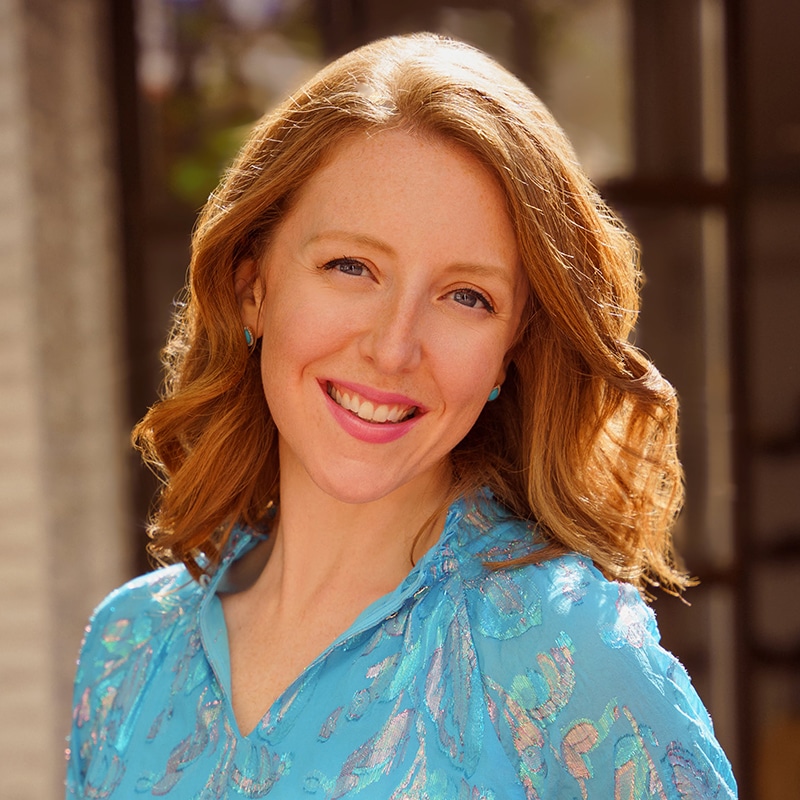
Dr. Casey Means is a Stanford-trained physician and #1 New York Times bestselling author of Good Energy. After earning her medical degree from Stanford University School of Medicine, she trained in head and neck surgery before transitioning to functional medicine to target the root causes of chronic illness. Through her weekly Good Energy Newsletter, she directly empowers hundreds of thousands of readers with actionable lifestyle advice, thought-provoking essays on the intersection of human health and ecological health, and the latest biomedical science to help them reclaim their cellular health and lifelong vitality.
She is the co-founder of Levels, a health technology company utilizing continuous glucose monitoring to track metabolic health. Alongside her brother Calley, she co-authored the #1 New York Times bestseller Good Energy: The Surprising Connection Between Metabolism and Unlimited Health. Her public health advocacy led to her nomination by President Donald Trump to serve as the U.S. Surgeon General, although the nomination was ultimately withdrawn. As a leading health communicator, Dr. Means has shared her insights on major global media platforms and highly influential podcasts, including The Joe Rogan Experience, Huberman Lab, and On Purpose with Jay Shetty.

Peter Diamandis, MD is the founder of over 28 companies in the areas of Longevity, AI, synthetic biology, space and education. He is cofounder of Singularity University and the Abundance Community. He serves as co-founder of two $700 million+ venture funds: BOLD which focused on Health and LINK-Exponential Ventures focusing on AI.
He is the Founder and Chairman of XPRIZE which has launched $600 million of incentive prizes driving $30 billion in R&D. Notably he is the host of Moonshots, the #1 podcast in AI and Exponential tech.
Diamandis has been named by Fortune magazine as one of the “World’s 50 Greatest Leaders” and by Forbes as “One of America’s 250 greatest innovators”. He has degrees in molecular genetics and aerospace engineering from MIT and an MD from Harvard Medical School.
Diamandis is a New York Times Bestselling author of 6 books: Abundance, BOLD, The Future is Faster Than You Think, LIFE FORCE, LONGEVITY GUIDEBOOK, and We Are As Gods. His favorite saying is, “The best way to predict the future is to create it yourself!”

Aviva Romm, MD is a Yale-trained, board-certified family physician, herbalist, midwife, and internationally recognized leader in integrative medicine gynecology, obstetrics, and pediatrics. She has spent over four decades advancing evidence-based, whole-person healthcare for women and families.
A pioneering voice in women’s integrative health and midwifery care, Dr. Romm is the founder of the Yale Integrative Medicine Program, and her own organization, The Women’s Integrative Health and Medicine Institute, dedicated to practitioner education, consumer empowerment, and transforming women’s healthcare through science-based, root-cause approaches to prevention and healing. She is the author of numerous influential books including Hormone Intelligence, a New York Times bestseller, and Botanical Medicine for Women’s Health, widely regarded as the definitive textbook on women’s herbal medicine. Her forthcoming book, Force of Nature: A Whole Woman’s Guide to Perimenopause, Menopause, Midlife, and Beyond, continues her mission of redefining women’s health across the lifespan.
Dr. Romm serves on the Board of Directors of Every Mother Counts and chairs its Impact Committee, helping advance equitable maternal healthcare globally. Through her clinical work, research, teaching, writing, and advocacy, she bridges traditional healing wisdom with modern medical science, empowering women to transform their personal health and healthcare professionals to transform patient care and the healthcare system itself toward one that more deeply meets the needs of women.

Dr. Dale Bredesen received his undergraduate degree from Caltech and his medical degree from Duke. He was a postdoctoral fellow in the laboratory of Nobel laureate Prof. Stanley Prusiner, and then held faculty positions at UCSF, UCLA, and UCSD. He was the Founding President and CEO of the Buck Institute for Research on Aging, and his laboratory studied mechanisms of neurodegeneration and published over 230 scientific papers, leading to the first publication of the reversal of cognitive decline in Alzheimer’s disease and two successful clinical trials. He is the author of three New York Times bestsellers and is currently the Senior Director of the first precision medicine program for neurodegenerative diseases at the Pacific Neuroscience Institute, and Chief Scientific Officer at Apollo Health.

Dr. Kat Toups is a board-certified neuropsychiatrist, Distinguished Fellow of the American Psychiatric Association, and IFM Certified Practitioner specializing in geriatric psychiatry and cognitive decline, with nearly four decades of clinical experience.
She is Principal Investigator of the EVANTHEA and Four Winds Precision Medicine Dementia Reversal Trials and has served as principal investigator or lead investigator on more than 100 clinical trials, including over 20 focused on mild cognitive impairment and Alzheimer’s disease.
She previously held academic and leadership appointments at the University of California, Davis, including Assistant Professor of Clinical Psychiatry, Chief of Inpatient Psychiatry at the VA, and Residency Training Site Director at David Grant Medical Center.
Dr. Toups’ work focuses on systems-based, personalized approaches to brain health, integrating metabolic, infectious, inflammatory, immune, hormonal, vascular, toxic, and lifestyle contributors to cognitive decline.
In collaboration with Dr. Dale Bredesen and colleagues, her research has explored multimodal approaches to improving cognitive function in early impairment.
She is a frequently invited keynote speaker at national and international medical conferences and is actively engaged in advancing precision medicine approaches to cognitive and psychiatric disorders.
Sept. 18-19, 2026 Masterclass: Functional Medicine Is Longevity Medicine
Dr. Toups and Dr. Bredesen’s pre-print paper (under peer review): Precision Medicine Treatment of Alzheimer’s Disease: Successful Randomized Controlled Trial
Dr. Casey Means’ newsletter: The Good Energy Newsletter
People mentioned
Sir Demis Hassabis, CEO of DeepMind and Isomorphic Labs
Dario Amodei, CEO of Anthropic
Alisa Vitti, women’s health expert

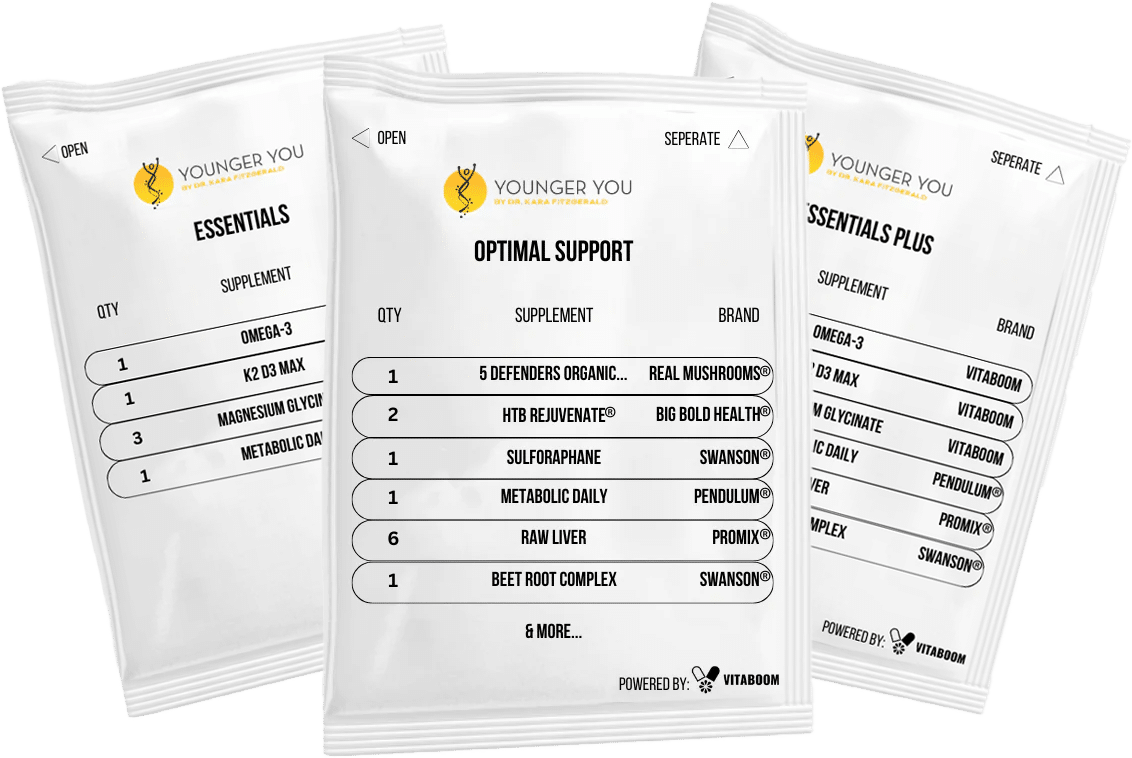
Younger You Daily Supplements are Now Here!
What could be more convenient than having your daily supplements all pre-portioned in one pouch? Choose your level to get the combination of supplements that’s right from you. Monthly subscription available.
(note you’ll be leaving www.drkarafitzgerald.com to go to www.vitaboom.com to complete your purchase)