

The Tough Gut Playbook: Rebuilding Gut Resilience in IBS-Prone Patients
Contact Info:
Website: www.calocurb.com/drkara10
I’ve been watching the science behind Calocurb evolve over the last year, and I have to say this is one of the most exciting clinical tools I’ve seen emerge in the metabolic space in quite some time. A hops-derived compound that stimulates endogenous GLP-1, CCK, and PYY, without a prescription or injection? That’s a big deal, especially for patients struggling with appetite regulation, weight plateaus, or the aftermath of GLP-1 discontinuation.
In this episode, I sit down with Sarah Kennedy, founder of New Zealand-based Calocurb, to talk about the years of government-funded research that led to this discovery, the remarkable clinical outcomes they’ve seen so far, and how I’ve personally used it in my practice with excellent results. If you’re looking for science-backed, natural strategies to support appetite control, fasting, or GLP-1 transitions – this one’s worth a listen. ~DrKF
PS. Calocurb will join me and an all-star lineup of experts in our upcoming Functional Medicine IS Longevity Medicine™ Masterclass, a free online event that acknowledges, unites, and elevates the role of functional medicine in longevity medicine. Don’t miss what will be an inspiring, high-energy event – book your spot here.
Can a bitter compound derived from hops provide the appetite-regulating benefits of GLP-1s without the cost, side effects, or injections? In this episode of New Frontiers, Dr. Kara Fitzgerald interviews Sarah Kennedy, the scientist and CEO behind Calocurb, a natural GLP-1 activator born from a decade of New Zealand government-funded research. Together, they unpack the fascinating discovery of gut-based bitter receptors and their ability to trigger the key satiety hormones CCK, GLP-1, and PYY.
Sarah shares how her team screened over 1,000 plant extracts before identifying a unique hops compound that delivered remarkable clinical results, including a 600% spike in GLP-1 and a 120% reduction in cravings. You’ll also hear how functional medicine practitioners are using this tool to support fasting, reduce appetite, and help patients transition off GLP-1 meds without rebound hunger. An insightful, clinically relevant conversation with wide application for practitioners in metabolic health, appetite regulation, and beyond.
In this episode of New Frontiers, learn about:
- The Hidden Fallout of GLP-1 Medications: How synthetic GLP-1s suppress your body’s own production and why patients often experience rebound hunger, cravings, and weight gain when stopping treatment.
- Bitter Receptors in the Gut as an Untapped Therapeutic Target: Discover how taste receptors throughout the gastrointestinal tract trigger the release of GLP-1, CCK, and PYY and how this can be clinically leveraged to support appetite regulation.
- A Botanical Breakthrough Backed by Government-Funded Science: How New Zealand researchers tested over 1,000 plant extracts and identified a hops-derived compound that significantly increases appetite-regulating hormones.
- Natural Activation of Incretin Hormones Without Injections: Learn how this non-pharmaceutical extract was shown to trigger a 600% increase in GLP-1 and a 120% reduction in food cravings within hours of use.
- Bridging the Gap Off GLP-1s: Explore how this natural compound may help patients transition off injectables safely by reactivating endogenous GLP-1 production and minimizing hunger spikes.
- Reducing Food Noise & Making Better Food Choices: Going beyond appetite control, learn how this extract can support the gut-brain axis, eating behavior changes and better relationships with food.
- Supporting Women’s Cycles and Fasting Protocols: Hear about Calocurb’s unique clinical results in women, including reduced cravings during the luteal phase and improved tolerance during 24-hour fasts.
- Practical Applications for Functional Medicine Clinicians: How this compound is being used in practice for patients who can’t tolerate GLP-1 side effects, prefer a natural approach, or need support during refeeding and dietary shifts.
Dr. Kara Fitzgerald: Hi everybody, welcome to New Frontiers in Functional Medicine where we are interviewing the best minds in functional medicine. And of course, today is no exception. I am with Sarah Kennedy. She is the founder of Calocurb, a science-backed weight management product now sold in five global markets. She’s a former executive at Fonterra and Vitaco. Sarah brings over 20 years of experience in health, nutrition, and leadership. She’s also an MIT Sloan Fellow and she’s a trained veterinarian.
Dr. Kara Fitzgerald: Sarah, welcome, welcome, welcome to New Frontiers in Functional Medicine. I am so excited to talk to you. Actually, we’re going to just pick up on a conversation we started just over a year ago at IFM, the International Conference, when it was in Vegas. I’m thrilled with the science that you’re doing, and the discoveries that you’ve been making, and the product born out of this extensive research called Calocurb. Give me the origin. Let’s just start from the beginning. Talk about who you are, this investment from the New Zealand government in conducting this research, and where you ended up in this new product that you’ve discovered and brought to market.
Sarah Kennedy: Thanks, Kara. I’m delighted to be here. I will try and speak a bit slower because you will notice my accent is a bit odd. It’s New Zealand. How it came about, is actually fascinating. Almost all, or 100% of primary research in New Zealand is done by the government. So in 2010, a group of very talented scientists in an institute called Plant and Food Research had the hypothesis that they would find a plant-based extract that suppressed appetite. Now why did they have this hypothesis? It was actually partly from historical reasons. So in times of famine, Scottish people in the Highland chewed very, very bitter berries. Kalahari desert people chewed very, very bitter cactus before they went hunting. That was actually the origin of Hoodia, if you remember Hoodia [Hoodia gordonii, an African indigenous plant containing the appetite suppressing compound P57 which was subsequently commercialized by the weight loss industry]. And then there’d been some recent pharmacological work done in rats. So they put in a grant to the government, and it was called Foods for Appetite Control, and they got back a 20 million dollar grant to conduct this. So that was in 2010. Now you’ve got to remember—
Dr. Kara Fitzgerald: Wasn’t there a little bit of background concern around the potential of a sort of impending obesity/diabetes epidemic happening and so there was an eye towards that as well?
Sarah Kennedy: Absolutely. I think everyone sees New Zealand as clean and green, which it is, but we have a similar obesity and weight problem in New Zealand and the drugs were ineffective and expensive. So how could we do this in another way? So they received this grant. So firstly, where their [the scientists’] hypothesis came from was this bitter [taste]. So the whole bitterness. So they took over 300 human biopsies from right down through the gastrointestinal tract through colonoscopies and enteroscopies. And they actually mapped the whole of our bitter taste receptors right down through the intestinal tract. Now that hasn’t been done before.
Sarah Kennedy: They proved that we have 25 taste receptors on our tongue and we have them right down through our gastrointestinal tract. It’s actually interesting, about 90% to 92% of people have 1-18 or 1-19 [of the 25 taste receptors] and about 5% to 7% have 1-25. So we call them the supertasters— they can map them all and the distribution. What they showed with these bitter taste receptors in the lower intestine is that when stimulated with something very bitter, they released three appetite-suppressing hormones: CCK, GLP-1, and PYY. So they then could show they released [these hormones] — but what would they release against that would actually be safe and keep the receptors alive?
Dr. Kara Fitzgerald: I want to add here, I want you to define the compounds that were stimulated and then I want you to continue with the story. But was this the first time the bitter taste receptors were actually mapped out in the gastrointestinal tract? I mean, is it this team that should be credited with that work in the scientific literature?
Sarah Kennedy: Yes, it’s published. So to be published it has to be original.
Dr. Kara Fitzgerald: Right. I mean it’s really kind of remarkable to me because it took a lot of us by storm, this original research about the distribution of the bitter receptors. And in fact, around that time, bitter receptors were discovered in the lung parenchyma as well, extraordinarily enough. So hats off to them for doing such extraordinary science.
Sarah Kennedy: Well it came from— And can I tell you why it evolved? Why do we have them through our body? And I find that the most fascinating. Humans— and we can’t even say animals because we haven’t mapped animals— but plants and humans evolved at the same time. Humans have these because bitter is often associated with toxic. So if you eat something very, very bitter, you’ll spit it out. If it goes into your stomach, you’ll either produce ghrelin, which says eat more so you can dissipate or dilute this toxin, or you’ll vomit it up. But if it goes into the intestine, you can’t do any of that so your body releases these appetite suppressing hormones to tell your brain to stop eating. Because what it’s saying is you could have eaten something poisonous.
Sarah Kennedy: It’s really interesting. Humans evolved with this, but plants evolved at the same time. So if you think about an apple tree, an apple itself is very, very sweet because the apple tree wants humans to eat it to spread the seeds. But the leaves are very, very bitter because the tree doesn’t want the humans to eat the leaves. So it’s kind of, humans and animals evolved at the same time and that’s really where the hypothesis came from to how could we stimulate these bitter taste receptors to get a behavioral change in appetite. So that’s where that came from. So once they had these human cells, they then built this interendothelial model. Just think of this high throughput model. And they tested over a thousand extracts to see what would make these taste receptors release these hormones. Literally only two did.
Sarah Kennedy: Now that’s actually not unusual because if we were eating bitter things and we were not eating all the time, we wouldn’t survive, so it was important. So there were two. The first one was part of potato oxalate, which is great but it’s poisonous, so you’d be thin but dead. So that was counted out. And the second one, literally the only other one, was a hop. So an extract of a hop. Hops are a bittering agent that goes into beer. And because this institute is plant and food research, and they’ve done all the breeding of hops in New Zealand, they then tested another 50 varieties of hops, till they got what they called the Eureka and this was the hop variety that gave the highest expression of these appetite suppressing hormones. They then went on and called this extract Amarasate.
Sarah Kennedy: I always say, never let a scientist name anything. No one the world can pronounce it. But amara means bitter in Latin and sate means satiation. So it was bitter satiation, but of course everyone pronounces it wrong. I even think I don’t pronounce it how the scientists do. But they had the extract. That was about 2014. They then did a lot of things in formulating it and so on like that. They then took it into their first human clinical trial and that was sort of the fundamental trial and so they had 30 men which they cannulated, or took blood from all the time. They gave— well it wasn’t even called Calocurb then it was just the extract in a delayed release capsule. They gave it an hour before an eat-till-you’re-full lunch and an eat-till-you’re-full snack and they could then measure the release of CCK, GLP-1 and PYY against placebo. And that’s where we saw these enormous spikes. So, 600% for CCK which is Cholecystokinin, which is a very potent but short-acting appetite suppressant, 600% for GLP-1, and around 400% for PYY. And this acted over four hours.
Dr. Kara Fitzgerald: And what is PYY?
Dr. Sarah Kennedy: It is another appetite suppressing hormone, but it’s much lower down in the intestinal tract. So in fact, what’s happening is the Amarasate, the active ingredient, releases in the upper duodenum or in the upper intestinal tract and it kind of goes down… I kind of describe it like a ball within a tube or a ping pong ball going down like that and it’s stimulating these bitter taste receptors as it’s going down which is why we’re getting this four hours of activity. Because, you would know that, GLP-1 and these incretins, or these appetite suppressing hormones, are degraded within about two minutes and that’s a body’s natural and normal thing to do. But because we’re going down and we’re activating these bitter taste receptors right down through the gastrointestinal tract, we’re getting this prolonged action. And when they measured the calorie intake, remember from an eat-till-you’re-full lunch and an eat-till-you’re-full snack, they got 18% less calories than the placebo. What that’s telling you is, A, you saw the rise of the appetite suppressing hormones and then B, the calorie reduction.
Dr. Kara Fitzgerald: That’s significant.
Sarah Kennedy: Well, there’s two ways to compare it. With the semaglutide, so a Wegovy or an Ozempic, on average, that is about 24% reduction a day and we are 18%. So there is that comparison. The other thing is the rise of CCK and these three gastrointestinal tract [hormones], you actually have to be above 400% to make a behavioral change. So all of these products that say, I stimulate GLP-1, yes, they do. You you can eat an apple and it stimulates GLP-1. But to make a behavioral change, you have to be above 400%. And the behavioral change is, I don’t want to eat as much. So that’s really what’s happening. And that was the first clinical trial and that was sort of the fundamental.
Dr. Kara Fitzgerald: And when was this published?
Sarah Kennedy: That was finished in 2016 and presented at an obesity conference in the UK, actually, in 2017 and they got huge publicity but of course it wasn’t commercialized. So because of my background I was approached. This is what happens. They get to something where they think it can be commercialized and then they go, well, we need to have a partner to commercialize it. So they approached me for some guidance. What would I do? This was in 2017 and when I saw it I had never seen something like this that had this amount of science, with this big a category, which we know is across the world, that we could use. It comes from source to shelf. And I was absolutely entranced by it. So a bit like the man that liked the product and he bought the company, I said I want it and I raised the capital, formed a team, named the product, commercialized it. So that’s really the background of it.
Dr. Kara Fitzgerald: It’s amazing. But let me ask you, I have questions for you. First of all, I just want to point out that one of the most successful caloric restriction studies that we’ve got in humans, which successfully slowed the rate of biological aging as measured by the Dunedin Pace of Aging Clock, a clock that was developed in the amazing New Zealand, by the way, and really one of the best tools we have.
Sarah Kennedy: Wow.
Dr. Kara Fitzgerald: Yeah, I know. I’ve featured New Zealand-associated science three times on my podcast. I mean, you’re a very well-represented country on this podcast because you’re up to pretty extraordinary science. It’s pretty cool.
Sarah Kennedy: Well, we’re lucky because the government supports it.
Dr. Kara Fitzgerald: Really supports it. Yeah, it’s cool. Anyway, in this particular study, it’s called CALERIE— And by the way, folks, we will put all of the references that Sarah’s talking about and we’ll pop the CALERIE study in the show notes for you to be able to access. But it was a 10% restriction that was maintained long term that was associated in a reduction in the rate of aging, the pace of aging, as measured by that particular clock. I mean, 18% is, from that lens, quite extraordinary. And of course, the extent to which you’re increasing GLP-1 and the associated hormones is quite astonishing with this hops-derived compound. And it’s specially packaged. For anybody who might have missed it, you need to take it just about an hour before your meals and it kind of ping-pongs down and lights on all of those various receptors to have that appetite suppressing quality. And I will just say as an aside that in my practice, I’ve been using this routinely with the expected outcome, you know, with the expected outcome.
Sarah Kennedy: Yeah. Great!
Dr. Kara Fitzgerald: So it’s within the whole context of a functional medicine approach because that’s what I do. But yeah, I’m really happy to report our own use clinically has been really quite satisfying and I think consistent with the literature that you’re sharing. Okay, so you’ve got a long and pretty storied history there in New Zealand and the various companies you’ve been involved in. And you’re a veterinarian doctor by training and I know we’ll talk about that when we meet in person. We’ll talk about some of the topics that we got into off camera. But why did you buy the company? Why did they go to you for advice? Why were you the person to bring this product forward? I’m just really curious.
Sarah Kennedy: Yeah, sure. I did practice for five years, but then I moved into first, animal nutrition and then human nutrition. Lots and lots of stories behind that. Much earlier on, I took over as CEO of a very iconic but small health and wellbeing company in New Zealand, it was then called Healtheries. And we grew it over the next 10 years from 25 to 200 million and had a huge amount… So this was my background in functional and health and well-being. So they’re like, well, Sarah, what would you do with this? And then I’ve done other things, but as I said to you, up until this time, particularly in the supplement world or the functional medicine world, we literally had thermogenics, we had fillers, and we had laxatives.
Sarah Kennedy: This was even before the whole probiotic. That wasn’t even around then. So for me to see this… But the interesting thing, Kara, is I’m like, I’ve got the best mousetrap in the world. Everyone is going to come. But because it was so new when we launched in 2018, people are were going, “What? You’re messing with my brain. You’re releasing these hormones?” So we did because people would take it and get the results but it was slower. As you would know, in 2021, Wegovy, the Ozempic sister was approved by the FDA for obesity treatment. Novo Nordisk spent $1 billion on marketing. They took 239,000 practitioners out to lunch and dinner. So they really educated the market on the etiology of weight management. So I always get down on my knees and thank them every day because they really took away this doctrine that weight management was just about willpower.
Sarah Kennedy: They really showed that hunger is from the hindbrain and it is an evolutionary trait in us. Most people don’t realize if you reduce your calories by 25% per day, your hunger will double over four months. So of course diets fail because your body is saying to you, go out and eat something. You could be in famine. And that is what helped us to evolve. It’s what got us out of our caves. So there’s a whole thing in that. And then during this time, and you would have read, we continued doing clinical trials. So we had this one fundamental which showed the mode of action and then we’ve gone on to do three more.
Dr. Kara Fitzgerald: Describe them.
Sarah Kennedy: Incredibly exciting. The first one was in men and this was really looking at hunger and of course we depress hunger, because people eat less but you have to be able to scientifically measure it. So this is all done independently, and we did men in a 24-hour,water-only fast. We gave Calocurb at 16 hours and 20 hours and measured hunger and we got an 80% decrease in increased hunger at 24 hours. The people that hadn’t had Calocurb were 80% more hungry than the people that did. So that was great.
Dr. Kara Fitzgerald: And how did you establish that? Did you use subjective questionnaires?
Sarah Kennedy: VAS, yeah, a visual analog scale. So these are all ethics-approved and double-blinded. I was a bit grumpy at the time, but I’m thrilled now. We then went on and did it in females. Now I had to do it in females because to get my Australian regulations, the Australians said, well, you proved it in men but you haven’t proved it in women. So, thirty women, 24-hour water fast, you’d think, okay, this is quite easy. But thirty women in a three-way, crossover study, you have to do ninety times. And as you know, women are not used in human clinicals because we have hormones. So we had to match each of those women up on their exact day of their menstrual cycle and on the same day of the week because people eat differently. And we had to do that ninety times during COVID. So it took about 18 months and a quarter of a million dollars, but the results were stunning, absolutely stunning.
Dr. Kara Fitzgerald: What did you show?
Sarah Kennedy: We showed that at the end—- You know how we said 80% decrease for men, we showed 100% decrease for females. So at the end of 24 hours, they were no more hungry than they were at 16 hours, and that’s in the hardest time of a fast. But then even more, we measured craving and we got 120% decrease in craving. Now that’s massive. Massive. And then we did rebound eating and showed a 14.5% reduction in calorie intake. Now that was four hours after the last dose, which showed the length of time. Because remember the first clinical, we gave it an hour after taking, we measured it, and that was 18%. This was four hours, so we could show the longevity of it.
Sarah Kennedy: So some incredible implications or reasons you can use it with women is, most people don’t realize, in the luteal phase of the menstrual cycle, women will eat, on average, 200 calories more. And this is once again quite natural because your body is preparing in case you implant an egg. And this is what we call PMS and people go, I go crazy for sugar or something like that. Well, the body is actually saying to them you might need more energy. So you think of then, women can come in and out of Calocurb because it’s a capsule that you take twice a day. So you can come in and out of it over these times. There’s a whole lot of ways you can use it. So that was the third, and of course we’re just completing our fourth human clinical now, which is our largest and longest, and results are due in a October.
Dr. Kara Fitzgerald: That’s exciting and I know that’s men and women together. You’ve been working on this for years. You’re looking at weight and you’re also looking at a number of other biomarkers. Anybody listening to this podcast, we have a lot of clinicians listening, obviously they would be thinking about lipids, and about glucose, and about insulin, and just a myriad…
Sarah Kennedy: Weight, body composition, bloods, liver, kidney, some qualitative…
Dr. Kara Fitzgerald: Inflammation.
Sarah Kennedy: Inflammation, yeast, that’s a big one. So this has been for six months with a three month follow-up. It finishes this July, so you’re right, it has been years. By the time it goes through analysis and it’s unblinded, it’ll be October. I mean, we know anecdotally and you’ve used it, we know it works. But in order to make any claims and to substantiate, which I think you need to be able to do, you want the clinicals to be able to show it.
Dr. Kara Fitzgerald: Yeah, absolutely. And you already have some really strong, exciting clinical data. A lot of women listening, women clinicians, it wouldn’t be the first time on our program talking about cravings changing with the menstrual cycle. And this as a tool to be able to use, it’s quick-acting, it’s short-term. So to be prescribing this during certain times of the cycle as appropriate could be just really game changing as a creative application.
Sarah Kennedy: What most people tell us is, you take the noise out of my brain. It obviously makes you feel full faster. So just to reiterate, we work in an hour. So we say take it an hour before a main meal because you want it to go down and disperse in the upper duodenum and you want it on an empty stomach. It’s also degraded in 24 hours, so it goes down, it degrades in the colon and less than 1% is absorbed in the bloodstream. So it’s not going to affect the liver, it’s not going to affect the kidneys, it’s not going to affect drugs. Just think of it like that ping-pong ball going down and just lighting up those taste receptors.
Dr. Kara Fitzgerald: I have a bunch of questions as you’re throwing these out.
Sarah Kennedy: Sure.
Dr. Kara Fitzgerald: So using these in conjunction— Actually no. Before I ask you about using them in conjunction with GLP, a lot of clinicians are prescribing GLP-1s to lower the noise in relation to alcohol or in relation to other addictions. I know you haven’t studied it yet, but any anecdotal reports in that arena? I’m curious.
Sarah Kennedy: Yes, a lot of people come back and say, you know, I just don’t want that wine. Because we know the appetite center is very close to the addiction centers and this is what they’re studying. Unfortunately, as my husband would say, it hasn’t really stopped my wine intake.
Dr. Kara Fitzgerald: That’s funny. Have you tried it for that or? You’re the only one who hasn’t.
Sarah Kennedy: I think I just drink my way through it. Absolutely for that. As you said, just the applications— Practitioners are using it in a number of different ways. The first way is, of course, as an alternative. For people that can’t take the side effects, and we know that they’re quite severe, they can’t afford it, or they don’t want to inject themselves, or they want something natural. So a wonderful way to say, hey, try this. The second one is, as you talked about, in combination with the GLP-1 injectables. And a lot of them are using it like that because firstly, they can reduce the dosage right down to almost the lowest dosage and give Calocurb at the same time. So you’re getting that external or exogenous hormone, which is a synthetic hormone but you’re also stimulating your own natural hormone and getting really good results with that.
Sarah Kennedy: And the third one, which I think is the most important, and I say it’s not an if, it’s a must. When people are titrating off the GLP-1 injectables, most people don’t realize you have actually suppressed your endogenous GLP-1 to almost zero, and we can put this paper on the notes. So this is why when people come off they get this massive hunger because it’s like—
Dr. Kara Fitzgerald: They gain the weight back.
Sarah Kennedy: Yeah but there’s this massive hunger and so I say as you’re titrating down put Calocurb in because you’ve got to restimulate, you’ve got to super stimulate, that gut-brain axis. But it’s interesting, that’s a physiological reason. So just remember your endogenous is at zero. And if you think about it, that happens when you have a synthetic hormone. But the other one, which is quite interesting, there’s a psychology paper, or a paper that measured people’s feelings when they came off the injectables, and 100% of them felt fear and hopelessness.
Dr. Kara Fitzgerald: Interesting.
Sarah Kennedy: So the fear and hopelessness of course came from having to come off these injectables, these were insurance, but then not having anything to help them. And so we are working on doing another clinical trial looking at people going on to it as a maintenance. And I think it’s just this wonderful safety net for people because you kind of go from no food noise, and absolutely bathing your body in GLP-1, to nothing. So with Calocurb, you can actually start to adjust your lifestyle and go, okay, I’m going to take back control but I’m also still managing that hunger and craving.
Dr. Kara Fitzgerald: Right. In my practice I’ve used it as a tool in the structures that you’re describing and have experienced it to be really quite beneficial.
Dr. Kara Fitzgerald: Toxicity. Now, I know it was really carefully researched by the New Zealand government. You’re continuing to research it. Is it safe for long-term use? And also, talk about the dosing that people are using. Is everybody following one pill twice a day? So the safety, the side effects, and dosing. Talk about those three things.
Sarah Kennedy: Okay. So important for practitioners listening is it’s an extract. So we take the hops— Oh my god, they’re beautiful. I was down there when they were being harvested about three months ago. They’d brought 50 brewers from around the world to look at the harvest. They’re all drinking beer and I’m the only person there talking about weight management. But they harvest them, then we take them and put them through CO2 supercritical extraction. We remove all the phytoestrogens so all you’re left with is your alpha and beta acids and a small amount of essential oil. So if you ever do get a small reflux, men quite like it because they say it’s like a beer burp.
Dr. Kara Fitzgerald: That’s so funny.
Sarah Kennedy: No phytoestrogens, so no potential estrogenic effects. As in toxicity, the safety profiles, we have GRAS, generally recognized as safe, and hops have been used for 2,000 years as a bittering agent. The other thing is, because it’s not absorbed in the bloodstream, or less than 1%, of course it’s just traveling through like that ping pong ball. So that’s sort of the toxicity profile and I’m very happy with it. And just on that, I’ve been on it for six years. Of course I’m going to say that as a founder. However, I will tell you, and I say this quite openly, I had a love-hate relationship with food my whole life. I love it but I hate it. Binging, dieting, yo-yo, all the rest. And I know all the reasons, but it still didn’t help me. With Calocurb I can quite honestly say I now have a good relationship with food. I actually can eat it, I just don’t eat as much. I always laugh. They used to say, gin with mummy’s little helper. I kind of think Calocurb as my little helper because I have this normal relationship now. So that’s toxins.
Dr. Kara Fitzgerald: Yeah. I want to just jump on that and then we’ll talk about side effects. I can see this being used as a tool to support people following some of the dietary patterns that we prescribe. Everybody knows in functional medicine that you’re probably going to do something like an elimination diet. You’ll probably be asked to stop some of your favorite foods like wheat, dairy, perhaps, and that can be really anxiety provoking. In fact, I’m sure there are practitioners listening who have already used it as an aid to support some of the dietary changes and I would love to hear from you and your experience. But that’s a great thought, Sarah. And note to myself to use it in that for people who need a little additional support for some of the dietary prescriptions.
Sarah Kennedy: Well I intermittent fast because I’m just lazy and so I take mine in the morning and I’ll go right through to twelve, one o’clock. And then I won’t even eat as much then and of course I don’t get the rebound eating, so that’s just what I do. As for dosage, we do have an onboarding and the reason for that is we are super stimulating. Remember we are doubling the increase of your natural GLP-1. So we’re super stimulating that. So we say take one a day for two days, take two a day for two days, and then get up to the dosage, which is two tiny capsules an hour before lunch and an hour before dinner. What that does is A, it gets the body used to that super stimulation, and B, around 5% of people will only need one capsule and we believe they’re the supertasters. You know how I said about 5% to 7% of people have 1 to 25. It doesn’t matter about your size, your weight, you just may be a supertaster and you may only need one capsule.
Dr. Kara Fitzgerald: Very interesting.
Sarah Kennedy: In that week of onboarding, you’ll know that. And you’ll know if you take too much. The only side effect we get is a laxative effect and you will know that immediately. It happens an hour to an hour and a bit after you’ve taken Calocurb and it’s a flushing effect. And we believe it’s the CCK which is flushing in the gut but your body gets used to it. And it’s interesting, a lot of people don’t mind it, particularly if they’ve been on the injectables, which the side effect is constipation. But that’s why we have the onboarding and getting your body used to it. And maybe you’re a one-capsule person, but that’s in about 5-7%. Always take it on an empty stomach, or a semi-empty stomach, with a glass of water, because you want it to go through to the upper duodenum. If you’ve got a lot of food in your stomach it may get caught in there. So that’s the point about getting it with an empty stomach.
Sarah Kennedy: To help people remember I say, think about it like at morning tea. It’s such an English thing to say, isn’t it? Morning tea. But when you have your cup of coffee, you know, think about it at… Well, I take mine at nine. It doesn’t really matter, but think about it at 10 o’clock and that’ll just see you through. Think about it at three o’clock when we have that slump. Think about it then, and just think, oh, I’ll take it now.
Dr. Kara Fitzgerald: How do you do it with your intermittent fasting structure that you follow? Say that again, because I know people will be interested in that.
Sarah Kennedy: Yeah, I just take mine at 9 o’clock in the morning. It doesn’t really matter, but I’m just like, oh, I’m not going to eat till 1 o’clock, because I do the 18:6, so I’ll take it at night. And of course, all I’m doing is I’m super stimulating the release of GLP-1 and so on like that. So it’s telling my brain, hey, you’re OK. Well, no, it’s just I don’t have that food noise. So I can walk by those muffins, I can walk by those bagels and go, no, I’m okay, I’ll wait. The other thing for me is when I eat at lunchtime I won’t eat as much and it’ll last me for longer. Because I’m in maintenance, I will take it sometimes in late afternoon, maybe early evening. And the reason I do that, if I know I’m going to eat late, you know, I’m going to a cocktail party or something like that and I’m going to eat late and I just don’t want to go and eat all the canapes or go and have a very large dinner.
Sarah Kennedy: It’s quite a subtle change, but I always say to people, you know how we have a meal and about 45 minutes later you go, oh, I’ve eaten too much? Well, that’s your natural signaling to your brain telling you you’re full and to stop eating. We just do it before so you’ll feel full sooner and it’s quite interesting. And you’ll stay fuller for longer.
Dr. Kara Fitzgerald: Yeah, that makes sense.
Sarah Kennedy: I’ll just tell you a little story. When I first tried it years ago, when I first had some sample capsules, it must have been in 2017, I was out to dinner with some girlfriends and, we’re in New Zealand of course, and we’d had a slow-cooked leg of lamb shared between us and we’d finished eating and we were just talking. And you know how sometimes—well me, I’m terrible— you pick at nice crunchy bits on the lamb or something like that. I sat back and I thought, I’m full. I can’t peck. And it was sort of like this massive revelation in my head. So yeah, it certainly will make you feel like that.
Dr. Kara Fitzgerald: That’s great. Yeah, which is consistent with the feedback around using GLP-1s, only the safety profile for this is likely much, much higher than the safety profile for GLP-1s where…
Sarah Kennedy: And we follow the normal biorhythms of the body. If you look at that graph on the placebo that goes up and that, we just double that curve. So it follows the normal body. You don’t need high GLP-1 when you’re asleep. You need it when you’re going to eat.
Dr. Kara Fitzgerald: Yeah. Right, right, right. It’ll be really interesting if you decide to do a long-term study to see whether you identify some of those extraordinary benefits they’re identifying with the synthetic GLP-1s. Or if there’s a little bit of a signal towards that. This next study that you guys will be unblinding in the fall will give a suggestion if you see difference with the metabolic markers and so forth. Exciting stuff. It makes a lot of sense. Is it contraindicated with anything?
Sarah Kennedy: You know, because as we said it’s in the gut, if you have an inflammatory gut disease, if you have Crohn’s, IBD or something like that, where you’ve got inflammation. Why am I saying that? I just wouldn’t put something in your gut if it’s inflamed. And that would be what my contraindications would be. And of course it’s never been studied in pregnant women or breastfeeding women. It’s never been studied in that, so we say the same for that.
Dr. Kara Fitzgerald: Do you make any recommendations? I mean, have you guys sort of pondered an optimal dietary pattern with this? I know, interestingly, with GLP-1, people can adopt some really poor eating habits using it.
Sarah Kennedy: Yeah.
Dr. Kara Fitzgerald: So they’re not eating a lot, but when they do make their food choices, they’re horrific. They’re just simple carbs, sugar, maybe a drive-through, fast-food meal. In fact, I was talking to a colleague of mine who works for a laboratory doing stool testing and she just said some of the most damaged, dysbiotic, inflamed guts were people using GLP for whom their caloric intake had dropped considerably, but their choices had become just really, really compromised, really poor food quality choices. What are your thoughts on that and on dietary pattern recommendations you might make?
Sarah Kennedy: Well Kara, this is why we like going through practitioners. This is why we focus on practitioners. Because at Calocurb we say we’re a tool in the toolkit. We are not the only solution. You have to have dietary and behavioral management and we believe practitioners are the best to do that. We’re just going to help. I mean, anything you’d say would be, you know, a high protein… We say a healthy diet but we don’t prescribe anything. We just want something that people will eat consistently and less of. But no, a practitioner is absolutely the best person because they’re going to advise a person on the way they live, on what they do. And as we know, there’s a whole lot of behavioral things as well, such as stress eating, anxiety, all of those types of things that a practitioner can help someone through versus we’re a tool in the toolkit.
Dr. Kara Fitzgerald: Yeah, that makes a lot of sense. I’m thinking of another patient who actually did use it. She was on an elimination diet and was not happy about that and Calocurb was helpful and continues to be helpful for her during that time. But also, you can kind of turn the volume up on the benefit of Calocurb when you play around with macronutrients. Like, turn up the fat a little bit, as you said, a little bit more protein. But you can also have plenty of room for the all-important vegetables, the all-important phytochemicals that we love so much here in our clinical practice. Yeah, it makes sense to use it and have a whole program designed by somebody who’s trained in it.
Sarah Kennedy: When consumers say to us that it didn’t work and we ask them what they mean, they say, “I didn’t lose 10 pounds in a week”. And it’s like, well, you never… So we try to put a realistic expectation on them, which is why working with a practitioner is so good. And I suppose I shouldn’t be shocked, or I shouldn’t be surprised, but the lack of understanding of nutrition sometimes, you know, we have to really understand that. Because some people have don’t know why they need protein, they don’t know why they need this balance of fats and so. Absolutely I always say practitioner first.
Dr. Kara Fitzgerald: As you know, because we’ve just talked about it, we see some pretty negative fallout when people transition off their synthetic GLPs. And if it’s not done exquisitely carefully and with support, such as using Calocurb, plus an appropriate dietary pattern, and psychological support, et cetera, there can be some negative fallout. What is your experience? What has the feedback been on people transitioning off? And do people generally transition off? Do you recommend that people transition off or is it safe to use this long-term?
Sarah Kennedy: For Calocurb? Yeah, absolutely. As I said, I’ve been on it for six years. For some of our long-term users, as I said, it’s a safety net. I mean, we have people with us for over five to six years. It is absolutely safe. And the other great thing is people come in and out of it as well. And we know people come in and out of it because we track people coming in and out and you know, they may use it… Like, I use it all the time for traveling. You can imagine traveling, you’re always at a— Well, I was in America 12 times last year, eating out, airport food, all of those things. How are you going to make good choices there? And this just helps you make good choices with it. I’ll use it on holidays, you know, if I’m going to be surrounded by a lot of food that I want to eat. I just don’t want to eat as much of it and feel like that. But if I’m going out to a beautiful dinner, I’m not going to use it then because I want to eat my meal.
Dr. Kara Fitzgerald: You’re going to enjoy it, yeah.
Sarah Kennedy: Yeah, so I sort of come in and out of it. But anytime I feel that food noise coming back to me, I’m like, okay, I’m just going to have my Calocurb. And it’s one of those things that’s always in my handbag. We were laughing at work the other day, I had my marketing person with me and she’s digging around in my handbag and I’m like, what are you doing? And she’s like, “Oh my God, I thought it was my handbag. I’m looking for my Calocurb.” So we’ve all got them in our handbags.
Dr. Kara Fitzgerald: That’s funny.
Sarah Kennedy: So yeah, it’s just part of… And of course I’m going to say that, but I talked to you before about my relationship with food and this has just made it so that I’m comfortable. I’m happy now with my relationship. Yeah, it’s a game-changer for me. Founders always have a story and that’s sort of what the game-changer was for me.
Dr. Kara Fitzgerald: Well, I’m telling you, I can’t wait to see where you go with the product. I’m thrilled that you asked me and my team to you support you in the launch of Calocurb here in the US. And we have an audience much wider than the US so you’ll be hitting a lot of people. I’m just thrilled. I’m excited about your commitment to science. I’m really looking forward to the data that you discover in this study that you shared with us that you have yet to unblind. We’ll be sure to follow up with that and report that on our site. Again, everybody, on your show notes page you’ll have all of the studies that we’ve referenced here and any other goodies that we think are important. Of course, we have our amazing offer to folks that will be on the show notes. Sarah Kennedy, again, thank you for joining me and we’re excited about what you guys are up to.
Sarah Kennedy: Thank you so much Kara and to your team for having me on.
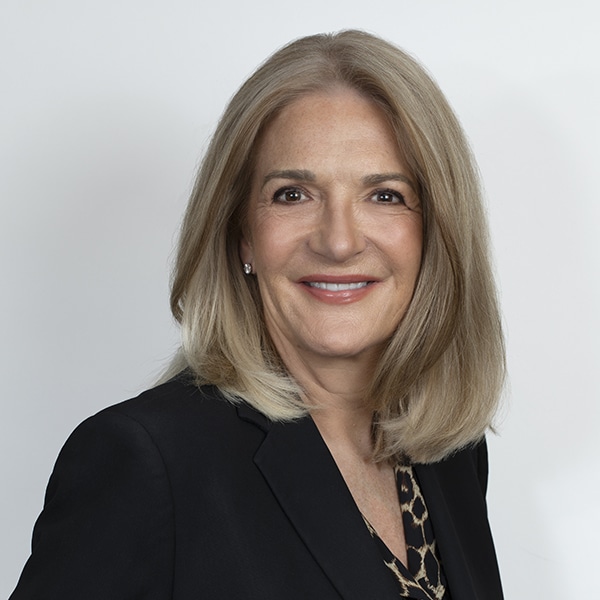
Sarah Kennedy, BVSc, is a veterinarian by training with over two decades of leadership in nutrition science and health innovation. She has held senior executive roles across the agribusiness and wellness industries, including Managing Director of Healtheries and Vitaco, and Vice President at Fonterra. A graduate of MIT’s Sloan Fellowship in Global Leadership and Innovation, Sarah is now CEO of Calocurb, a company born from New Zealand government–backed research exploring natural ways to support appetite regulation. Her work bridges plant-based science, gut physiology, and clinical relevance—making her a key voice in the conversation around natural GLP-1 activation.
Exclusive Offer for New Frontiers Listeners
Manage cravings and feel full faster with Calocurb, a 100% natural capsule that supports healthy weight management. Visit calocurb.com/drkara10 and use code DRKARA10 at checkout.
Sarah Kennedy, Founder and CEO of Calocurb Ltd.
Calocurb Clinical Trial and Ingredients
Research: New Zealand Bitter Hops Extract Reduces Hunger During a 24 h Water Only Fast
lResearch: Navigating coverage: A qualitative study exploring the perceived impact of an insurance company policy to discontinue coverage of antiobesity medication

Related posts