Why Bone Loss Accelerates With Aging: The Gut–Bone Connection

Why Bone Loss Accelerates With Aging: The Gut–Bone Connection

I just had a really fascinating conversation with the scientists at Sōlaria biō—Mark Charbonneau and Alicia Ballok—about a line of research that genuinely made me stop and rethink how we approach bone health. We talked about their journey from isolating microbes living inside edible plants, to identifying synergistic microbial interactions, to building out the preclinical work and then taking it all the way into human clinical research. It’s a rare and thoughtful progression, and the science is compelling. Their first clinical focus has been bone loss, and the results they’ve seen so far are striking. In an early clinical study, they reported a substantial reduction in bone loss—up to 80% in certain groups—along with meaningful reductions in CTX, one of the key markers we use to assess bone turnover. They’re now recruiting for a follow-up study in postmenopausal women in collaboration with Harvard, and we’ll share details in the show notes for anyone who may be eligible. This is a rich, science-forward conversation, and I think you’ll find it as interesting as I did. ~DrKF
Urolithin A for mitochondria and immune health

Human Clinical Evidence Supporting High-Dose Urolithin A for Mitochondrial and Immune Function

Age-related declines in muscle function, immune resilience, and cellular energy are closely linked to mitochondrial dysfunction, making mitochondrial-targeted interventions a key focus of aging research. In this context, recent placebo-controlled human trials show that a Urolithin A dose of 1000 mg produces broader and more pronounced effects on mitochondrial gene expression, muscle performance, and immune markers than lower doses.

Podcast guest headshots

Epstein Files: A Functional Medicine Response

This isn’t the podcast I expected to release this month. Not even close. But, in the wake of the most recent release of Epstein-related documents, things took a turn. In the face of what is such a colossal abuse of power over young women, it’s easy to feel paralyzed. In fact, along with a deep sense of pain, it was one of the first feelings that I felt as this new wave of information washed over us.

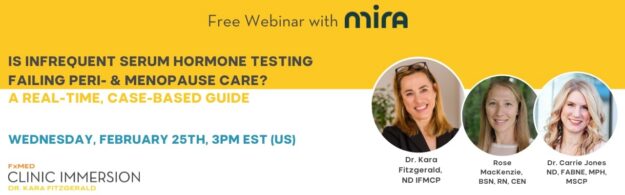
Is Infrequent Serum Hormone Testing Failing Peri- & Menopause Care? A Real-Time, Case-Based Guide

Is Infrequent Serum Hormone Testing Failing Peri- & Menopause Care? A Real-Time, Case-Based Guide

Dr. Carrie Jones (ND, FABNE, MPH, MSCP) and Rose MacKenzie (Clinical Manager at Mira) join Dr. Kara Fitzgerald for a practical, case-based exploration of real-time hormone testing in perimenopause and menopause care. Traditional hormone testing often captures a single snapshot, missing the dynamic fluctuations that define the menopause transition. In this clinician-focused webinar, we’ll show how longitudinal, at-home hormone data can sharpen diagnostics, guide HRT decisions, and improve treatment monitoring. Using real patient cases and cycle charts, this session will walk through how continuous hormone insights can change clinical decision-making in practice.

Why Aging Is Not a Fat Problem — A Muscle-Centric Approach to Longevity

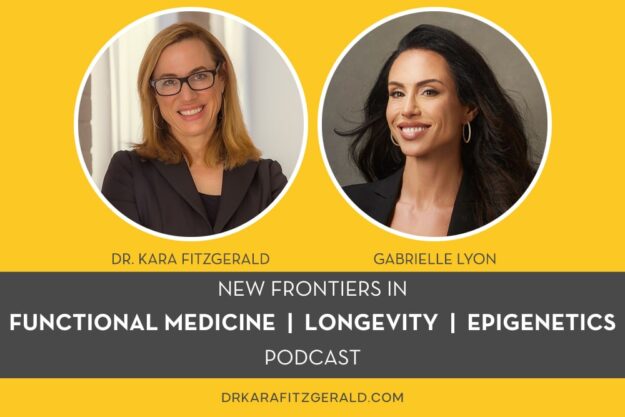
Why Aging Is Not a Fat Problem — A Muscle-Centric Approach to Longevity

This was an energizing and important conversation with Dr. Gabrielle Lyon. Her ability to connect muscle health with metabolic stability, aging, and even our current misunderstanding of obesity lit up something for me. The idea that intramuscular adipose tissue may be the real driver of metabolic dysfunction, and that skeletal muscle is our most underappreciated longevity organ, brings a clarity and direction I think our field really needs. And I’ll say personally, talking with her made me rethink my own training and protein patterns, especially as I reflected on how my body responds now compared to years ago. There’s something profoundly validating, and also motivating, about realizing that the levers we can pull — protein, resistance, intensity — still work, and may matter even more as we age. I think you’re going to feel that same spark listening to her. ~DrKF

Platelet-Derived Exosomes in Aesthetics: Data, Safety, and Real-World Use Cases

Platelet-Derived Exosomes in Aesthetics: Data, Safety, and Real-World Use Cases

Exosomes are having a moment right now, but this is the first time I’ve felt like I was able to sit down and really unpack what matters, the science behind them, the variability in sources, and why not all exosome products are created equal. In our conversation, Alisa Lask, CEO of Rion Aesthetics, helped bring clarity to a field that’s quickly becoming noisy, and I found myself genuinely impressed by the rigor and precision behind the platelet-derived exosomes she describes. For those of us watching regenerative aesthetics evolve, this discussion offers a grounded, thoughtful look at what’s real, what’s emerging, and what clinicians should be paying attention to. I think you’ll find it as illuminating as I did.

The Oral Microbiome: The Hidden Biomarker Driving Aging, Fertility & Systemic Inflammation

The Oral Microbiome: The Hidden Biomarker Driving Aging, Fertility & Systemic Inflammation

The oral microbiome belongs squarely in the functional medicine toolkit, and my conversation with Staci Whitman, DMD, IFMCP, makes that more clear than ever. As a board-certified pediatric dentist and co-founder of the Institute for Functional Dentistry, Staci is reshaping her field into one that aligns with systems biology and root-cause care. She lays out, with real clarity, how oral dysbiosis, airway restriction, sleep, hormones, nutrition, and even dental materials influence systemic inflammation and chronic disease. She also offers clear steps we can take as medical practitioners, including when to consider oral microbiome testing and how to use a straightforward five-question airway screener in patient visits. For clinicians focused on longevity and upstream drivers of disease, this conversation shows how much more powerful our care becomes when dentistry becomes part of the clinical partnership.

Targeting Immune Aging: New Findings from the MitoImmune Study on Urolithin A (Mitopure®)

Can Mitopure®, and its active ingredient Urolithin A, support an aging immune system? As we recognize immune aging as a primary driver of age-related disease, this question has taken on new clinical importance. The newly published MitoImmune study in Nature Aging provides the first rigorous clinical evidence to address this question. Conducted by researchers from Timeline, the Buck Institute for Research on Aging, and the lab of Professor.

Guide to Building a Sustainable Concierge Longevity Practice

Guide to Building a Sustainable Concierge Longevity Practice

It really takes courage to completely change course and walk away from a successful hospital medicine career. Dr. Brooke Stubbs did just that after realizing the pace and pressure of her work were costing her health. She found her way to lifestyle medicine, and that shift changed everything about how she practices—and how she lives. In our conversation, Brooke talks about what she’s learned along the way—how to build a concierge practice that actually works, set boundaries, create supportive systems, and price her services in a way that’s fair and sustainable. She also shares how Vibrant’s customizable panels have helped her provide consistent, comprehensive care. I love her honesty about learning through trial and error and her passion for building community. Her story is such a great reminder of what’s possible when we combine science, purpose, and heart in medicine. ~DrKF

Reversing Aging: Screening, Wearables & What To Do Now

Reversing Aging: Screening, Wearables & What To Do Now

When I sit down with Sergey Young, I’m always struck by the balance he brings. He’s deeply embedded in the future of longevity science, yet he champions the fundamentals we already know work: nutrition, exercise, sleep, purpose, and medical screening. For me, that’s a powerful reminder that as functional medicine practitioners, we already have the tools to help patients live longer, healthier lives. What excites me in this conversation is how Sergey shows us that the technologies on the horizon, including AI drug discovery, blood-based cancer tests, organ regeneration, and wearables, are making these solutions more affordable, more immediate, and more engaging for our patients. This isn’t just a distant dream. It’s a glimpse of where medicine is heading, and we are well positioned to lead the way. ~DrKF